HSBC Hong Kong launches tokenized money-market fund with HK$100 minimum in RedCoin
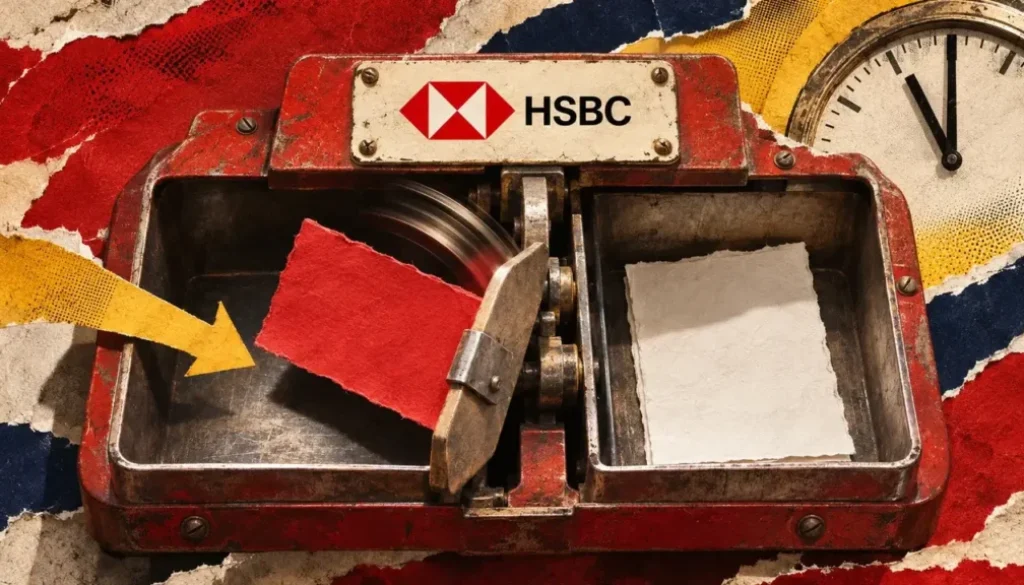
HSBC Hong Kong is lowering barriers to tokenized fund investing by allowing retail customers to purchase its money-market fund with as little as HK$100 paid in RedCoin, the bank’s stablecoin. The move marks an expansion of HSBC’s digital assets offering but maintains traditional fund settlement timelines and regulatory constraints on secondary trading.
- HSBC’s Hong Kong app now permits eligible customers to buy the tokenized money-market fund starting at HK$100 using RedCoin stablecoin.
- The fund’s 11 a.m. Hong Kong dealing cutoff determines the valuation price when customers redeem, with settlement within seven business days.
- Tokenized units lack peer-to-peer transfer rights, distinguishing HSBC’s offering from secondary trading available on competing platforms.
- HK$100 Minimum purchase amount for tokenized fund via HSBC app versus HK$10,000 standard minimum
- 100 RedCoin Stablecoin quantity required to meet the HK$100 subscription threshold
- 7 days Maximum business days for fund to pay HKD to distributor after dealing day
- 28 days Maximum calendar days from proper redemption request receipt to fund payment
CryptoSlate reported that HSBC’s Hong Kong banking app now enables qualified customers to invest in the bank’s Hong Kong dollar money-market fund with a minimum of HK$100 paid in RedCoin, HSBC’s HKD-denominated stablecoin. The public launch of the tokenized Class SD share class occurred on November 18, according to HSBC Asset Management, with the South China Morning Post reporting the development on November 19. The offering represents an expansion of RedCoin’s use in wealth management, following the stablecoin’s introduction for PayMe payments in October.
Low entry point accessible through the HSBC banking app
The fund is available within the Wealth tab of the HSBC HK App to customers meeting residency and account requirements. Eligible investors must be at least 18 years old, hold a sole-name integrated account, have a valid Hong Kong ID on file, maintain a local residential address and current contact details, and be physically present in Hong Kong to activate their RedCoin wallet. Under the RedCoin terms, customers with existing RedCoin in PayMe must fund their banking app wallet separately.
The HK$100 minimum through the app contrasts sharply with the standard HK$10,000 initial and subsequent purchase minimums published for both tokenized Class SD and conventional Class T, according to HSBC Asset Management’s tokenized-class key facts document. The fund manager retains discretion under the prospectus to accept smaller amounts through other channels.
Traditional settlement process and dealing-day pricing
Despite tokenization, the fund maintains conventional settlement mechanics and dealing-day cycles. The 11 a.m. Hong Kong time cutoff on dealing days determines which valuation applies when investors redeem, with the fund required to pay Hong Kong dollars to the distributor or its nominee’s settlement account within seven business days after the relevant dealing day once paperwork is complete. The prospectus sets a maximum of 28 calendar days from receipt of a properly documented redemption request to fund payment, though HSBC’s public customer guide does not specify the timing or currency of credit flowing to individual customers through the app.
Redemption requests that miss the fund’s 11 a.m. cutoff are treated as received on the next dealing day, potentially delaying settlement. Eligible distributors may impose earlier submission deadlines than the fund’s cutoff, compressing the window available to customers. Class SD holders submit all redemption requests through their distributor rather than directly to the fund.
Tokenized structure excludes secondary trading available elsewhere
HSBC’s tokenized units differ materially from competing offerings in their trading restrictions. The prospectus explicitly excludes peer-to-peer transfers and secondary trading, meaning Class SD holders cannot trade units directly with other investors. This contrasts with secondary market access available for other tokenized funds, as demonstrated when Hong Kong’s Securities and Futures Commission reported on October 26 that round-the-clock secondary trading had begun for ChinaAMC’s HKD and USD Digital Money Market Funds on a licensed virtual asset platform.
RedCoin itself moves on HSBC’s own distributed ledger, while Ethereum serves as the initial blockchain for the tokenized units, with transactions restricted to approved wallets. The official ownership record is maintained off-chain by the registrar, and the distributor holds units as nominee for the customer, preserving traditional custody arrangements.
Both the tokenized Class SD and conventional classes share the same portfolio of short-term deposits and money-market instruments, though class-specific fees produce different unit prices. HSBC reinvests declared dividends for Class SD in additional units, while conventional classes make no distributions.
The BlockWest read. HSBC is using tokenization to lower distribution costs and minimum entry points rather than to unlock new functionality—no secondary trading, traditional settlement windows, and standard fund cutoffs remain intact. For allocators, the appeal lies in stablecoin payment efficiency within the HSBC ecosystem, not in liquidity or trading flexibility that tokenization elsewhere has enabled.
Investors considering HSBC’s tokenized fund should monitor whether the bank extends the offering to international customers or other digital assets, and whether it eventually enables secondary trading as competing platforms like ChinaAMC’s have done, since current terms lock capital into fund redemption flows controlled by HSBC’s cutoff timelines and settlement requirements.
BlockWest is a news publication. Nothing here is investment advice. Read our disclaimer and editorial policy.