South Korea’s courts gain power to seize and sell cryptocurrency for unpaid debts
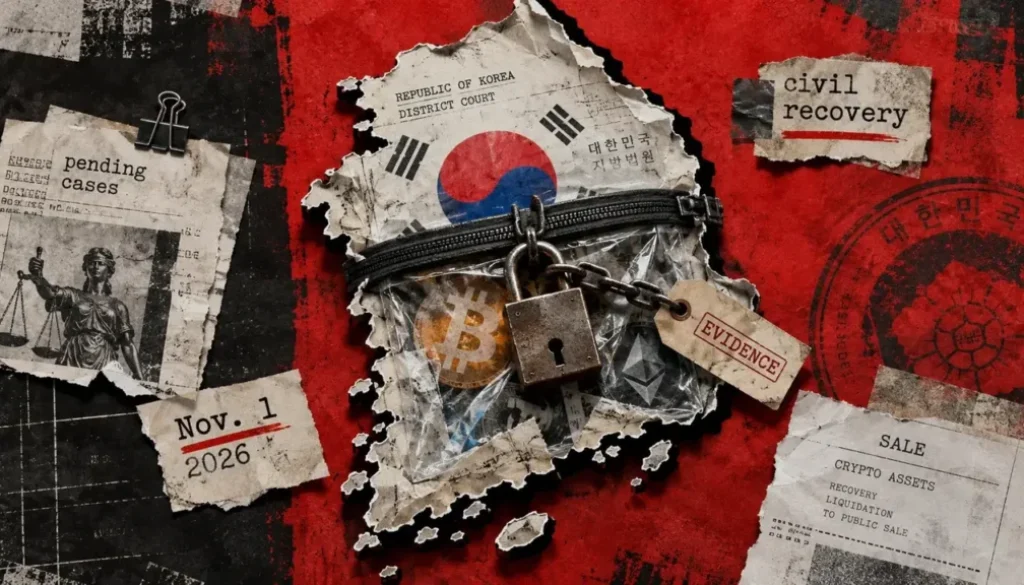
South Korea is establishing formal legal procedures for courts to seize and liquidate cryptocurrency holdings to recover unpaid debts, a move that signals how traditional debt-collection mechanisms are adapting to digital assets. The framework could reshape enforcement outcomes across Asia’s largest crypto markets and set a precedent for other jurisdictions wrestling with how courts should treat holdings that exist outside conventional banking channels.
- South Korea’s Supreme Court promulgated Rule 3280 on October 12, effective November 1, standardizing procedures for freezing, transferring, and selling digital assets in debt recovery.
- Courts may seize directly held cryptocurrency before formal notice to the debtor, and exchanges must disclose holdings and prevent transfers within one week of receiving attachment orders.
- Sales must use prevailing market prices on the transaction date, and debtors retain appeal rights, but enforcement against private-key-controlled assets may prove difficult in practice.
- Nov. 1 Effective date when South Korea’s standardized cryptocurrency seizure and sale procedures take effect nationwide.
- 1 week Timeline for exchanges and custodians to disclose debtor holdings after receiving court attachment orders.
South Korea has established formal procedures allowing courts to seize and sell cryptocurrency holdings to satisfy civil debt claims, according to CryptoSlate. The Supreme Court issued Rule 3280 on October 12, creating standardized procedures for courts to handle cryptocurrency in enforcement actions as digital asset holdings become more common in South Korean debt-recovery cases. The regulations take effect on November 1 and apply to cryptocurrencies held both on exchanges and in private wallets, addressing a gap in legal procedures for assets that can be transferred rapidly outside traditional banking networks.
Courts can seize directly held crypto before formal notice to debtors
The rules allow court officers to take possession of cryptocurrency held directly by debtors before serving formal notice of an attachment order, a provision that narrows the window for debtors to move assets beyond creditors’ reach.
For self-custodied crypto, courts can prohibit transfers and order the assets delivered to an enforcement officer, with that transfer potentially occurring before the attachment order is formally served on the debtor. If the enforcement officer receives the cryptocurrency first, the attachment becomes effective upon receipt. However, the rules acknowledge a practical constraint: enforcement against self-custodied assets may remain difficult where debtors control the private keys required to authorize transfers, meaning seizure does not guarantee the creditor can ultimately access the funds.
Exchanges must disclose holdings and prevent transfers within one week
The framework imposes new disclosure and freeze obligations on exchanges and other custodians handling debtor accounts. Once a court serves an attachment order, the exchange or custodian must prevent transfer of the covered assets to the debtor and prohibit the debtor from disposing of the claim or receiving the cryptocurrency. Creditors can ask courts to compel custodians to disclose information about targeted holdings within one week of receiving the order.
The required disclosure includes whether the custodian recognizes the debtor’s claim, the type and quantity of cryptocurrencies held, and whether other creditors have existing claims or priority rights over the assets.
For cryptocurrencies held on exchanges, creditors can obtain court orders attaching a debtor’s right to receive those assets without needing to take custody themselves. Once the attachment is served, the custodian becomes bound by the freeze, and the disclosure requirement gives creditors a defined mechanism to identify what assets are available for repayment and what competing claims may exist.
Sales use market price on transaction date, debtors retain appeal rights
Once creditors attach cryptocurrency, they can seek court orders to recover its value through multiple methods. Judges may authorize transfers to creditors at court-determined valuations or direct enforcement officers to arrange sales through virtual asset service providers. For exchange-held crypto, the rules permit sales through the custodian, transfers to accounts controlled by enforcement officers, or conversion into assets that can be more easily liquidated.
Sales must use the prevailing market price on the transaction date or another appropriate valuation, creating a defined pricing process for assets whose values can fluctuate sharply during enforcement proceedings. Debtors retain the ability to appeal decisions authorizing asset transfers or sales, which take effect only after becoming final. The regulations also establish procedures for restoring assets when enforcement is withdrawn or canceled, and existing attachment and preservation orders remain valid after November 1, with custodians required to apply the new disclosure, transfer and sale procedures to those cases.
The BlockWest read. South Korea has solved a procedural gap that existed wherever courts held crypto but lacked standardized seizure methods. The framework addresses the speed advantage digital assets hold over frozen bank accounts, though private-key custody remains practically unenforceable. Custodians now face real compliance costs, and debtors face faster liquidation timelines than traditional enforcement would allow.
Watch whether South Korean enforcement officers develop effective practices for valuing and selling seized crypto through licensed exchanges under market conditions, and whether the provision allowing pre-notice seizure of directly held assets survives legal challenge from debtors claiming insufficient due process protection.
BlockWest is a news publication. Nothing here is investment advice. Read our disclaimer and editorial policy.