Standard Chartered offers RLUSD custody in Dubai through regulated bank service
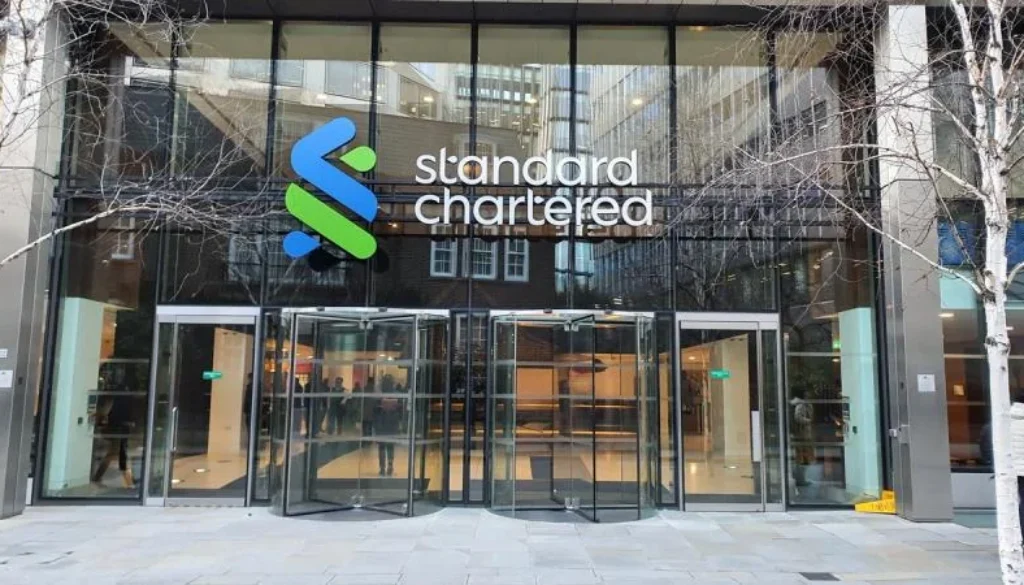
Standard Chartered’s regulated custody offering for RLUSD in Dubai, combined with its planned integration into LMAX’s collateral system, signals institutional appetite for stablecoin infrastructure that separates asset custody from trading execution. The arrangement could accelerate RLUSD adoption as an institutional settlement and collateral asset while expanding the bank’s digital-asset services across key financial hubs.
- Standard Chartered’s Dubai branch now offers regulated institutional custody of Ripple’s RLUSD stablecoin on the XRP Ledger.
- The bank plans to let LMAX Group clients use RLUSD held at Standard Chartered as collateral without transferring it to the trading venue, pending testing and regulatory approval.
- Standard Chartered holds nearly $450 billion in assets under management and has been expanding custody operations across Singapore, Hong Kong, and Dubai.
- $450B Assets under management held by Standard Chartered bank globally
- $150M Financing Ripple provided to LMAX Group in January for infrastructure embedding
CoinDesk reported on Wednesday (October 14) that Standard Chartered’s Dubai branch has begun offering institutional custody of Ripple’s dollar-pegged RLUSD stablecoin on the XRP Ledger. The move provides eligible institutional clients with a regulated bank venue to hold the stablecoin, backed by a global financial institution with nearly $450 billion in assets under management. Standard Chartered also announced plans to work with Ripple and LMAX Group, an institutional trading venue for foreign exchange and digital assets, to enable a collateral integration feature that remains subject to documentation, testing, regulatory requirements and internal approvals.
LMAX collateral arrangement separates custody from execution
The planned arrangement between Standard Chartered and LMAX Group would allow clients to use RLUSD held at the bank to back trades on LMAX’s platform without transferring the stablecoin to the venue. This custody-execution separation could appeal to banks, funds and other institutions seeking to trade with stablecoins while keeping assets housed at a regulated custodian rather than at a trading venue.
Waqar Chaudry, Standard Chartered’s global head of digital assets, securities services and transaction services, said institutional clients want to participate in digital asset markets without compromising asset safeguarding or risk management.
Regulated custody connected to a global systemically important bank is becoming one of the most valuable pieces of infrastructure in digital assets.
Joseph Goh, head of Asia-Pacific at Singapore-based crypto investment bank Areta
Standard Chartered expands custody footprint across Asia-Pacific and Middle East
The Dubai custody offering represents the latest expansion of Standard Chartered’s digital-asset services infrastructure.
Last week, the bank announced plans to offer institutional clients in Singapore custody for selected cryptocurrencies, stablecoins and tokenized real-world assets, following its full acquisition of Zodia Custody earlier this year. Standard Chartered became the first bank to distribute one of Hong Kong’s two regulated stablecoins in August, signaling a broader push into digital-asset infrastructure across the region’s major financial centers.
RLUSD integration deepens Ripple’s institutional market positioning
The collateral integration advances Ripple’s effort to position RLUSD as a settlement and collateral asset for institutions rather than limiting it to payments or spot settlement.
Ripple provided LMAX with $150 million in financing in January as part of plans to embed RLUSD into the group’s infrastructure for institutional trading. The planned LMAX link, if completed, would create another route for RLUSD into the collateral systems that underpin institutional trading operations, broadening the stablecoin’s use cases beyond traditional payment and settlement functions.
The BlockWest read. Standard Chartered’s move signals that custodial infrastructure, not just stablecoin issuance, is becoming a competitive moat in institutional digital assets. The bank’s global scale and regulatory standing matter more than the stablecoin’s network; institutions trust the custody provider more than they trust the blockchain. This favors large, established financial institutions over pure-play crypto platforms.
The collateral integration remains subject to testing, regulatory requirements and internal approvals, with no timeline disclosed for when LMAX clients would be able to use RLUSD held at Standard Chartered as live collateral.
BlockWest is a news publication. Nothing here is investment advice. Read our disclaimer and editorial policy.