Trump administration ties tariff cuts to trade deal completion with 14 partners
The Trump administration’s new tariff framework on 14 trading partners uses rate reductions as explicit incentives to sign trade deals, reshaping the commercial calculus for Vietnam, India, and Singapore. For technology and financial markets, the structure matters more than the headline rates: semiconductors are exempted for South Korea and Taiwan, and implementation could slip until January, leaving room for negotiation.
- Vietnam faces a proposed 35% tariff on excess-capacity goods, falling to 20% if a reciprocal trade deal is reached with Washington.
- India could secure a reduction from 25% to 17% by concluding its long-pending trade negotiation with the United States.
- China retains the option for tariffs to double from 20% to 40% if the USTR determines Beijing is not engaging in bilateral talks.
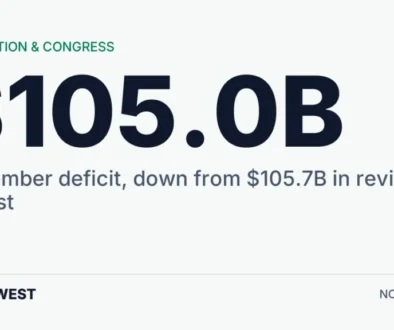
- 35% Vietnam’s proposed excess-capacity tariff, highest among all named trading partners
- 20% China’s capped rate on top of existing 25% tariff from Trump’s first term
- 15% Tariff floor for EU, South Korea, Switzerland, and Taiwan absent trade deals
- $33B U.S. trade surplus with Singapore in 2025, up from $27B in 2024
The U.S. Trade Representative’s Office announced Wednesday that it has determined 14 economies engage in unreasonable practices related to structural excess capacity in manufacturing, triggering Section 301 investigations that justify proposed tariff action. According to CNBC reporting, the tariff framework explicitly offers lower duty rates to countries that complete trade agreements with Washington, creating direct financial pressure to accelerate negotiations. U.S. Trade Representative Jamieson Greer stated the duties could take effect as early as January, though a senior U.S. official indicated the proposal likely will not take effect for several months, creating a window for deal-making.
Vietnam and India face steepest rate gaps, sharpening incentive to negotiate
Vietnam and India stand apart from other targeted economies because the gap between their base tariffs and negotiated rates is wider than peers. Vietnam faces a proposed 35% tariff on excess-capacity goods, the highest among all 14 economies, but that rate collapses to 20% if the two countries complete a reciprocal trade agreement. India’s tariff would fall from 25% to 17% under similar terms. Vietnam’s trade ministry said Thursday it was working with the U.S. to complete a trade deal as soon as possible, signaling the tariff leverage is already moving negotiating behavior.
Wendy Cutler, senior vice president at the Asia Society Policy Institute, said both countries have “a strong incentive” to conclude deals with Washington to secure the lower rates. The difference in outcomes is material for export-dependent economies: a 15-percentage-point swing for Vietnam and an 8-percentage-point gap for India represent substantial cost variations for manufacturers in textiles, apparel, pharmaceuticals, and steel.
China’s capped rate and the January tariff-truce deadline reshape bilateral leverage
China faces a capped tariff rate of 20% on excess-capacity goods, layered on top of an existing 25% tariff imposed during Trump’s first term, bringing potential combined exposure to 45%. The USTR determination explicitly conditions the rate ceiling: if a trade truce reached in South Korea last October is not extended beyond January, China’s rate could double to 40%. Beijing has rejected Washington’s claim that it maintains unreasonable excess-capacity practices.
On Thursday, Chinese Commerce Ministry spokesperson He Yadong called on Washington to “rectify its wrongdoing and return to the right track of resolving issues through dialogue,” while urging implementation of $30 billion in reciprocal tariff cuts agreed in late September. Wendy Cutler assessed that “while not happy, Beijing seems prepared to live with the new rates provided that they don’t exceed 20%,” and said Washington is using the tariff structure to “secure expected shipments of critical minerals and rare earths, and further purchases of U.S. agricultural goods.”
Semiconductor exemptions and implementation delay cushion impact on South Korea and Taiwan
The USTR exempted semiconductors and other electronics from the excess-capacity tariff framework, directly benefiting South Korea and Taiwan, whose economies are heavily concentrated in chip production and related goods.
South Korea faces a 15% excess-capacity tariff cap but escapes levies on memory-chip exports, the sector that dominates its manufacturing base. The USTR report specifically singled out South Korea for its concentration in memory-chip production and what it described as outsized government support, yet chose not to impose tariffs on that sector. Taiwan faces a 15% cap on excess-capacity goods but benefits from exemptions on mobile phones, networking equipment, and other consumer electronics. Mark Williams, chief Asia economist at Capital Economics, estimated Taiwan’s effective tariff rate would rise to about 9% from 6%, a modest shift relative to the headline rate.
The administration’s indication that implementation could slip from an earlier estimate into January gives trading partners a grace period to pursue deal-making before duties take effect.
Singapore disputes findings despite 20-year trade surplus, seeking USTR reconsideration
Singapore faces a maximum potential tariff rate of 20% on excess-capacity exports, net of existing Section 301 duties, which could fall to 10% if it reaches an agreement on reciprocal trade or concludes other negotiations addressing USTR findings, according to Singapore’s Ministry of Energy, Trade and Industry. Singapore’s trade ministry said it disagreed with the USTR’s findings and was “very disappointed” with the proposed action, arguing the determination failed to account for the structure of Singapore’s economy and the city-state’s existing trade surplus with the United States.
Under the U.S.-Singapore Free Trade Agreement, Singapore imposes zero tariffs on U.S. goods. The U.S. has maintained a consistent trade surplus with Singapore for more than 20 years, with that surplus growing to $33 billion in 2025 from $27 billion in 2024. Singapore said it would submit further comments during the public consultation period and urge the USTR to reconsider the findings, though the framework offers a path to lower rates through negotiation of reciprocal trade terms.
The rationale for targeting 14 economies pivots on slow restrictions of Chinese goods and investment
Mark Williams observed that the word “China” appears 253 times in the USTR’s report on Vietnam and 315 times in the document on the European Union, suggesting the tariff action against 13 countries beyond China is fundamentally aimed at Beijing’s market practices. The USTR determinations identify failure to restrict imports and foreign direct investment from China as a foremost criticism of multiple targeted economies.
Williams said the proposal “puts most of the targeted countries back where they were earlier in the year,” after the Supreme Court struck down Trump’s emergency tariffs in February, suggesting limited incremental impact on most economies except those with large gaps between base and negotiated rates.
The 14 economies named in the action are China, the European Union, Singapore, Switzerland, Indonesia, Malaysia, Cambodia, Thailand, South Korea, Vietnam, Taiwan, Bangladesh, Japan, and India. The determinations do not include Mexico or Norway, the USTR said. The document leaves open which of the multiple criticized practices in each economy will be the subject of future enforcement or whether the USTR will modify rates as individual countries pursue negotiations.
The BlockWest read. Markets fixated on headline tariff rates missed the architecture: this framework weaponizes deal-making by offering specific rate reductions for completed agreements, turning tariffs into a closed-door negotiating tool rather than a broad economic tool. For institutions with Asian supply chains, the January deadline signals real time pressure, not political theater. Watch whether Vietnam or India strike deals before January to validate whether tariff leverage actually accelerates trade negotiations or if it hardens positions.
Vietnam’s trade ministry committed Thursday to working with the U.S. to complete a trade deal “as soon as possible,” making the next 60 days pivotal; analysts will watch whether India and Vietnam announce framework agreements before the January implementation window opens, and whether China’s bilateral talks shift if Beijing and Washington do not extend their October tariff truce beyond month-end.
BlockWest is a news publication. Nothing here is investment advice. Read our disclaimer and editorial policy.