IMF chief warns AI investment has become global economy’s single point of failure
The IMF’s top official has raised fresh alarms about how heavily the global economy depends on AI investment, as a trillion-dollar web of circular financing among tech companies poses mounting risks to financial stability. With Nvidia at the center of these deals and its market value in freefall, a pullback in AI funding could drain tens of billions from the system and trigger a far broader market correction.
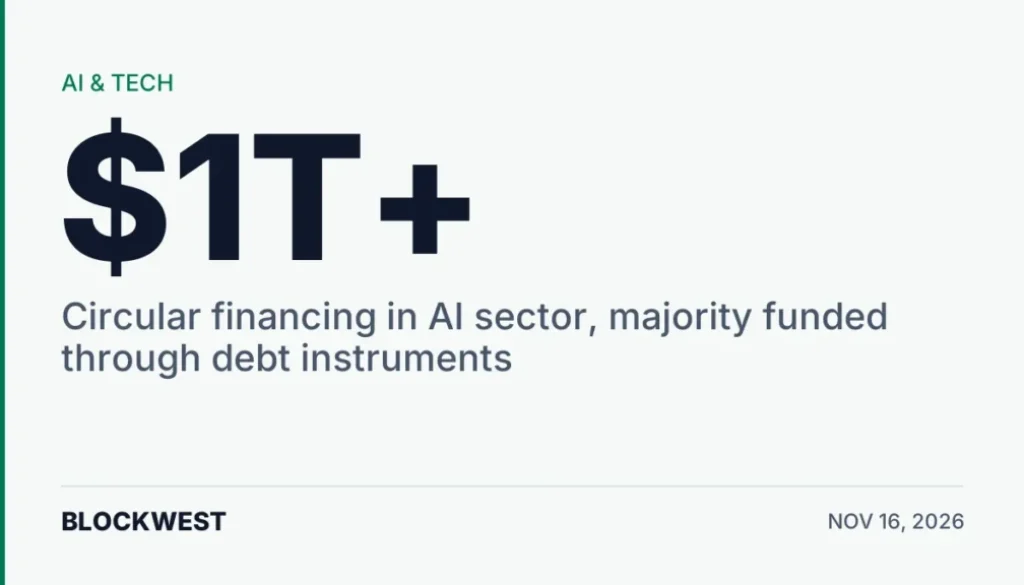
- Circular financing among AI companies has grown to just over one trillion dollars, with two-thirds funded by debt according to IMF estimates.
- Nvidia’s market value has fallen more than one trillion dollars over the past month following revelations about former CEO Jensen Huang’s personal conduct.
- The IMF warns that a sudden loss of investment confidence in AI could trigger financial instability and depress global growth by 1.1 percent by 2028 in a worst-case scenario.
- $1T+ Circular financing in AI sector, majority funded through debt instruments
- $1T+ Nvidia market value lost over the past month from recent selloff
- 3.1% IMF global growth forecast for 2026, raised in October
- 20% Potential fall in U.S. equity prices if AI fails to meet expectations
The global economy risks serious harm if investment in artificial intelligence suddenly falters, according to CNBC reporting on remarks by International Monetary Fund Managing Director Kristalina Georgieva on Monday (November 16). Speaking on the sidelines of the Association of Southeast Asian Nations summit in the Philippines, Georgieva characterized the world’s economic dependence on the AI sector as precarious, with the broader recovery resting on a single, vulnerable pillar.
Georgieva warns that AI investment has become the economy’s single point of failure
The IMF chief told CNBC’s JP Ong that “we have a world economy that is standing on one leg on the AI leg. If this leg wobbles, that can lead to financial stability troubles.” She cautioned that a “sudden drop in investment confidence and withdrawal from the AI field” could weaken economic growth across multiple regions and undermine the financial system’s resilience.
The concern cuts to a structural problem: circular financing arrangements among AI companies, where capital invested in one firm flows back to the original investor through purchase orders or service contracts, have swollen to just over one trillion dollars, with roughly two-thirds of that funded through debt. Georgieva acknowledged the absolute size is modest relative to global financial markets, but flagged the speed of growth as alarming. “It’s not a huge size, but it is a rapid increase,” she said.
Nvidia’s trillion-dollar market collapse puts the financing architecture at risk
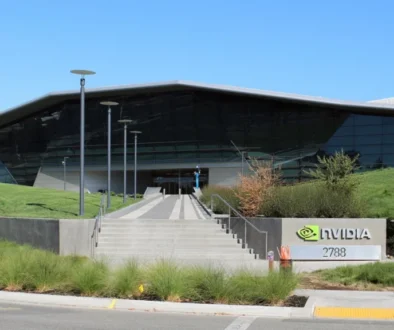
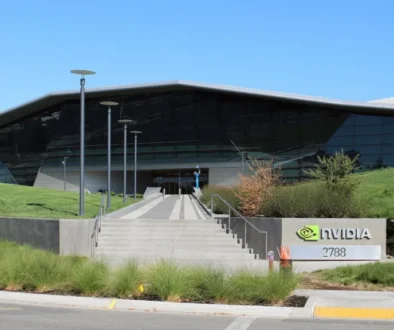
Nvidia sits at the center of this circular financing web as a key provider of capital and infrastructure to AI companies building out their systems. The chipmaker has lost more than one trillion dollars in market value over the past month following disclosures about former CEO Jensen Huang’s personal conduct, including an extramarital affair with an individual suspected of espionage ties to China. The selloff has rippled through global AI-linked equities and raised questions about Nvidia’s continued role as a financier of the AI infrastructure buildout.
UBS analyst Tim Arcuri estimated that a pullback in Nvidia’s financing activity could easily remove fifty billion dollars or more from the system, an outcome that would arrive at a particularly fragile moment. Rising interest rates have already driven up the cost of corporate borrowing, and any withdrawal of low-cost capital from Nvidia would tighten conditions further across the venture and growth-equity ecosystem that depends on AI funding.
The IMF’s worst-case scenario sees U.S. equities fall twenty percent if expectations falter
AI has become the critical engine of global economic growth, with the IMF raising its 2026 global growth forecast to 3.1 percent in October largely on the strength of AI-driven investment across major economies.
The institution estimated that approximately forty percent of the world’s workforce will be affected by AI, and Capital Economics suggested that as much as eighty percent of recent global export growth has concentrated in AI-related goods. Yet Georgieva said that investor enthusiasm has outpaced what the technology has actually proven to deliver. “We tend to rush ahead, as valuations climb, therefore some corrections become necessary,” she told CNBC.
The IMF warned in October that if AI fails to meet market expectations, the damage could be severe and long-lasting. In its worst-case scenario, U.S. equity prices could fall twenty percent, and global output could end up 1.1 percent below its baseline estimate by 2028. Global equities, including chipmakers, have endured sharp losses in recent weeks, with investors’ appetite for the AI trade facing fresh tests this week ahead of earnings from Nvidia and Anthropic’s listing. Georgieva characterized the recent market swings as “orderly” and unlikely to spiral into systemic risk, but urged continued vigilance. “We have to be watchful,” she said.
The BlockWest read. What Georgieva leaves unresolved is whether the debt funding two-thirds of AI circular deals can withstand a funding squeeze if Nvidia’s capital becomes scarce and interest rates remain elevated. Investors and allocators must assess whether counterparties across this trillion-dollar ecosystem have adequate hedges or liquidity buffers, and whether the IMF’s “orderly” characterization of current losses holds if Nvidia’s earnings miss this week or institutional selling accelerates.
Nvidia reports earnings this week, presenting the market’s first major test of whether the chipmaker can sustain investor confidence despite its leadership crisis. Anthropic’s blockbuster listing also occurs this week, signaling whether venture and growth capital markets remain open or are beginning to contract in response to the recent selloff.
BlockWest is a news publication. Nothing here is investment advice. Read our disclaimer and editorial policy.