Nvidia options traders price 7% stock move ahead of earnings report.
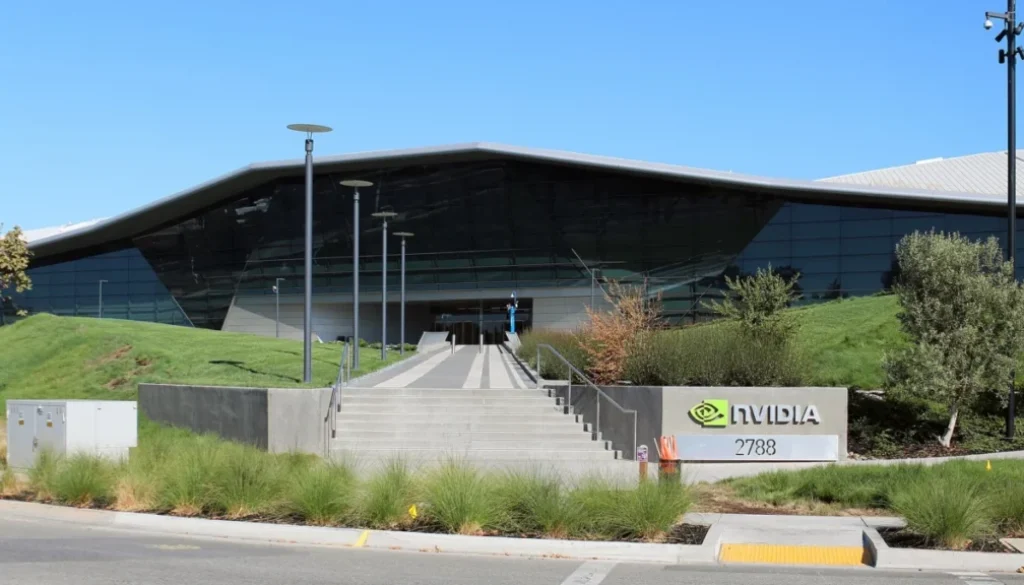
Nvidia’s $2 trillion market cap loss has triggered the highest options volatility around an earnings report in nine months, signaling trader expectations for extreme price movement. The divergence between put and call positioning suggests bulls are repositioning while bears lock in gains, leaving the stock vulnerable to sharp swings in either direction.
- Options traders are pricing a 7% stock reaction after Tuesday’s earnings, the largest implied move since February 2025.
- Implied volatility reached 68 on Monday, up from under 40 in early October, ranking Nvidia among the top 35 most volatile S&P 500 stocks.
- The ratio of open puts to calls has narrowed to 0.87, down from a one-year high of 1.02 two weeks ago, indicating call buying.
- $2 trillion Market value lost since all-time highs in October 2026
- 7% Expected stock reaction after earnings versus 3.2% median move last eight quarters
- 35% Share price decline since hitting all-time highs in October
- 68 Implied volatility Monday versus under 40 in early October
Nvidia faces its earnings report on Wednesday (November 18) as a company in turmoil. The sudden departure of CEO Jensen Huang has wiped $2 trillion from the chipmaker’s market capitalization since it hit all-time highs in October, a loss that ranks the company among the five most valuable firms in the S&P 500 by remaining market cap. CNBC reported that options traders are preparing for extreme volatility, pricing in a 7% stock move after the results, the most aggressive implied move heading into an Nvidia earnings since February 2025.
Options pricing signals largest volatility spike since February 2025 earnings
The 7% expected move dwarfs the 3.2% median reaction across Nvidia’s last eight quarterly reports. Implied volatility in the stock has surged to 68 as of Tuesday (November 17), nearly double the level of under 40 seen in early October. The company now ranks among only the top 35 most volatile stocks in the broader index, a dramatic reversal from its status as one of the market’s most reliable performers during the AI boom.
The last time Nvidia touched higher volatility levels was during President Trump’s tariff announcement in April 2025, when the stock’s volatility peaked above 92. That event, known as Liberation Day, created a multi-year benchmark for how much price swings can widen when systemic risk engulfs the semiconductor sector. Even at current elevated levels, the recent moves fall short of that extreme.
Put-to-call ratio tilts toward calls as bears lock in profits
Mixed signals from options positioning suggest divergent trader sentiment beneath the surface volatility. The ratio of open put contracts to call contracts has narrowed to 0.87 as of Monday, down from a one-year high of 1.02 recorded two weeks earlier and the lowest level since early October. This tightening indicates that traders are rotating away from downside protection and toward bullish calls, even as the stock has lost 35% of its value since October highs.
Yet the picture grows more complex when examining specific contract activity. Of the 5 million options contracts traded on Monday, 3 million were calls. However, SpotGamma data show that the majority of these calls were likely opened by sellers rather than buyers, suggesting traders are selling upside to hedge other positions or lock in profits rather than making fresh bullish bets. This dynamic creates the appearance of call volume without matching bullish conviction.
Structural vulnerability to sharp moves in both directions after earnings
The options market landscape presents hazards for traders positioned in either direction heading into the report. Put contract volume on Monday concentrated heavily in the 155-strike puts that expired at market close the same day, suggesting traders were unwinding downside bets. This has left very few open put contracts at or below the $157 level where the stock closed Monday, meaning any earnings surprise to the downside could find protective positions thin and traders unprepared.
Call buyers face a parallel problem on the upside. Notable open interest exists in call contracts from the 175-strike and higher, implying that traders who bought calls earlier in the decline plan to sell on any bounce that takes the stock past those levels. That concentrated profit-taking could act as a ceiling, capping Nvidia’s recovery even if earnings disappoint less than feared. Nigam Arora, founder of the Arora Report, stated in comments ahead of the report that “longer term, I see significant downside risk unless Nvidia can attract an exceptional leader, someone like Tim Cook or AMD’s Lisa Su.”
Longer term, I see significant downside risk unless Nvidia can attract an exceptional leader, someone like Tim Cook or AMD’s Lisa Su.
Nigam Arora, founder of the Arora Report
Of the $2.3 billion in total options premium traded on Nvidia on Monday, $1.2 billion was tied to puts, reflecting the concentration of downside betting even as the aggregate put-to-call ratio favored calls.
The BlockWest read. Nvidia’s options market is pricing leadership risk as much as earnings risk. Traders have already priced in the worst of the sell-off but lack conviction about recovery, locking in profits at defined strike levels rather than betting on a rebound. The stock will move sharply on Tuesday’s report, but structural barriers embedded in open interest suggest the range of that move is narrower than the implied volatility spike suggests.
Nvidia reports earnings after market close Wednesday (November 18). The largest immediate test for bulls will be whether the stock can clear and hold above 175, where concentrated call open interest suggests profit-taking will intensify.
BlockWest is a news publication. Nothing here is investment advice. Read our disclaimer and editorial policy.