University of Michigan survey shows Americans expect persistent inflation despite stable consumer sentiment
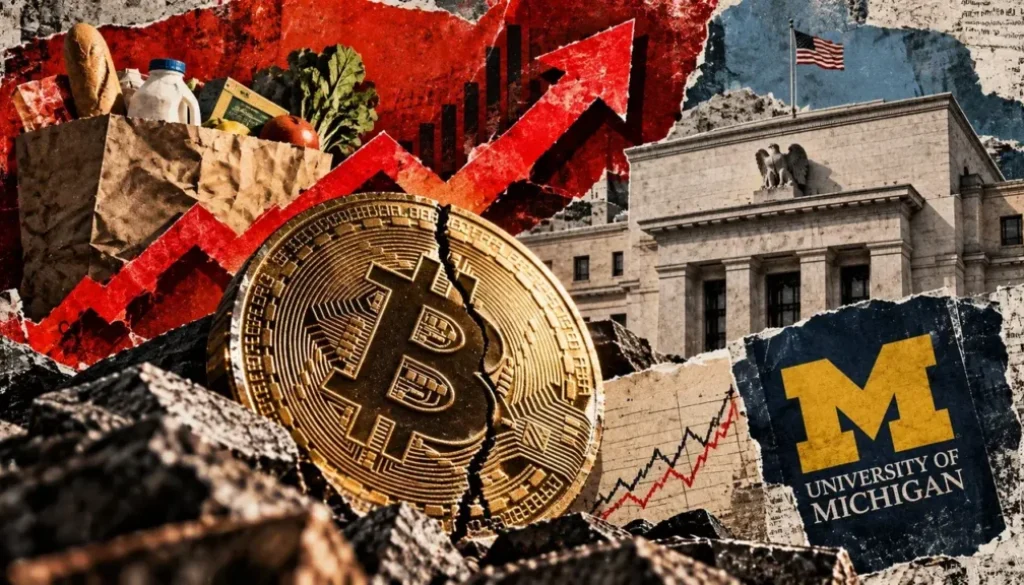
A University of Michigan survey reveals that American consumers expect inflation to remain elevated over the long term, a persistence that could restrain Federal Reserve rate cuts even as headline sentiment holds steady. For Bitcoin investors betting on monetary easing, this disconnect between stable consumer mood and entrenched price expectations represents a hidden headwind to the easier financing conditions the asset class has priced in.
- Long-run inflation expectations reached 3.5% in October, up from 3.4% in September and above 2019 and 2024 levels.
- Year-ahead inflation expectations rose to 4.7% from 4.6%, with both readings matching preliminary October figures.
- Elevated expectations risk prompting consumers to accelerate purchases, reinforcing inflation and narrowing room for Fed monetary easing.
- 3.5% October long-run inflation expectations versus 2% Fed target objective
- 4.7% Year-ahead inflation expectations in October consumer survey
- 48 University of Michigan consumer sentiment index, flat month-over-month
- September 15–16 Date Fed judged expectations consistent with 2% goal
A University of Michigan study released October 23 found that American households expect inflation to persist above historical norms, even as the headline consumer sentiment index remained stable. CryptoSlate reported the findings alongside their implications for monetary policy and digital asset valuations. The survey’s final October reading placed overall sentiment at 48, virtually flat from 48.1 in September, yet year-ahead inflation expectations climbed to 4.7% from 4.6%, while long-run expectations reached 3.5%, up from 3.4% the prior month. Both inflation metrics exceeded comparable readings from 2019 and 2024, according to the survey’s web-interview methodology.
Elevated expectations rooted in tariffs and geopolitical shocks
Survey director Joanne Hsu attributed the sustained inflation expectations to two successive economic shocks: the 2025 tariff escalation and the energy shock associated with the 2026 Iran conflict. Consumers expecting further price increases may accelerate purchases to lock in current prices, a behavior pattern that, if widespread across households, could reinforce actual inflation rather than contain it.
Hsu described the risk of such precautionary spending as material but currently unmeasured within the survey data.
The findings also revealed elevated expectations among households anticipating the largest price increases, alongside greater uncertainty in their forecasts compared with prior years. Sample sizes differ across survey years, yet Hsu noted that the historical comparison held even when cross-checked against official phone-interview data from earlier periods.
Fed sees anchored expectations but some worry about persistence
At its September 15–16 meeting, Federal Reserve participants judged medium- and longer-term inflation expectations consistent with the 2% objective, according to the meeting minutes. Some officials nevertheless expressed concern that prolonged above-target inflation could alter wage- and price-setting behavior among businesses and workers, risking a shift in expectations.
Those Fed judgments predate the Michigan survey’s October findings.
The Fed’s policy framework holds that anchored inflation expectations help inflation return to 2% and support moderate long-term interest rates. If inflation expectations remain entrenched above that level, the central bank faces a narrower policy space to ease rates, a constraint that would pressure asset classes like Bitcoin that benefit from accommodative monetary conditions.
Monetary tightening’s historical drag on crypto valuations
A 2023 International Monetary Fund working paper found that US monetary tightening depresses a shared pricing component across crypto assets by reducing investors’ willingness to take risk, a mechanism resembling its effect on equities. That historical finding provides an empirical bridge between the inflation-expectations problem and potential weakness in Bitcoin and other risk assets: stubborn inflation could keep rates higher for longer, dampening speculative demand.
Hsu cautioned that entrenched expectations remain avoidable, implying that policy action or demand shocks could still interrupt the current trajectory. The question for investors is whether Fed rate cuts will materialize before consumer behavior shifts permanently around inflation assumptions.
The BlockWest read. The headline sentiment figure of 48 may reassure policymakers that confidence remains intact, but Hsu’s warning about precautionary spending suggests consumers are already repricing their real purchasing power expectations. If they accelerate spending to beat inflation, they may inadvertently lock in the very outcome they fear, leaving the Fed trapped between fighting inflation and supporting growth. Bitcoin’s rally has assumed rate cuts; this data suggests the Fed’s hands may stay tied longer than consensus prices.
The next test arrives when the Fed reviews its framework and communications tools against the backdrop of these elevated expectations. The central bank’s commitment to acting forcefully to keep inflation expectations anchored at 2% will face credibility pressure if long-run expectations continue to drift higher in future surveys, particularly if the tariff and energy shocks persist or intensify.
BlockWest is a news publication. Nothing here is investment advice. Read our disclaimer and editorial policy.