S&P Global launches crypto vault risk ratings as Base incident exposes depositor exposure
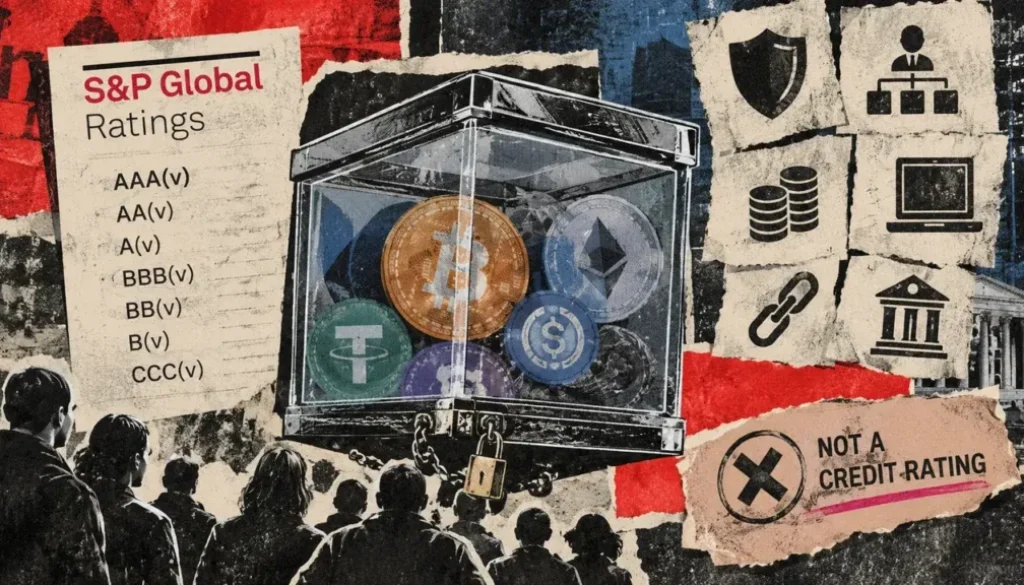
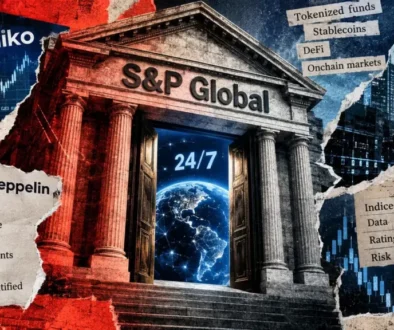
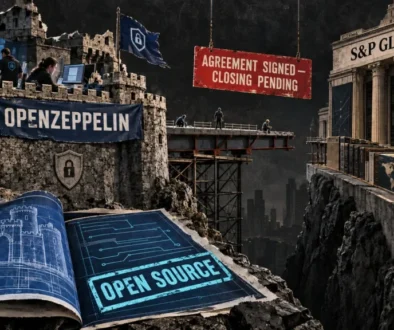
S&P Global has introduced a standardized risk-grading system for crypto lending vaults just as a $6 million security incident on the Coinbase-backed Base network exposed how exposed depositors can be to risks buried inside vault structures. The timing puts a spotlight on a market that has grown nearly sevenfold in two years with little independent scrutiny of what sits between investor deposits and the underlying lending protocols.
- S&P’s Vault Risk Assessment framework launched on October 4, the same day CertiK flagged a suspicious $6 million transaction.
- Crypto vault deposits reached about $10 billion in September, up from roughly $1.5 billion two years earlier.
- S&P says it will begin publishing assessments for individual vaults in future announcements, giving allocators a common benchmark.
- $10B vault deposits in September versus prior-year totals
- $1.5B vault deposits two years earlier, before sevenfold growth
- $6M value of tokens moved in the Base vault incident
- Oct. 4 launch date of S&P’s Vault Risk Assessment framework
According to reporting by CryptoSlate, S&P Global Ratings launched its Vault Risk Assessment framework on October 4, creating a standardized method for comparing the likelihood that investors in crypto lending vaults suffer impairment. S&P said deposits in these products reached about $10 billion in September, up from roughly $1.5 billion two years earlier, a near sevenfold increase over that period.
The launch landed on the same day blockchain security firm CertiK flagged suspicious activity tied to an unnamed vault on Base.
CertiK flags $6 million token movement tied to Base vault
CertiK reported, in a post on X, that a newly deployed proxy borrowed about 1,783 aBaswstETH, worth roughly $6 million, from the vault before redeeming the tokens through Aave for around 1,783 wstETH. The incident did not exploit Aave’s own code.
Instead, it illustrated a risk that becomes more consequential as vaults attract more capital: investors can be exposed to failures in the contracts, permissions and managers positioned between their deposits and the underlying lending protocol, rather than in the protocol itself. That distinction is central to the risk categories S&P’s new framework is built to evaluate.
Vaults pool investor assets and allocate them according to predefined strategies, either automated through smart contracts or directed by human managers known as curators. Depositors receive tokens representing claims on the pooled assets and any returns generated.
S&P’s framework scores six separate failure points
S&P’s assessment evaluates six areas: portfolio credit quality, liquidity mismatch, curator risk, blockchain risk, protocol risk, and vault security and governance. The agency designed the framework to look beyond point-in-time transparency from blockchain transactions and instead assess how a vault might behave as conditions change.
S&P said vault structures can replicate functions associated with money-market, private-credit, private-equity and hedge funds while allowing pooled capital to operate directly on blockchains. That flexibility, the firm noted, introduces additional points of failure: a depositor exposed to a large lending protocol can still suffer losses from a curator’s allocation decisions, thin withdrawal liquidity, altered smart-contract permissions, or vulnerabilities inside the vault itself, as the Base incident demonstrated.
Grades use a “(v)” suffix, with AAA(v) marking the lowest relative risk category. S&P stressed these are not credit ratings, do not assess expected yields, and do not guarantee recovery of capital.
Individual vault assessments are the next milestone
S&P described the grades as forward-looking opinions on the relative risk of impairment, subject to change as eligible assets, smart-contract features or liquidity conditions evolve. That structure allows the agency to downgrade a vault whose risk profile deteriorates even if its on-chain transaction history remains clean to date.
The firm said it will begin publishing assessments for individual vaults in future announcements, following the launch of the broader framework. Those grades would give institutional allocators a common benchmark for comparing vault strategies across a market S&P estimates has grown from $1.5 billion to about $10 billion in two years.
The BlockWest read. Once S&P starts grading named vaults, curators will face a choice allocators have long imposed on fund managers: raise yields to compensate for a weaker grade or tighten controls to earn a stronger one. We expect institutional treasuries, which have mostly sat out onchain vaults over governance uncertainty, to treat a published (v) grade as the minimum diligence threshold before committing balance-sheet capital.
S&P has not set a date for its first individual vault assessments, leaving open which products will be graded first and whether the Base vault involved in CertiK’s $6 million incident will be among them.
BlockWest is a news publication. Nothing here is investment advice. Read our disclaimer and editorial policy.