Metaplanet Acknowledges That Freezing 319 Million Share Insider Pool Worsened Shareholder Dilution

Metaplanet’s board acknowledged that its insider share pool mechanism amplified shareholder dilution, then froze the pool at 319.5 million shares rather than reversing the damage. The company’s chief executive exercised vested options days later, raising questions about the freeze’s effectiveness in protecting existing shareholders.
- Metaplanet’s insider share pool reached 319.5 million shares, roughly a quarter of the company’s total capitalization.
- The pool’s size resulted from a design pegged to 20% of authorized shares, which expanded as the company issued stock to purchase Bitcoin.
- CEO Simon Gerovich exercised 92,000 vested options ten days after the freeze, purchasing 64 million shares worth $101.3 million at the time.
- 319.5M Insider share pool size frozen by the board as percentage of total capitalization
- ¥244 Metaplanet stock price on Tuesday, down 9.96% from prior close
- 43,000 Bitcoin holdings making Metaplanet the third-largest corporate holder
- 1.35B Share count in 2024, up from 153.9 million two years prior
Metaplanet disclosed in an August 18 filing that its insider share pool mechanism amplified dilution for existing shareholders, yet the board’s response fell short of reversing the damage. Instead of canceling or reducing the pool, directors froze it at 319.5 million shares, representing roughly a quarter of the company’s capitalization. The freeze imposed a lockup preventing holders from selling shares until August 17, 2031, but left the pool’s size intact and the underlying economic claims undiminished.
The distinction between a frozen pool and a reduced one carries significant practical implications. A frozen pool prevents further dilution from option exercises but leaves prior dilution in place, while a reduction would restore some economic value to existing shareholders by eliminating unvested or excess claims. Metaplanet’s choice to freeze rather than reduce means shareholders will bear the full weight of 319.5 million contingent shares for seven years, unless the company takes additional action.
How a rescue package ballooned into a Dilution mechanism
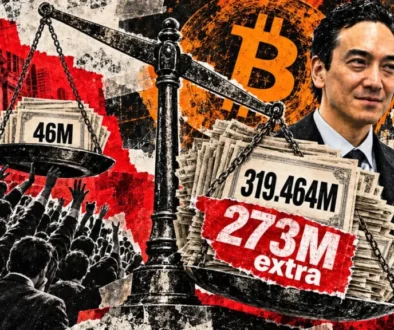
The insider pool originated as a rescue mechanism in 2023 when the company, then called Red Planet Japan, faced potential insolvency. In February 2023, shareholders approved a recovery plan under which seven staff members purchased options at 18 yen per unit, granting them the right to buy shares at 10 yen. The award initially covered 46 million shares but was never fixed at that level.
Instead, the pool was designed to equal 20 percent of all shares the company could authorize and issue. As Metaplanet pivoted to Bitcoin accumulation in April 2024, selling new stock to purchase coins, the authorized share count ballooned from 153.9 million to 1.35 billion over two years. Each capital raise automatically enlarged the insider pool proportionally, which ultimately reached 319.5 million shares by August 2024. Metaplanet itself acknowledged the mechanism’s flaw in its filing, stating that it “amplifies the dilution borne by existing shareholders.”
The mechanism reflects a broader corporate governance challenge in high-growth companies. Many firms use percentage-based equity pools to ensure insider incentives scale with the business, but this approach can backfire when companies make dramatic pivots or engage in aggressive capital raises. The Bitcoin acquisition strategy, while potentially value-accretive to the business, created unintended consequences for share mathematics that management later recognized as problematic.
CEO exercises options days after freeze takes effect
CEO Simon Gerovich exercised 92,000 vested rights ten days after the freeze, acquiring 64 million shares for 640 million yen (approximately $4.16 million in cost basis) that were valued at 15.6 billion yen ($101.3 million) on the day of exercise.
The timing underscored lingering shareholder concerns about the freeze’s protective value. Gerovich’s personal stake rose to 6.2 percent following the transaction, a position built through an insider compensation structure that rewarded executives for issuing shares. The exercise occurred despite management’s own public acknowledgment that the pool’s mechanics amplified shareholder harm.
Such rapid exercises following dilution acknowledgments are common in equity-heavy compensation structures, where executives maximize the value of vested awards before market sentiment shifts. Gerovich’s exercise within ten days of the freeze announcement suggests that insiders viewed the board’s action as unlikely to prevent future capital raises or reduce existing claims, making immediate option conversion an attractive strategy.
Metaplanet’s market valuation stood at approximately $2 billion as of the filing, while its Bitcoin holdings of 43,000 coins were valued at roughly $3.4 billion with Bitcoin trading near $78,533. The company’s insiders therefore held a claim on a quarter of an equity value that trailed the underlying asset base, creating persistent tension between shareholder interests and insider economics.
Investor disagreement over pool size and Treasury performance
David Bailey, a Bitcoin executive who became a shareholder in 2024, argued that a 20 percent insider pool was defensible given Metaplanet’s strong treasury performance. Bailey noted that Metaplanet stock performed exceptionally well as corporate Bitcoin holders gained traction, and characterized the pool size as reasonable in that context.
Metaplanet’s financial metrics partially support Bailey’s claim: Bitcoin per 1,000 shares rose roughly 43-fold over two years, even after accounting for the dilutive effect of vested options.
However, the market’s valuation gap suggests limited investor confidence in the offset. All Metaplanet equity trades at roughly $2 billion, while the company’s coins alone represent $3.4 billion in value before accounting for debt or other liabilities. This valuation discount implies the market attributes negative value to corporate overhead, cash drag, or other factors, making the insider pool’s economic claims a more visible target for shareholder frustration.
Existing shareholders have publicly identified the 273 million excess shares in the pool as the recovery mechanism they seek, indicating minimal acceptance of Bailey’s calculus. The gap between his view and shareholder sentiment reflects a classic tension in Bitcoin-focused corporate strategies: the assets may appreciate sharply, but equity structures can dilute gains unpredictably, especially when insider compensation ties to the capital base itself.
Metaplanet’s board stated it would maintain the frozen pool through the 2031 lockup period. The critical next test arrives if the company issues additional stock to expand its Bitcoin position, triggering renewed questions about whether a frozen pool can coexist with further capital raises, or whether the board faces pressure to reverse prior dilution. Investors will likely scrutinize any new equity issuance to determine whether the freeze was merely a temporary concession or a genuine commitment to limiting insider claims on future growth.
BlockWest is a news publication. Nothing here is investment advice. Read our disclaimer and editorial policy.