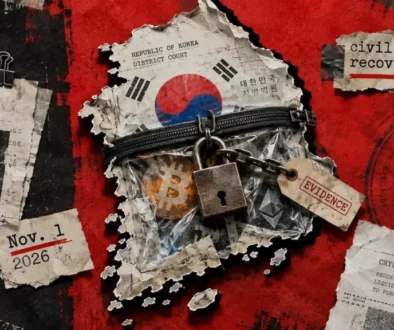
London court applies Chinese law to seized bitcoin, strengthening UK Treasury’s claim
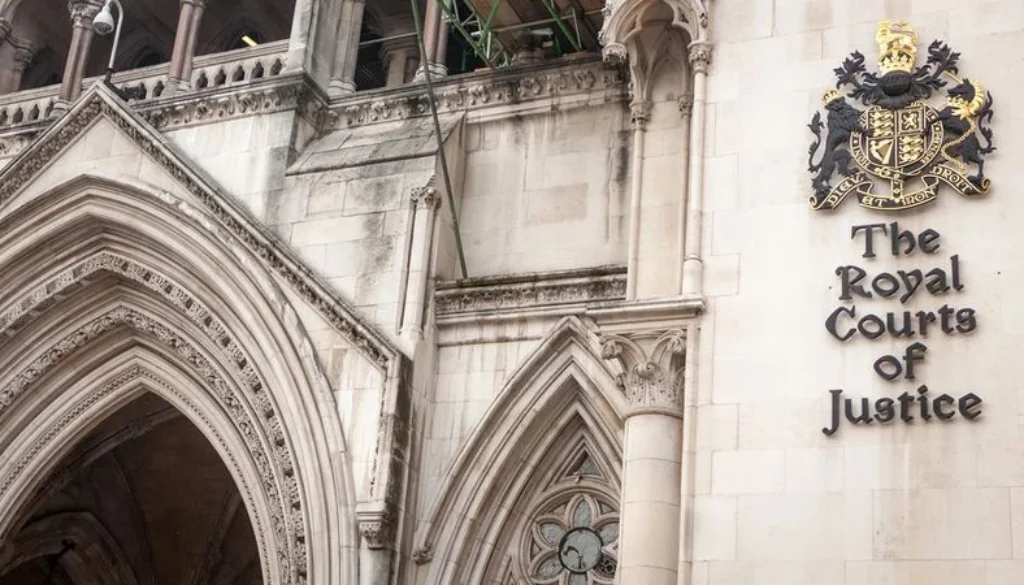
A London court has ruled that Chinese law, not English law, governs claims by defrauded investors to 61,000 bitcoin seized by British authorities, dramatically narrowing their path to recovery. The decision substantially improves the odds that the UK Treasury will retain the multi-billion-pound cache, though victims’ lawyers are appealing.
- 61,000 bitcoin worth approximately £3.8 billion ($5 billion) seized by London Metropolitan Police in the investigation of Zhimin Qian.
- Qian pleaded guilty to defrauding over 128,000 investors through a Ponzi scheme between 2014 and 2017 before converting proceeds to bitcoin and fleeing to Britain in 2017.
- The ruling does not determine final ownership but substantially strengthens the British government’s legal position to retain the seized cryptocurrency.
- £3.8 billion Value of seized bitcoin at time of court ruling decision
- 128,000+ Number of Chinese investors defrauded by Zhimin Qian’s Ponzi scheme
- 2014-2017 Years during which the Tianjin Lantian Gerui fraud operated in China
- $25.8 billion Value of cryptocurrency held by US government addresses according to Arkham Intelligence
CoinDesk reported that Mr Justice Mark Turner of the London High Court ruled Monday that Chinese law governs property claims to 61,000 bitcoin seized during the Metropolitan Police investigation into Zhimin Qian. Qian ran a massive Ponzi scheme through her company, Tianjin Lantian Gerui Electronic Technology, defrauding more than 128,000 investors between 2014 and 2017. She converted the stolen proceeds into bitcoin and fled to the United Kingdom in 2017, where authorities eventually seized the cryptocurrency worth approximately £3.8 billion ($5 billion) at the time of the ruling.
London court applies Chinese law to victims’ claims after finding fraud occurred entirely in China
The victims had argued that English law should apply to their claims, a position that could have given them stronger property rights over the seized bitcoin. However, the judge determined that because the fraud scheme, investor losses, and fraudulent representations all occurred within China, Chinese law rather than English law must govern the property claims.
The relevant damage occurred in China. The applicants parted with their money in China. The alleged fraudulent representations were made in China. The contractual relationships thereby induced were entered into in China. The immediate economic consequences of the alleged wrongdoing were likewise suffered in China.
Mr Justice Mark Turner, London High Court
Ruling narrows victim recovery path but does not finalize ownership
The decision does not finally determine who will retain the seized bitcoin. However, it substantially narrows the route through which victims can pursue recovery claims, which increases the likelihood that the British government will eventually keep most of the cryptocurrency. The Crown Prosecution Service said a further hearing will determine whether any victims can establish an interest in the bitcoin.
According to the Financial Times, the victims’ lawyers are appealing the judgment.
US already holds billions in seized cryptocurrency as strategic asset
The UK’s handling of seized crypto contrasts with the US approach. The United States established a strategic bitcoin reserve in March 2025 that includes bitcoin and other cryptocurrencies seized in enforcement actions, with no single token acquired using taxpayer money. Addresses linked to the US government hold $25.8 billion worth of cryptocurrencies, according to blockchain data firm Arkham Intelligence, demonstrating how seized assets have become institutionalized within the federal balance sheet.
The BlockWest read. We’re watching how governments treat seized crypto as a policy asset class separate from enforcement tools. The UK court’s reasoning on jurisdictional property claims may reshape how cross-border fraud victims pursue claims against seized digital assets held by other nations, setting precedent for future cases.
The Crown Prosecution Service is scheduled to hold a further hearing to determine whether any of the defrauded investors can establish an interest in the seized bitcoin, while victims’ lawyers pursue their appeal of Mr Justice Turner’s decision.
BlockWest is a news publication. Nothing here is investment advice. Read our disclaimer and editorial policy.