Federal Reserve survey names artificial intelligence as top financial system risk
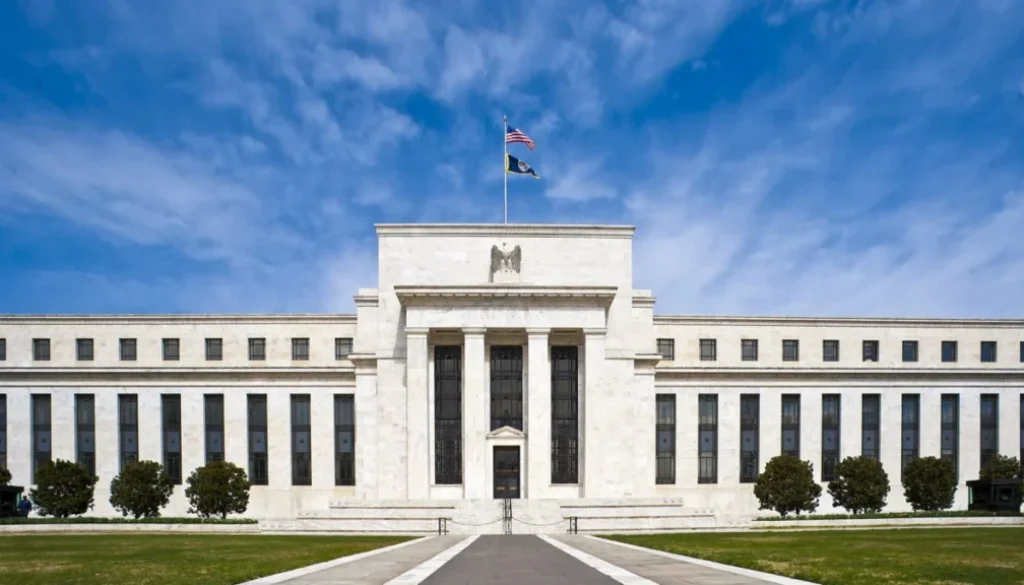
The Federal Reserve’s latest financial stability survey reveals artificial intelligence has overtaken all other risks as the primary threat to markets and institutions. The finding underscores growing concern among policymakers about AI’s role in inflating asset valuations, creating cybersecurity vulnerabilities, and enabling novel forms of leverage.
- 87% of survey respondents identified AI as a salient risk, up sharply from 50% in spring 2026
- Three specific AI concerns dominate: elevated equity valuations, cybersecurity threats from state actors and frontier models, and complex AI-related financing structures
- Risk asset correction ranked second at 52% of respondents, followed by higher long-term rates at 48%
- 87% Of survey respondents citing AI as salient risk versus 50% in spring
- 52% Of respondents naming risk asset correction as major threat to stability
- 56% Of midterm voters saying data centers mattered crucially or majorly in their choice
- 2013 Last year hedge fund leverage reached current highest levels since then
Threats stemming from artificial intelligence have emerged as the dominant concern in the Federal Reserve’s twice-yearly survey of financial system risks, released Saturday (November 14). According to CNBC’s reporting, respondents cited three distinct areas where AI poses danger to market stability: inflated equity valuations that could trigger sharp corrections if earnings disappoint, cybersecurity vulnerabilities created both by malicious state-sponsored attacks and by frontier AI models themselves, and previously unknown forms of leverage embedded in AI-related financing arrangements. The survey period extended through October 28, capturing sentiment just days before the midterm elections in which data center expansion proved to be an unexpectedly salient issue among voters.
AI concerns surge past all other financial risks in Fed survey
The jump in AI-focused worry reflects both the rapid pace of technological deployment and mounting uncertainty about the sector’s financial architecture. Eighty-seven percent of survey respondents flagged AI as a salient risk, a steep climb from 50 percent when the Fed conducted its spring survey. No other threat category came close to matching that level of concern. Risk asset correction ranked a distant second at 52 percent of respondents, while elevated long-term interest rates, cyberattacks broadly construed, and fiscal debt sustainability each drew mentions from between 43 and 48 percent of those surveyed.
The positioning of AI above traditional macroeconomic dangers reflects the speed with which the technology has reshaped investor portfolios and corporate balance sheets. Market participants and institutional investors surveyed include economists, analysts and other financial sector sources who track systemic risk across multiple asset classes and time horizons.
Equity valuations and financing structures create distinct AI-related vulnerabilities
The survey identified valuation risk as the foremost concern, with respondents worried that lower-than-expected earnings could force a rapid repricing downward in equity markets. This reflects the fact that many AI-focused companies, particularly the so-called hyperscalers that train and deploy large language models, have seen their share prices advance well ahead of demonstrated profitability. A market correction on that scale would ripple across institutional portfolios and potentially trigger forced selling in related assets.
Cybersecurity threats occupy equal standing with valuations in respondents’ minds, driven by two separate vectors. Sophisticated state actors have intensified their targeting of financial networks, while the rapid advancement of frontier AI models introduces novel attack surfaces that existing security infrastructure may not adequately address. The third major concern involves novel financing structures tied to AI development and deployment, where leverage and interconnectedness remain poorly understood by market participants and regulators alike.
Hedge fund leverage and concentrated bets raise stability questions
The survey noted that hedge fund leverage has reached its highest level since 2013, with that exposure concentrated among a relatively small group of funds.
This concentration risk compounds the vulnerabilities posed by AI itself, since a significant portion of hedge fund capital has migrated into AI-related positions across semiconductors, software, and infrastructure. The report found the financial system otherwise stable on traditional measures, though the combination of elevated leverage in a concentrated corner of the market alongside surging AI-related debt creation suggests multiple pressure points could activate simultaneously under adverse conditions.
The BlockWest read. We see a Fed survey that flags AI-related financing as a systemic risk but does not yet spell out what regulators plan to do about leverage in those structures. The concentration of hedge fund positions and the opacity of AI-financing arrangements together create the conditions for a sharp repricing if sentiment shifts, particularly if earnings disappoint relative to current valuations.
Watch whether the Federal Reserve’s next Financial Stability Report, due in May 2027, includes specific guidance on AI-related leverage limits or disclosure requirements for lenders and investors. The central bank has not yet announced whether it will use supervisory tools or rulemaking to address the financing structures respondents identified as risks, leaving the scope and timing of regulatory response as the next critical question for market participants holding AI-exposed portfolios.
BlockWest is a news publication. Nothing here is investment advice. Read our disclaimer and editorial policy.