Congress expands insider trading probe to three crypto platforms

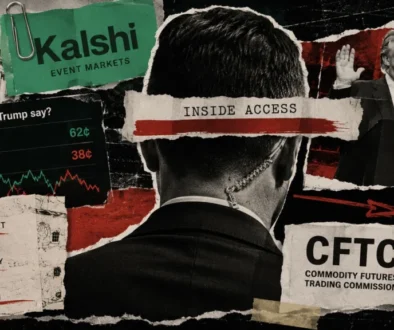
Congress is expanding its insider trading investigation across prediction market platforms, adding three major crypto and derivatives exchanges to an existing probe that has already ensnared two platforms. This escalation signals lawmakers’ concern that trading safeguards across the sector remain inadequate to prevent bad actors from exploiting nonpublic information.
- House Oversight Chairman James Comer sent letters to Hyperliquid, Crypto.com, and PredictIt owner Aristotle Exchange on Tuesday.
- A Hyperliquid trader placed a $1.1 billion short in Bitcoin and Ether one minute before Trump’s October 10, 2025 tariff announcement, profiting over $150 million.
- The investigation now spans five platforms total, following a U.S. Army officer’s alleged use of classified information to profit about $400,000 on Venezuelan political bets.
- $1.1B Short position placed minutes before nonpublic Trump tariff announcement on Hyperliquid
- $150M+ Profit generated from the tariff-timed short as leveraged positions collapsed
- $400K Proceeds from alleged insider trading by U.S. Army Master Sergeant Gannon Ken Van Dyke
- 80+ Polymarket users identified with suspiciously timed bets
BeInCrypto reported that House Oversight Chairman James Comer has opened a formal investigation into three additional prediction market and crypto trading platforms over suspected insider trading activity. The move expands a probe that the House Committee on Oversight and Government Reform already initiated in May 2025 targeting Polymarket and Kalshi. Comer’s latest letters, sent Tuesday, are directed at Hyperliquid, Crypto.com, and PredictIt operator Aristotle Exchange, bringing the total number of platforms under Congressional scrutiny to five.
A $1.1 billion short placed one minute before Trump’s tariff announcement
The catalyst for the expanded probe centers on a single, precisely timed trade. On October 10, 2025, President Trump posted that China would face 100% tariffs. Minutes before that announcement became public, a Hyperliquid trader had already placed a massive short position worth approximately $1.1 billion in Bitcoin and Ether, according to an Investing.com analysis tracked by Comer.
The wallet in question added to the short one minute before Trump’s post went live. As the tariff news roiled markets, $19 billion in leveraged bets were wiped out, and the short position generated more than $150 million in profits. On-chain analysts linked the wallet to Garrett Jin, a former BitForex CEO, who denied engaging in insider trading and said he had traded on behalf of a client.
This transaction, precisely timed to a nonpublic government decision, executed on a platform with apparently no identity verification or mechanism to refer the responsible party to U.S. law enforcement, mirrors a pattern of insider trading the Committee is investigating across the prediction market sector.
James Comer, House Oversight Committee Chairman, in a letter excerpted by CNBC
Congress demands identity verification and suspicious trade monitoring from five platforms
Comer’s letters to all five platforms request detailed information about Know Your Customer identity checks, geographic enforcement mechanisms, and procedures for detecting anomalous trading activity. Kalshi and Polymarket have already submitted nearly 1,000 documents in response to the earlier investigation.
The investigation reflects a growing pattern of abuse across the sector. A New York Times investigation identified more than 80 Polymarket users who placed bets timed suspiciously close to undisclosed events. Most seriously, a soldier was charged in April with using classified information about Operation Absolute Resolve–the operation that led to Venezuelan President Nicolas Maduro’s capture–to place wagers that generated about $400,000 in profits.
“As online prediction platforms grow and become more mainstream, some bad actors have exploited the platforms to make thousands of dollars by placing bets based on nonpublic information,” Comer said.
What the five platforms must now disclose to Congress
Crypto.com operates a regulated prediction market arm allowing U.S. users to bet on politics, sports, and economic outcomes. PredictIt has offered political wagers since 2014. Neither platform has yet been required to respond to Congressional requests, unlike Kalshi and Polymarket, which have already handed over substantial documentation.
The Committee’s formal letters ask each platform to explain how it verifies the identities of domestic and foreign account holders, enforces geographic restrictions on users, and monitors for suspicious trading patterns. The documents do not specify a deadline for response, leaving unclear when Congress expects to receive materials or issue subpoenas if platforms decline to cooperate voluntarily.
The BlockWest read. The common thread across all five platforms is the absence of meaningful friction between nonpublic government information and betting contracts. Comer’s focus on identity verification and anomaly detection treats the symptom, not the disease: prediction markets that settle on government decisions will attract those with access to advance word. The real question is whether any platform can credibly detect insider trading when the timing itself is the only telltale sign.
Comer has not announced a deadline for the three newly targeted platforms to respond, and it remains unclear whether the Committee will pursue subpoenas or formal compulsion if Hyperliquid, Crypto.com, and Aristotle Exchange decline to cooperate.
BlockWest is a news publication. Nothing here is investment advice. Read our disclaimer and editorial policy.