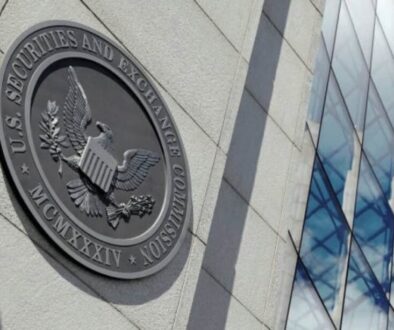
SEC Commissioner Hester Peirce departs Friday, removing agency’s leading crypto advocate

Hester Peirce, the SEC’s most consistent voice for regulatory clarity in crypto, departs Friday (October 2) after years pushing for defined rules amid agency resistance. Her exit leaves the commission severely understaffed and removes a key advocate for industry-friendly policy as tokenized securities enter early trading phases.
- Peirce’s final day is October 2, ending her tenure as the SEC’s leading crypto advocate under two prior administrations.
- The SEC issued an innovation exemption Friday allowing tokenized U.S. stocks listed on major exchanges to trade onchain through designated venues.
- Her departure leaves only two commissioners on the SEC, allowing the agency to function with a two-member quorum and casting doubt on Democratic representation.
- Oct. 2 Final day for SEC Commissioner Hester Peirce, marking end of her crypto advocacy era
- 2 Commissioners remaining on SEC after Peirce’s departure, down from five-member quorum standard
- 5 years Duration of innovation exemption for tokenized securities trading onchain
- 2019 Year Peirce publicly acknowledged her “Crypto Mom” nickname during enforcement-heavy SEC era
CoinDesk reported Friday that SEC Commissioner Hester Peirce posted her resignation on X, ending a decade-long push for crypto regulation that survived two prior administrations hostile to digital assets. Peirce, widely known as “Crypto Mom” within the industry, exits as the SEC simultaneously released a landmark exemption allowing tokenized stocks to trade on automated market maker platforms without triggering full securities exchange registration.
Peirce’s departure removes the SEC’s most persistent voice for regulatory clarity
Peirce served under SEC Chairs Jay Clayton, a Republican who pursued aggressive enforcement, and Gary Gensler, a Democrat who accelerated legal actions against major crypto platforms. Throughout both tenures, she advocated for defining rules rather than pursuing case-by-case enforcement, a position that isolated her from agency leadership. In a 2019 speech during the enforcement-resistant era, Peirce acknowledged her industry nickname and criticized the agency’s approach directly.
The only guidance out of the SEC is a parade of enforcement actions and a set of staff guidance documents and staff no-action letters.
Hester Peirce, SEC Commissioner, 2019 speech
Her influence expanded notably under the Trump administration, where she led the SEC’s newly formed Crypto Task Force and worked with Chairman Paul Atkins, who took office after her appointment to lead the effort.
The innovation exemption opens onchain trading for tokenized stocks in a limited trial
On Friday, the SEC issued an order granting time-limited exemptions designed to permit onchain trading of stocks listed on major U.S. exchanges through newly designated “tokenized securities venues,” or TSVs. These venues use automated market maker liquidity pools and operate without triggering traditional exchange registration requirements under the Securities Exchange Act of 1934. Liquidity providers supplying capital to TSVs also received exemptions from dealer registration.
The exemptions are limited to five years, with the SEC framing the initiative as an interim step to gather data on how tokenized stock trading functions before developing permanent rules. The agency stated that U.S. persons, both established firms and new entrants, can participate. Issuers retain the right to opt out of TSV trading. According to Peirce’s statement on the order, the exemption does not apply to truly decentralized finance systems driven purely by automated software, which do not require an exemption under her interpretation of securities law.
Peirce’s exit creates acute staffing challenges for the five-member agency
Her departure reduces the SEC to just two members: Chairman Paul Atkins and Republican appointee Mark Uyeda.
SEC rules allow two commissioners to constitute a quorum during vacancies, meaning the agency can continue operating legally at severely reduced capacity. However, the Trump White House has not yet nominated Democratic replacements to the SEC or its sister agency, the Commodity Futures Trading Commission, leaving open whether vacancies will be filled. The absence of Democratic appointees marks a stark departure from the agency’s traditional structure and raises questions about future policy direction on enforcement and rulemaking under a two-member body.
Peirce’s career at the agency encompassed numerous policy statements and guidance documents covering mining, staking, memcoin classifications and asset definitions meant to clarify which regulator holds authority over different crypto asset types. She also championed Regulation Crypto Assets, which established a pathway for offering crypto assets without triggering stringent securities regulations.
The BlockWest read. Peirce leaves behind a framework designed to enable institutional participation in digital assets, not to eliminate regulatory oversight. For allocators and market infrastructure builders, the departure removes her voice but preserves the structures she helped establish: the Crypto Task Force continues, the innovation exemption takes effect immediately, and interim rules remain enforceable. The real risk lies in enforcement philosophy, not rule clarity, under a skeleton-crew commission.
The open question now pivots to the SEC’s staffing path and policy momentum. Will the Trump administration nominate Democratic commissioners to restore a full five-member board, or proceed with temporary two-member operations that could accelerate crypto-friendly decisions but face credibility questions? Atkins’ next public statement on commission priorities will signal whether Peirce’s regulatory architecture survives unchanged or whether enforcement intensity shifts in her absence.
BlockWest is a news publication. Nothing here is investment advice. Read our disclaimer and editorial policy.