Otter.ai raises $320 million from General Catalyst’s growth fund, its first new capital since 2021

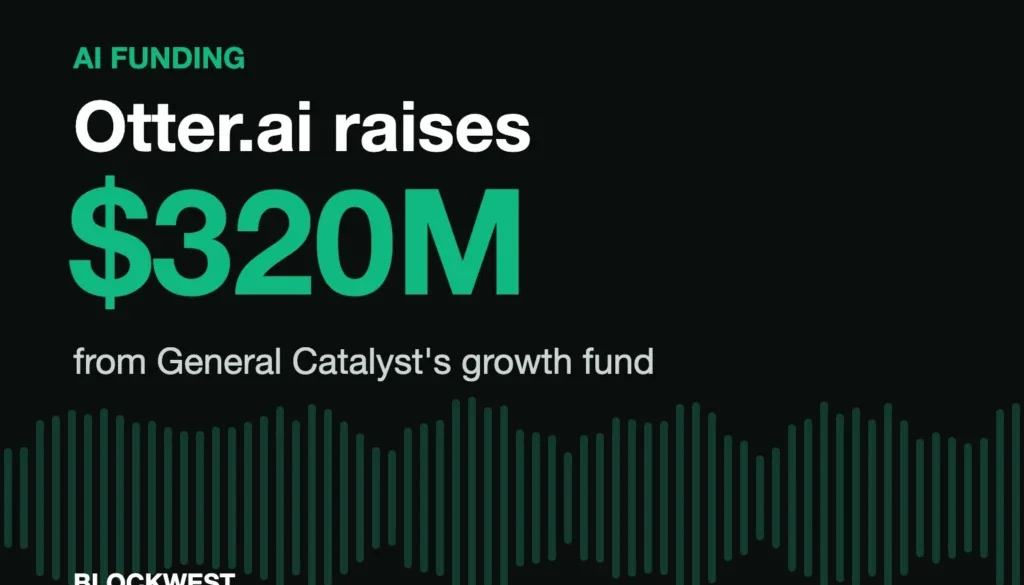
Otter.ai has raised $320 million from General Catalyst’s Customer Value Fund, more than six times what the meeting assistant raised in its first decade. The structure matters as much as the size: the money is non-dilutive and earns its return from the results of Otter’s marketing spend, a bet that AI meeting software has become predictable enough to finance like a growth asset rather than a startup.
- The $320 million comes from General Catalyst’s Customer Value Fund (CVF), which provides capital for customer acquisition without taking equity and is paid back from how that spending performs.
- Otter passed $100 million in annual recurring revenue last year and says it now has 40 million users, up from 25 million a year earlier.
- The company plans to spend on enterprise sales, international expansion and new products, including pre-meeting briefs and a “Live Assist” feature that answers questions during calls.
- $320M Non-dilutive capital from General Catalyst’s Customer Value Fund
- ~$50M Otter’s total funding before this deal, with its last round in 2021, per PitchBook
- $100M+ Annual recurring revenue Otter passed last year
- 40M Users to date, up from 25 million a year earlier
Otter announced the financing on Tuesday (October 20), TechCrunch reported. The company did not disclose a valuation. Before this deal it had raised about $50 million in total, according to PitchBook, with nothing new since 2021.
The money is tied to marketing results, not equity
General Catalyst’s CVF does not buy shares. It funds a company’s customer acquisition and earns a return based on how that spending performs. For Otter’s founders and earlier backers, that means no dilution. For General Catalyst, it is a bet on unit economics: the structure only works if the cost of winning a customer stays reliably below what that customer pays over time.
“Voice is one of the biggest untapped opportunities in enterprise AI,” said Pranav Singhvi, partner and co-founder of CVF.
Otter did not give updated revenue, monthly active user or churn figures, which are the numbers that will decide whether the structure pays off.
A crowded field after almost a decade in the market
Otter has been operating for nearly ten years, but its market has filled up fast. Competitors named in the coverage include Fireflies.ai, Granola, Read AI, Circleback and Quill, along with Superhuman, which bought Fathom, and voice and scheduling tools such as Wispr and Calendly. Zoom, Microsoft and Google also build AI note-taking directly into their meeting products.
Otter’s answer is to move past transcription. Its OtterPilot assistant launched in 2023, and the company now offers search across enterprise apps and integrations with other AI tools. It is testing a pre-meeting brief that pulls context from past conversations, and Live Assist, which lets users question the assistant mid-call. New chief marketing officer Alex Gay, who joined from Superhuman, said meetings are “terribly inefficient” because people spend the first twenty minutes recapping earlier discussions.
The BlockWest read. We read this financing as a sign that some AI application revenue is now steady enough to be funded like an operating business rather than a moonshot. Revenue-based growth capital lets a profitable-looking app company scale without giving up ownership. The risk is bundling: if Microsoft, Google and Zoom keep giving AI notes away inside tools companies already pay for, each marketing dollar buys fewer lasting customers, and a structure that is repaid from marketing results will show that quickly.
Next to watch: whether Otter discloses updated ARR or a valuation, the rollout of Live Assist and pre-meeting briefs, large enterprise contracts, and whether other AI app companies choose revenue-based capital over equity rounds.
BlockWest is a news publication. Nothing here is investment advice. Read our disclaimer and editorial policy.