Grayscale: Zcash Could Become More Important as AI Poses Risks to Financial Privacy
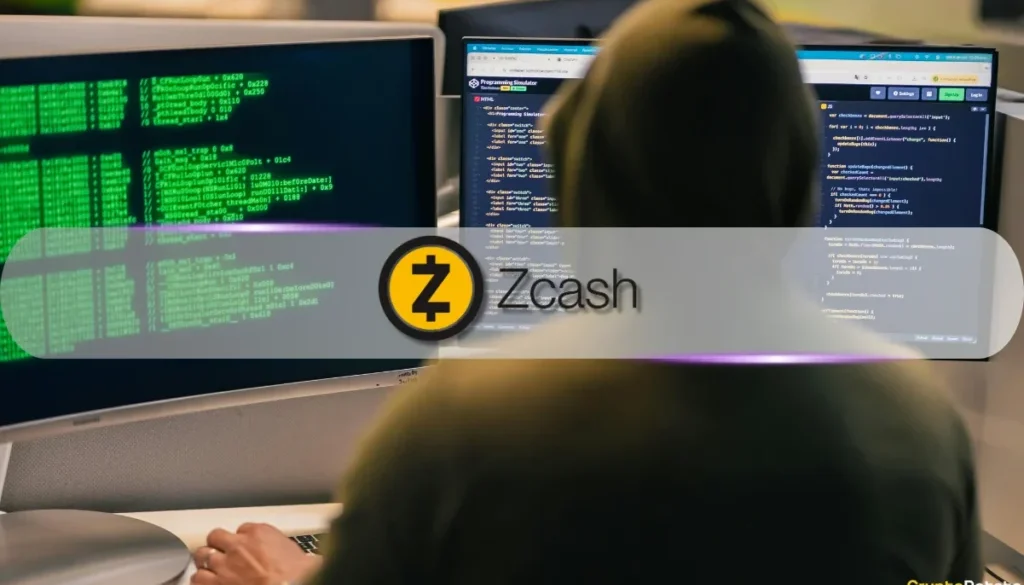
Grayscale’s research suggests artificial intelligence will amplify demand for blockchain privacy solutions, positioning Zcash as a potential beneficiary as AI tools make de-anonymization of public blockchains easier. The investment firm converted its Zcash Trust into a spot ETF this month, betting the token’s current valuation leaves room for significant gains.
- Grayscale Head of Research Zach Pandl expects AI to create new privacy threats and drive demand for privacy solutions like Zcash.
- Zcash uses zero-knowledge cryptography in shielded transactions to conceal both transaction addresses and amounts, unlike Bitcoin’s fully transparent ledger.
- ZEC gained nearly 80 percent over the past month and is currently trading around 850 dollars per token.
- 80% ZEC price gain over the past month compared to longer-term performance
- $850 Current ZEC trading price versus analyst target of $1,800
- Aug 25 Launch date of Grayscale’s new spot ZEC ETF on NYSE Arca
- 20x ZEC surge over the past year versus sub-1% Bitcoin market cap share
Grayscale released a research report identifying artificial intelligence as a catalyst for a new wave of financial privacy concerns, with implications for both traditional finance and blockchain networks. The firm’s analysis identifies AI as likely to accelerate de-anonymization risks on public blockchains by making address labeling more effective and widely available. This development could drive institutional and retail users toward privacy-preserving alternatives, with Zcash positioned as a primary candidate to capture that demand.
AI threatens de-anonymization on transparent blockchains
Grayscale Head of Research Zach Pandl framed AI as the third major wave of financial privacy concern, following earlier waves triggered by computerization in the 1970s and internet expansion in the 1990s. Public blockchains like Bitcoin face particular vulnerability because all transactions are recorded on an immutable, transparent ledger accessible to anyone with internet connectivity. The pseudonymous nature of blockchain addresses creates an illusion of privacy while leaving a permanent digital footprint that persists indefinitely.
When blockchain activity is linked with off-chain information such as exchange deposits, user identities, or transaction patterns, individual addresses can potentially be de-anonymized, a risk that was outlined in Bitcoin’s original white paper. Sophisticated chain analysis firms have already developed tools to track and classify addresses based on behavioral patterns and known transaction histories. Regulatory pressure has further incentivized development of more advanced address labeling systems, enabling law enforcement and financial institutions to monitor blockchain activity with increasing precision.
While the de-anonymization risk predates AI, advances in machine learning and data analysis could make blockchain address labeling significantly more effective and accessible, according to Grayscale’s assessment. Machine learning algorithms can identify patterns in transaction behavior, timing, and network clustering that human analysts would struggle to detect manually. As these tools become more sophisticated and commoditized, they may eventually become accessible to a broader range of actors beyond specialized forensics firms, democratizing de-anonymization capabilities.
This development raises the stakes for users who conduct financial transactions on public blockchains without privacy protections, creating an incentive to migrate toward solutions that offer stronger confidentiality guarantees. Individuals concerned about financial surveillance, asset seizure, or competitive intelligence gathering may increasingly view privacy-focused blockchains as essential infrastructure rather than optional tools.
Zcash’s shielded transactions address AI-Era Privacy gaps
Unlike Bitcoin, Zcash incorporates zero-knowledge cryptography through shielded transactions that conceal both the addresses involved and the transaction amount. This cryptographic approach allows network participants to verify transactions without revealing sensitive information, providing mathematical certainty about transaction validity without exposing metadata. Grayscale characterized this privacy feature as potentially becoming a “must-have” for users prioritizing financial confidentiality in an environment where AI tools threaten de-anonymization of transparent blockchain activity.
The firm noted that Zcash’s market valuation may not fully reflect its privacy advantages relative to other assets. Grayscale pointed out that while ZEC surged approximately 20 times over the past year, it still represents less than 1 percent of Bitcoin’s total market capitalization, suggesting the current price may underestimate Zcash’s long-term value proposition for privacy-conscious users. This valuation gap could narrow if institutional adoption of privacy-focused cryptocurrencies accelerates in response to regulatory scrutiny and AI-driven surveillance capabilities.
Grayscale’s spot ZEC ETF launches amid strong token performance
Grayscale converted its Zcash Trust, originally launched in 2017, into a spot ZEC exchange-traded fund that began trading on NYSE Arca on August 25. The conversion represents another step toward mainstream acceptance of privacy-focused cryptocurrencies, following similar ETF launches for other digital assets.
The timing of the ETF launch coincides with significant momentum in ZEC price action. Over the preceding month, Zcash gained nearly 80 percent, climbing to approximately 850 dollars per token at the time of reporting. The institutional-grade product provides a regulated vehicle for investors seeking exposure to Zcash without directly managing private keys or custody arrangements, potentially attracting capital from institutional portfolios that require traditional market infrastructure.
Crypto analyst Ali Martinez has identified 1,800 dollars as a “first stop” price target for ZEC, suggesting potential for further upside gains from current levels. The question now centers on whether Grayscale’s ETF launch will accelerate institutional adoption of Zcash as a privacy-focused holding, or whether regulatory and competitive pressures will constrain momentum beyond near-term technical targets. Regulatory scrutiny of privacy-focused cryptocurrencies remains a significant wild card that could impact both adoption rates and government policy toward privacy technologies in financial markets.
BlockWest is a news publication. Nothing here is investment advice. Read our disclaimer and editorial policy.