Elon Musk Supports Physics-Based Argument That Quantum Computers Cannot Crack Bitcoin
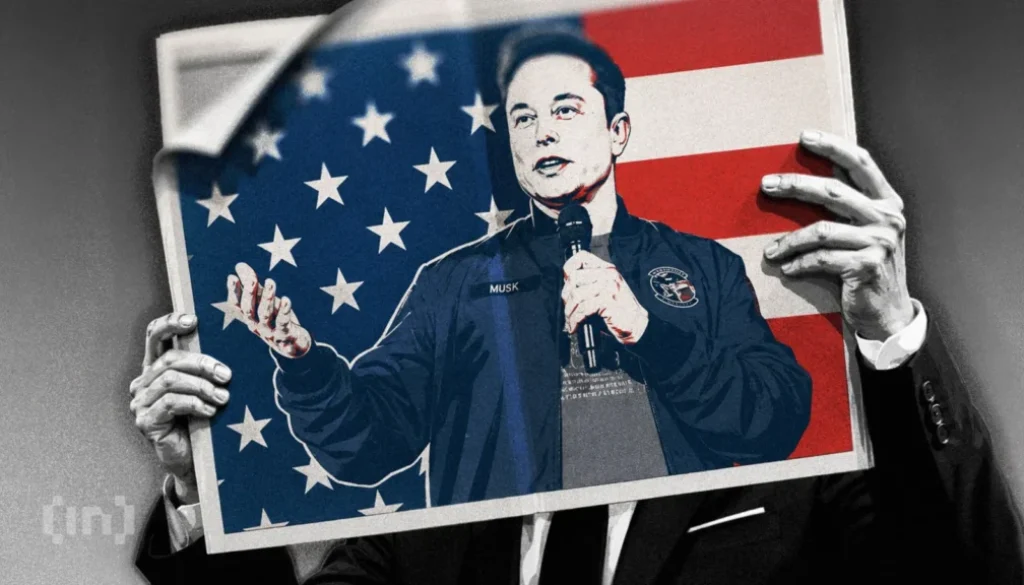
Elon Musk’s endorsement of a fringe physics theory about quantum computing limits has sparked claims that Bitcoin is already safe from quantum threats, but the theory remains unproven and unrelated to Bitcoin’s actual cryptographic vulnerabilities. The gap between theoretical quantum-resistant designs and real-world quantum hardware remains vast, with the practical timeline for any threat still years away.
- Musk agreed the universe consists of discrete Planck-scale units on August 29, but said nothing about Bitcoin or quantum threats to cryptocurrency.
- Oxford physicist Tim Palmer’s theory predicts quantum computers plateau between 200 and 400 qubits, but ordinary quantum theory sets no such limit.
- Breaking Bitcoin signatures requires an estimated 835 logical qubits, while IBM plans to reach only 200 logical qubits by 2029.
- 835 Logical qubits estimated needed to break Bitcoin signatures with Shor’s algorithm
- 200 Logical qubits IBM projects its quantum computer will reach by 2029
- 200-400 Qubits where Palmer’s theory predicts quantum computing hits a natural ceiling
- $78,449 Bitcoin price after Musk’s comments, with 1.17% daily gain
Elon Musk’s five-word reply to a physics discussion has been misinterpreted by cryptocurrency observers as validation that Bitcoin faces no quantum threat. On August 29, Musk responded to an Institute of Art and Ideas post about Oxford physicist Tim Palmer’s work by agreeing that the universe is composed of discrete Planck-scale units. Crypto investors and commentators quickly seized on this endorsement to argue that Bitcoin is already quantum-safe, citing Palmer’s theory that quantum computers cannot grow beyond a certain size. However, Musk’s statement addressed fundamental physics, not cryptographic security or Bitcoin’s vulnerabilities to quantum algorithms.
The misinterpretation reveals how technical discussions in physics can be rapidly repackaged and distributed through cryptocurrency communities seeking reassurance about long-term security risks. Bitcoin’s underlying security model relies on elliptic curve cryptography, which standard quantum computers running Shor’s algorithm could theoretically compromise. This vulnerability has been recognized since the earliest days of quantum computing research and remains one of the most pressing challenges for the broader digital asset ecosystem.
Musk’s comments had nothing to do with Bitcoin Security
Musk’s original message focused entirely on whether the universe operates as a continuous medium or in fixed increments. He made no mention of private keys, cryptographic signatures, or any aspect of Bitcoin’s security model. One day later, investor Fred Krueger cited Musk’s physics comment under a headline claiming Bitcoin is quantum-safe, attributing the position to both Musk and venture capitalist Steve Jurvetson.
This attribution conflated a theoretical physics endorsement with a statement about cryptocurrency security.
The incident highlights broader concerns about how information moves through financial communities. Investors facing uncertainty about emerging technological threats often seek reassurance from prominent public figures, and social media enables rapid amplification of statements removed from their original context. The pattern of misattribution is common in speculative markets where narrative momentum can drive price movements independent of fundamental developments.
Palmer’s theory remains outside scientific consensus on Quantum limits
Tim Palmer holds genuine credentials as a Royal Society fellow elected in 2003, with a long career building weather forecasting models at Oxford. His March paper in the Proceedings of the National Academy of Sciences proposes that nature contains no smooth continuum and that quantum entanglement hits a physical wall around 200 to 400 qubits on current hardware, with an absolute ceiling at 1,000 qubits.
Palmer argues this limit emerges from replacing irrational numbers with discrete values in quantum mechanics. However, standard quantum theory sets no such ceiling, leaving Palmer in a minority view until experimental evidence proves him right. Quantum mechanics has performed perfectly in every experiment conducted to date, and no quantum computer has yet approached the scales Palmer predicts would trigger failure.
The scientific community has not embraced Palmer’s framework as an established principle. While his work merits consideration as a theoretical proposal, mainstream quantum physics research continues operating under the assumption that quantum computing can scale beyond Palmer’s predicted limits. Laboratories worldwide are pursuing qubit growth targets that exceed his theoretical plateau, treating these goals as engineering challenges rather than fundamental obstacles.
The actual qubit gap between theory and hardware remains enormous
Breaking Bitcoin’s ECDSA signatures requires approximately 835 logical qubits according to a July study by Han Luo and colleagues, down from earlier estimates of 1,098 and 1,175 qubits. Those declining estimates reflect ongoing refinements in quantum algorithm efficiency, not any reduction in the difficulty of attacking Bitcoin. Researchers continue optimizing approaches to reduce the computational resources needed, but the absolute barrier remains substantial relative to current capabilities.
IBM’s roadmap targets 200 logical qubits by 2029, which would test the lower end of Palmer’s predicted quantum computing plateau but would represent only a quarter of what researchers estimate is needed to threaten Bitcoin. Other major technology companies, including Google and Chinese firms, are pursuing parallel development tracks. Bitcoin’s price has moved independently of this debate, trading near $78,449 after the Musk comments. Separately, developers are advancing post-quantum migration proposals without waiting for quantum hardware to mature or Palmer’s theory to be validated.
The distinction between physical qubits and logical qubits remains critical to understanding this timeline. Current quantum computers produce many noisy physical qubits that require error correction to create fewer reliable logical qubits. This conversion ratio affects all practical calculations about when meaningful quantum threats could emerge. Industry estimates suggest reaching 835 logical qubits would require vastly larger numbers of physical qubits, compounding the engineering challenge ahead.
The real test of both Palmer’s theory and Bitcoin’s actual quantum vulnerability window arrives around 2029, when IBM and other firms plan machines with 200 logical qubits or more.
BlockWest is a news publication. Nothing here is investment advice. Read our disclaimer and editorial policy.