Dollar index reaches 18-month high as bitcoin holds near $86,000
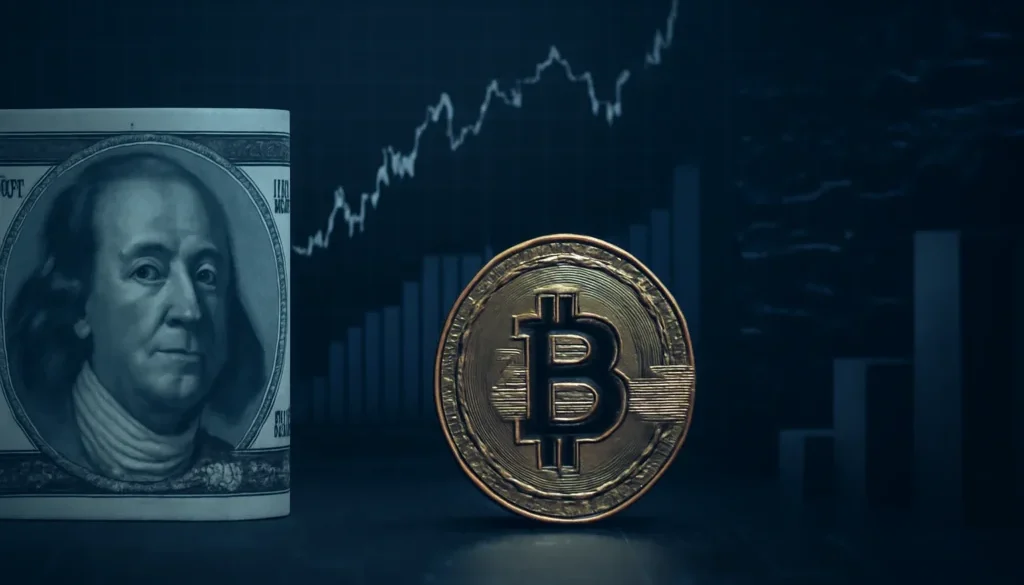
The U.S. Dollar Index has climbed to its highest level in roughly a year and a half, driven by a stronger Federal Reserve rate path and mounting political risk in the eurozone. Bitcoin has so far shrugged off the dollar’s advance, holding steady near $86,000 even as tighter financial conditions typically weigh on risk assets.
- The Dollar Index reached roughly 102.5 on Monday, its highest level in about 18 months.
- The euro fell to around 1.12 against the dollar, a 17-month low, as Spain called a snap election.
- Bitcoin held near $86,000 despite the dollar’s rally and rising U.S. Treasury yields.
- 102.5 dollar index level, an 18-month high after climbing from 99
- $86,000 bitcoin’s price, holding firm despite the dollar’s advance
- 1.12 euro-dollar rate, a 17-month low for the currency
- 4% upper bound of the Fed’s rate range after September’s hike
The U.S. Dollar Index climbed to roughly 102.5 on Monday, its highest level in about 18 months, according to reporting by CoinDesk. The gauge, which tracks the dollar against six major currencies, has risen from near 99 in early September and now sits well above its 200-day moving average, also near 99. Bitcoin, meanwhile, has held near $86,000 even as the dollar’s advance tightens financial conditions for risk assets broadly.
Dollar index tops 102.5 as euro falls toward 1.12
The euro has dropped to around 1.12 against the dollar, a 17-month low, as fiscal and political risks build across the currency bloc. The euro carries a 57.6% weighting in the Dollar Index basket, making its weakness the single largest driver of the dollar’s recent gain. France faces rising pressure over its deficit and borrowing costs ahead of next year’s presidential election, while Spanish Prime Minister Pedro Sánchez has called a snap election for November 29, adding to regional uncertainty.
A stronger dollar typically raises the cost of servicing dollar-denominated debt held outside the United States and erodes overseas investors’ purchasing power. That dynamic creates headwinds for both equities and bitcoin.
Fed’s September hike to 4% underpins dollar strength
The Federal Reserve’s decision last month to raise its benchmark rate by 25 basis points to a range of 3.75% to 4% has helped sustain the dollar’s momentum. Markets are now pricing further tightening, with a target range of 4.5% to 4.75% seen as the most likely outcome by June 2027. Higher rates make cash and government bonds more competitive with stocks and cryptocurrencies, raising the bar for risk-asset returns.
Long-term U.S. Treasury yields have climbed to levels last seen more than two decades ago. The combination of tightening policy and elevated yields has not been enough to dislodge bitcoin from its current range.
Bitcoin holds near $86,000 despite tighter conditions
Bitcoin traded near $86,000 after a strong start to October, largely unmoved by the dollar’s rally. That resilience contrasts with the textbook relationship in which a stronger dollar and higher rates typically pressure risk assets lower.
The BlockWest read. Dollar strength and a widening rate advantage for Treasuries put pressure on allocators who treat bitcoin as a cash substitute. Corporate treasuries and ETF flows, not spot price alone, will show whether accumulation continues once cash yields near 4.5% to 4.75% become the competing option. This is a test of demand under tightening, not a verdict on bitcoin’s broader trend.
Markets will watch Spain’s election on November 29 and the Federal Reserve’s next policy decision for signs of whether the dollar’s rally extends or the projected 4.5% to 4.75% rate path by June 2027 actually materializes.
BlockWest is a news publication. Nothing here is investment advice. Read our disclaimer and editorial policy.