Lagarde asked Greece to block Binance’s EU license application
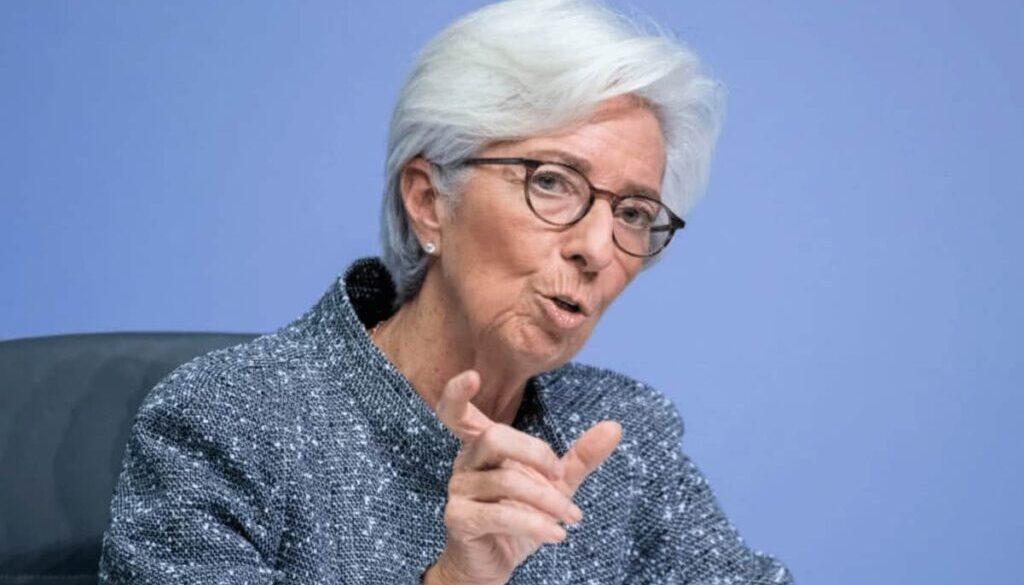
The European Central Bank president’s alleged intervention in Binance’s EU licensing process raises questions about regulatory independence and the limits of unelected officials’ influence over crypto market access. The episode underscores tensions between central bank digital currency ambitions and established crypto platforms seeking legitimacy in Europe.
- Christine Lagarde personally asked Greek Prime Minister Kyriakos Mitsotakis to block Binance’s EU license application.
- Binance’s application had cleared technical review by early June and the mandatory 40-day assessment period without objections.
- Lagarde cited Binance’s prior US money laundering plea and concerns that approving the exchange would boost dollar stablecoins over the ECB’s digital euro.
- 1,500 Binance compliance team members since its 2023 US settlement
- 27 EU member states covered by a MiCA license approval from any single country
According to a Wall Street Journal report, ECB President Christine Lagarde directly intervened in Binance’s application for a Markets in Crypto-Assets (MiCA) license through Greece’s Hellenic Capital Market Commission (HCMC), asking Prime Minister Kyriakos Mitsotakis to reject the exchange’s bid. The move came despite Greek regulators having effectively cleared the application for approval, and raises a fundamental question about the formal authority the ECB president holds over licensing decisions that legally belong to independent national regulators. The story was first reported by CryptoPotato.
The application clears technical review before lagarde’s intervention
Binance submitted its MiCA application through Greece in pursuit of a license that, once granted by any EU member state, extends automatically across all 27 member states. By early June, the application had completed its technical assessment, the mandatory 40-day objection period had expired without challenge, and the HCMC’s anti-money laundering officer had signed off favorably, according to the Journal’s reporting.
Notifications to other member states were reportedly already in preparation when the process stalled between June 7 and June 15.
Lagarde’s position overrides greece’s own finance ministry support
An HCMC official subsequently informed Binance that Lagarde opposed the license. The Journal reported that Lagarde had signaled this position directly to Mitsotakis during a May meeting, effectively overriding the support of Greece’s own finance minister. Lagarde cited two rationales: Binance’s 2023 guilty plea to US money laundering and sanctions violations, and her concern that approving the exchange would encourage adoption of dollar-denominated stablecoins at a moment when the ECB was launching its digital euro initiative.
A legal expert characterized the intervention as “political interference” in a licensing process that falls entirely within the jurisdiction of independent national regulators, since the ECB holds no formal authority over MiCA approvals. The episode raised questions about the practical limits of regulatory independence when an unelected central bank leader can influence decisions beyond her stated purview.
Binance abandons Greece and pursues France instead
Reuters broke news of the Greek rejection risk in mid-June. Binance initially disputed the development, noting that the HCMC’s technical review had found its application compliant and highlighting its compliance team, which has grown to roughly 1,500 people since its 2023 settlement with US authorities.
The pushback proved unsuccessful, and Binance withdrew its Greek application in favor of seeking authorization elsewhere.
Regulators in Ireland and Latvia also rejected Binance’s applications, citing the exchange’s historical penalties and organizational complexity. Coinbase secured a MiCA license based in Luxembourg, while Kraken already held EU approval. Binance has pivoted to France, where it holds a smaller registration and is in discussions with the Autorité des Marchés Financiers (AMF), the country’s financial markets regulator, as its remaining path to a bloc-wide MiCA license covering all member states.
The BlockWest read. Lagarde’s intervention signals that central bank concerns about stablecoin competition are now shaping crypto market access in ways that bypass formal regulatory channels. The ECB’s digital euro agenda is not merely a monetary policy question but a competitive constraint on which platforms can operate in Europe, a shift that allocators should weigh when assessing regulatory risk across jurisdictions.
Binance’s path to an EU-wide MiCA license now depends entirely on France’s AMF, which has not yet signaled approval or rejection of the exchange’s application. The outcome will determine whether Binance can operate across the bloc or remains confined to smaller registrations in individual countries, and whether central bank digital currency ambitions will continue to shape crypto licensing decisions outside formal legal channels.
BlockWest is a news publication. Nothing here is investment advice. Read our disclaimer and editorial policy.