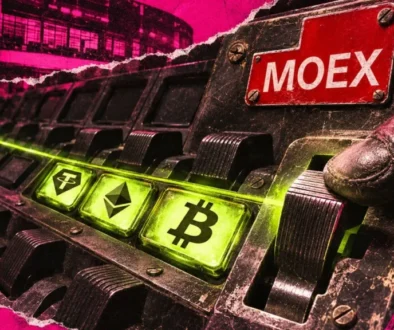
Moscow Exchange launches Bitcoin and Ethereum spot trading in December
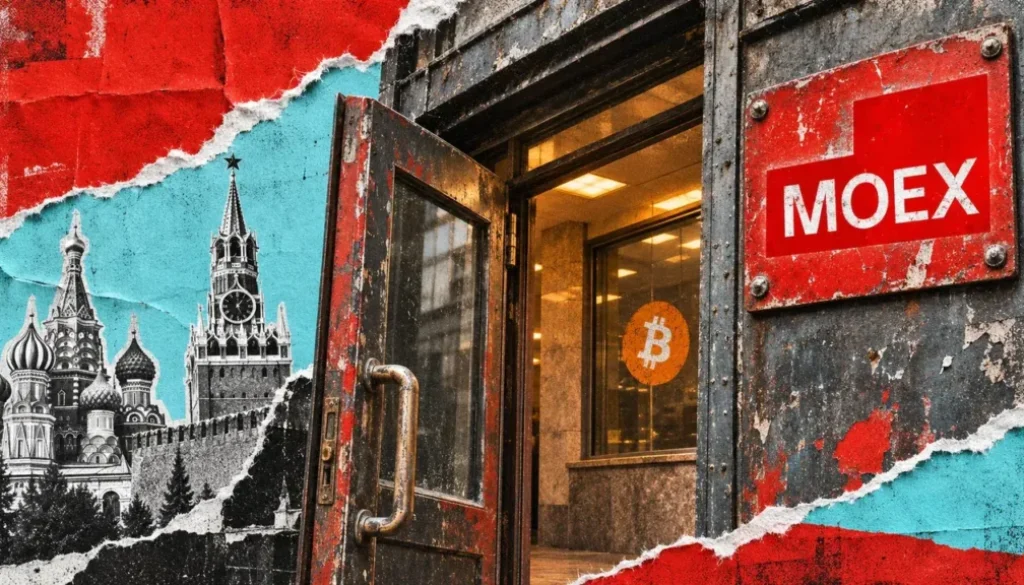
Russia is opening its stock exchange to direct Bitcoin and Ethereum trading starting December, marking the first major market to blend crypto spot trading with traditional exchange infrastructure under state control. The move is complicated by US sanctions on both the exchange operator and its clearinghouse, creating uncertainty over how stablecoin settlement will function.
- Retail investors limited to 300,000 rubles (roughly $3,000) in annual crypto purchases per intermediary starting November 17.
- Moscow Exchange plans December 1 pilot launch through US-sanctioned National Clearing Centre using five trading pairs.
- Bitcoin, Ethereum and USDT approved for ordinary investors; qualified investors can trade other cryptoassets without purchase caps.
- Nov. 17 Central bank retail purchase rules took effect for three cryptocurrencies
- Dec. 1 Target launch date for Moscow Exchange spot trading pilot transactions
- ₽300,000 Annual purchase limit per intermediary for ordinary investors on crypto
- 5 years Minimum price history requirement on foreign exchanges for approved assets
According to reporting by CryptoSlate, Russia has cleared the way for Bitcoin and Ethereum spot trading on its national exchange, though with restrictions that highlight the country’s attempt to regulate crypto within its broader financial system while maintaining strict capital controls. The Bank of Russia approved a list of cryptocurrencies available to non-qualified investors, which includes Bitcoin, Ethereum, and the US dollar-linked stablecoin USDT, with the retail purchase rules taking effect on November 17, 2026 (Sunday). A separate ordinance governing exchange operations allows venues to begin trading from November 22 (Sunday), provided the central bank has approved their trading rules.
Retail investors face a 300,000-ruble annual cap measured in rubles spent
The central bank’s framework restricts ordinary investors to purchasing no more than 300,000 rubles (approximately $3,000) worth of cryptocurrencies per year through any single intermediary, calculated by the amount spent on purchases rather than the market value of holdings afterward. The limit applies to all three approved assets combined: a customer who buys 100,000 rubles of Bitcoin and 100,000 rubles of Ethereum through the same broker has consumed two-thirds of their allowance, regardless of price fluctuations. Purchases can flow through brokers, asset managers, or registered crypto exchange offices, including over-the-counter deals arranged outside the exchange’s order book.
Qualified investors, defined as those who pass a knowledge test and review risk disclosures, can purchase other cryptocurrencies without the same annual cap. The Bank of Russia selected Bitcoin, Ethereum, and USDT partly because they are heavily traded and have at least five years of price history on foreign exchanges. The selection criteria also included market capitalisation and average daily trading volume, designed to mitigate risks for retail participants new to crypto markets.
Crypto cannot be spent domestically: merchants remain barred from accepting cryptocurrencies for goods and services within Russia.
Moscow Exchange will operate through a sanctioned clearinghouse with five trading pairs
Moscow Exchange plans to launch spot trading on December 1 (Tuesday) through the National Clearing Centre, with five initial trading pairs: Bitcoin, Ethereum, and USDT against rubles, plus Bitcoin and USDT against USDX, a specialized settlement currency used by the clearinghouse. The exchange’s technical specification describes same-day and next-day settlement, with the clearinghouse expecting to process settlements roughly every 30 to 60 minutes. The market will not initially support direct Bitcoin-to-Ethereum trading, though the exchange may consider crypto-to-crypto pairs in 2027.
Short selling will initially be prohibited, though brokers may offer margin trading under applicable rules. Members can place anonymous orders or negotiate deals with known counterparties, and the clearinghouse’s design relies on a separate digital depository that records asset ownership rights rather than moving coins on a public blockchain for each trade. This arrangement allows the exchange to operate without sending Bitcoin between wallets every time an order matches.
Both Moscow Exchange and the National Clearing Centre were sanctioned by the US Treasury in June 2024, creating a critical unresolved question about USDT settlement.
Tether sanctions policy and depository identity remain unresolved
The proposed pilot faces a substantial technical and legal complication: USDT is issued on Ethereum, meaning Tether, a company outside Russia, controls the underlying token and maintains a policy for freezing wallets associated with sanctioned entities. Moscow Exchange has not identified which wallets will hold USDT tokens for the trading system, explained who will supply them, or described how Tether’s sanctions controls would apply to the custody arrangement. The published materials reviewed do not identify the separate depository or confirm whether customers can withdraw holdings directly to personal wallets.
Moscow Exchange already operates a Bitcoin futures market that generated more than 600 billion rubles in turnover since launching in summer 2025, but those cash-settled contracts deliver gains and losses in rubles without delivering actual assets. The December pilot would trade the assets themselves, leaving the futures volume as an unreliable gauge of retail demand for direct Bitcoin ownership. If the pilot proceeds, repeat trading and the ability to buy or sell near quoted prices will indicate whether a functioning market is taking shape, while the exchange and its partners must simultaneously demonstrate they can hold USDT and complete settlement without triggering Tether’s sanctions freeze.
The BlockWest read. Russia has built infrastructure to cage retail crypto participation within its exchange system while preserving state oversight and preventing capital flight. The 300,000-ruble cap and ban on domestic merchant payments ensure crypto remains a speculative asset class, not a parallel currency. What matters for allocators is whether the December pilot clears the USDT hurdle: if Tether freezes the depository wallet or refuses to settle trades, the platform loses its stablecoin market before it starts.
The December 1 launch date will test whether Moscow Exchange and the National Clearing Centre can operate under US sanctions and whether Tether will permit USDT to settle through the exchange’s custody infrastructure; no freeze has been verified, and Tether has not publicly confirmed its position on the arrangement.
BlockWest is a news publication. Nothing here is investment advice. Read our disclaimer and editorial policy.