Institutions managing €800 billion demand proof crypto networks generate token returns

Institutional allocators managing hundreds of billions in assets are demanding proof that cryptocurrency networks generate measurable earnings tied to token value, not just ecosystem activity. The question signals a maturation in how large wealth managers evaluate crypto investments beyond speculation and toward fundamental revenue models.
- Institutions managing €800 billion in assets raised concerns that crypto ecosystem traction lacks fundamental investment justification during closed-door meetings.
- Robinhood Chain processed 793.7 million transactions and $51 million in network fees in its first full quarter, though 74 percent came in a 12-day surge.
- Arbitrum governance token ARB is documented solely as a voting mechanism, leaving allocators unclear how network revenues translate to token-holder returns.
- €800B Assets under management by institutions questioning crypto’s fundamental value proposition.
- $1.07B Stablecoin supply on Robinhood Chain by quarter-end, up from $102.3 million at launch.
- 74% Share of quarterly network fees earned during a 12-day period in late August and early September.
- 12 months Timeframe Arbitrum’s head of strategy predicted for institutions to become very active participants.
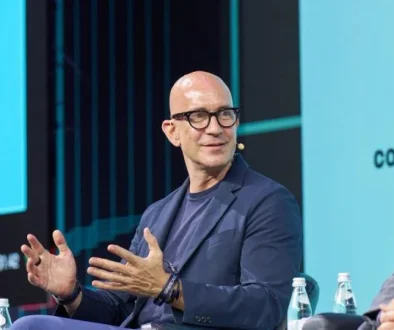
Brendan Ma, head of investment strategy at the Arbitrum Foundation, engaged with representatives of institutions managing approximately €800 billion in assets through intensive closed-door meetings focused on cryptocurrency investments. CryptoSlate reported that the core tension recurring across these conversations centered on a fundamental disconnect: blockchain networks demonstrated genuine activity and ecosystem development, yet allocators saw no clear link between that traction and financial returns for token holders.
There’s been business or ecosystem traction that has been divorced from any fundamental case.
Brendan Ma, head of investment strategy, Arbitrum Foundation
Ma explained that private bankers and wealth managers repeatedly pressed him on how network activity translated into value for an investor holding the asset. Institutions expressed interest in networks that were “building towards durable, sustainable network revenues and a P&L that can be geared towards investment and reinvestment.”
The revenue question institutions are demanding answers on
Allocators distinguished between two separate investment pathways. One involves deciding whether to purchase and hold cryptocurrency assets directly, typically driven by conviction about which infrastructure protocols will underpin future tokenization. The other involves building products on top of blockchain networks and using infrastructure to deploy them with clients.
For the first group, the critical question centers on which infrastructure will power the tokenization of real-world assets. The second group of builders asks which assets make sense to bring on chain. Ma noted that stablecoins and Treasury bonds moved fastest into blockchain environments, and competition is intensifying across private credit, equities, commodities, and structured strategies like hedge fund products.
Private and publicly listed banks Ma encountered possessed sophisticated thinking about both products and investments but remained largely quiet about their ambitions publicly.
Robinhood Chain’s early numbers reveal the revenue-to-activity challenge
Robinhood Chain, an Ethereum layer-2 network built using Arbitrum technology, launched publicly on July 1 and provided an immediate test case. Between its launch and the end of the third quarter, the network processed 793.7 million transactions and generated $51 million in fees paid by users, according to Robinhood’s October 9 quarterly report. Application revenue measured separately reached $591.4 million during the same period.
The fee distribution exposed a concentration risk. A 12-day window from August 30 to September 10 accounted for 74 percent of the quarter’s total network fees, suggesting the early surge may not represent sustainable economics. Stablecoin supply on Robinhood Chain expanded from $102.3 million at launch to $1.07 billion by quarter-end, a tenfold increase that nonetheless left open questions about persistence.
Allocators now face two critical uncertainties: whether activity levels will sustain after the launch spike fades, and how any resulting revenue reaches the investors who bought the token.
How governance tokens become investment cases
Arbitrum’s governance documentation describes the ARB token as a mechanism for voting on decentralized autonomous organization proposals. No documented connection ties governance participation to token-holder economics or returns.
For an institutional investment committee to approve allocation, the case would need to explain how governance rights connect to network economics and generate value for token holders. Alternatively, an institution valuing the infrastructure itself could build on Arbitrum independently without taking an ARB position, making the token a separate decision from the infrastructure investment.
Ma predicted that within 12 months these institutions would become “very active, very knowledgeable” participants in crypto, suggesting their engagement is still in early stages despite their current skepticism.
The BlockWest read. These allocators are not rejecting crypto; they are demanding grown-up financial metrics. The infrastructure case for blockchains is separate from and stronger than the investment case for any single token, and institutions will likely build on multiple chains while remaining selective about which governance tokens merit capital. Sustained fees and transparent revenue distribution are table stakes, not differentiators.
The question Brendan Ma will face in the months ahead is whether any major blockchain network can demonstrate that fees paid by users and applications translate directly into measurable returns for token holders—or whether the gulf between infrastructure value and token value has become permanent. Watch for the first institutional fund prospectus that treats a blockchain token as an equity-like claim on network revenues rather than a governance placeholder or speculative bet.
BlockWest is a news publication. Nothing here is investment advice. Read our disclaimer and editorial policy.