US government considers Tether for overseas stablecoin initiative after 2021 fine
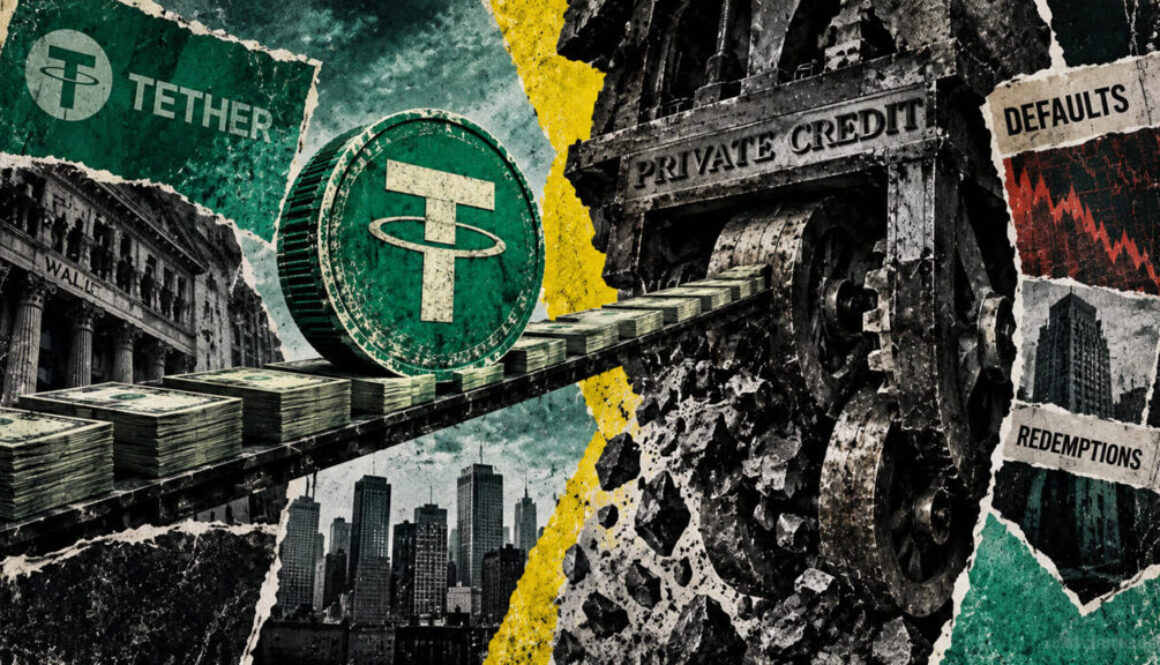
Washington fined Tether $41 million in 2021 for lying about the dollars behind its tokens, yet five years later the company’s $114.96 billion Treasury bill portfolio has become a reason for the US government to help spread those same tokens overseas. The gap between those two positions shows how completely a once-marginal stablecoin issuer has been absorbed into American financial statecraft.
- USDT represented more than 60% of the stablecoin market at the end of June, according to Tether’s own reserve report.
- Tether’s latest reserve report lists $114.96 billion in directly held US Treasury bills with a weighted average maturity below 90 days.
- Bloomberg reported that the Trump administration is weighing an overseas stablecoin initiative involving Treasury, the State Department and the US International Development Finance Corporation.
- $114.96B Tether’s directly held Treasury bills versus its 2021 fine
- 60%+ USDT’s share of the stablecoin market at end of June
- $41M CFTC penalty against Tether in October 2021 over reserve claims
- $1.50B Tether’s second-quarter net operating profit, mostly Treasury income
Washington’s posture toward Tether has shifted from enforcement target to preferred distribution partner. According to CryptoSlate, the company that regulators once punished for misrepresenting its reserves now sits at the center of US thinking about spreading dollar-denominated tokens abroad. Bloomberg reported Wednesday (September 23) that the Trump administration is weighing an overseas stablecoin initiative, potentially through joint ventures with private firms and involvement from Treasury, the State Department and the DFC, aimed at extending dollar use and Treasury demand overseas.
CFTC found Tether’s reserves met backing standard on only 27.6% of days in a 26-month sample period
The origin of Washington’s skepticism toward Tether is documented in a CFTC order from October 2021, which fined Tether $41 million and Bitfinex $1.5 million, for a combined $42.5 million. The order found that from at least June 2016 to February 2019, Tether claimed USDT was fully backed by an equivalent amount of fiat currency held in its bank accounts, when in fact its reserves met that standard on only 27.6% of days across a 26-month sample period from 2016 through 2018.
The order also found Tether relied on unregulated third parties to hold reserve funds, comingled those funds with Bitfinex’s operating capital, and had never completed an audit of its reserves despite claiming it would.
This case highlights the expectation of honesty and transparency in the rapidly growing and developing digital assets marketplace.
Rostin Behnam, then-Acting Chairman, Commodity Futures Trading Commission
That order left one question unresolved: whether an eventual audit would satisfy the transparency the CFTC demanded. Tether announced on August 13 that KPMG US had completed an audit of its 2025 financial statements with an unqualified opinion, but an annual financial-statement audit is a different exercise than the real-time reserve attestation the 2021 order implied was missing.
$114.96 billion in Treasury bills makes Tether a top US debt buyer
Tether’s shift toward government debt began in October 2022, when it eliminated commercial paper from its reserves and moved into Treasury bills. Its most recent reserve report put total reserve assets at $187.75 billion against liabilities of $183.64 billion as of June 30, 2026, leaving $4.11 billion in excess reserves.
Beyond the $114.96 billion in directly held Treasury bills, the report lists $18.63 billion in overnight reverse repo agreements, $18.84 billion in precious metals, $5.80 billion in Bitcoin and $13.45 billion in secured loans. Combining those categories into a single Treasury figure would overstate Tether’s exposure, but the scale of its short-term dollar financing still makes it one of the largest private buyers of US government debt. Tether reported roughly $1.50 billion in second-quarter net operating profit, led by Treasury and repo income.
The company has also built enforcement cooperation into its business. It adopted a voluntary freezing policy tied to US sanctions designations in December 2023, and the Justice Department credited Tether’s assistance in a September 9, 2026 action restraining $52 million in alleged scam proceeds.
GENIUS Act deadlines set the terms for Tether’s next expansion
Treasury Secretary Scott Bessent connected stablecoins to broader dollar access and Treasury demand in a July 2025 statement on the GENIUS Act. Federal Reserve Governor Stephen Miran made a related point in a November 2025 speech, arguing that the larger opportunity lies with foreign savers who currently have restricted dollar access, not Americans reshuffling money they already hold in dollars.
Treasury’s August 17, 2026 proposed rule sets January 18, 2027 as the expected effective date of the GENIUS Act, with a further restriction on stablecoin offers and sales to US persons following on July 18, 2028. The law’s foreign-issuer track requires a finding that an overseas regulator’s regime is comparable, along with registration and compliance with lawful orders. Tether has already built a separate, US-facing product for that environment: USA₮, launched in January 2026 and issued by Anchorage Digital Bank, with Cantor Fitzgerald as reserve custodian and preferred primary dealer, though the token carries no government guarantee or federal deposit insurance.
The BlockWest read. For allocators, the story is not whether Tether survives scrutiny but whether Washington starts treating a private issuer’s balance sheet as adjacent public infrastructure. If USDT’s Treasury demand becomes something officials feel they must protect, oversight of Tether’s reserves and freezing powers could soften exactly when it matters most, a dynamic worth pricing separately from USDT’s peg.
The Bloomberg report does not name Tether as a partner in any overseas program, and Treasury, State and the DFC have not confirmed which financial instruments, loans, guarantees or equity, would be used if the initiative proceeds. The next marker is January 18, 2027, when the GENIUS Act’s foreign-issuer conditions are set to take effect and Washington’s terms for admitting tokens like USDT into the American market become binding rather than proposed.