
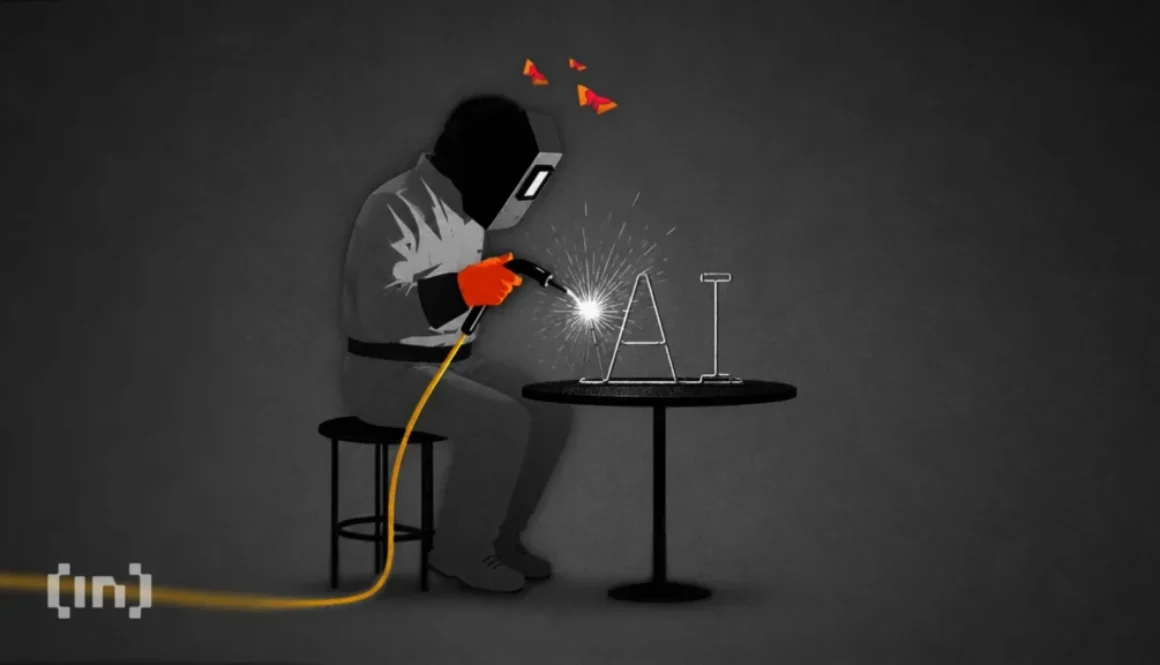
Artificial Intelligence Demands Vastly More Energy Than the Human Brain’s 20-Watt Consumption
As AI compute demands accelerate globally, the energy efficiency argument comparing human brains to data centers has become a rallying point for both skeptics and boosters, yet the underlying science is far more complex than viral posts suggest. The real constraint on AI expansion has shifted from chip supply to grid access, forcing infrastructure players and chipmakers to confront fundamental design tradeoffs that biology solved but silicon has not.
- A widely cited 2.7 billion watt estimate for digitally recreating a human brain originated in a single 2023 paper and has been misattributed to the Blue Brain Project for three years.
- Reliable independent studies estimate a typical ChatGPT query at around 0.3 watt-hours, with costs varying sharply based on workload and reasoning model complexity.
- Power grid access now gates AI data center construction more than chip availability, with median interconnection timelines exceeding five years from request to operation.
- 42.2M watts drawn by LineShine, China’s fastest supercomputer, versus brain’s 20 watts
- 50% growth in AI-focused data center capacity during 2025, with tripling expected by 2030
- 750MW of actual energized capacity among bitcoin miners pursuing AI contracts, versus $70B in announced deals
- 485 terawatt-hours of global data center consumption in 2025, with 10% allocated to AI mining
The comparison between a human brain consuming roughly 20 watts and a supercomputer drawing 42.2 million watts has become the internet’s favorite shorthand for critiquing AI energy consumption. Yet the numbers underlying this argument trace back further than most realize, and much of the analysis circulating on social media either misrepresents or inverts what the original research actually found. China’s LineShine supercomputer in Shenzhen recently achieved 2.198 exaflops, built entirely on domestic Chinese processors without reliance on Nvidia or US-controlled chips, marking the country’s first global ranking ascendancy since 2017. The power gulf between biology and silicon remains real, but understanding what it means requires separating verified facts from three years of misattribution.
How A Single Paper Became Viral Misinformation
The 20-watt figure for human brain metabolism rests on solid neuroscience, grounded in decades of metabolic measurement showing the brain accounts for about 2 percent of body weight while consuming roughly 20 percent of resting oxygen. The widely cited 86 billion neuron count, however, is shakier than it appears. That figure derives from four male brains and is currently under dispute in the journal Brain. Some viral posts cite 12 watts instead, drawn from a 2023 Frontiers in Artificial Intelligence paper that stated the figure without any citation.
The same paper produced the 2.7 billion watt estimate for digitally recreating a human brain that everyone shares across social media.
That figure came from extrapolating a 10-million-neuron simulation to mouse scale, then multiplying by a thousand. Critically, the paper noted that the simulation ran about 30,000 times slower than biology, a detail social posts consistently drop. Secondary sources subsequently credited the figure to the Blue Brain Project, which never published it. The misattribution has persisted for three years despite the original paper’s clear methodology.
What Reliable Energy Data Actually Shows
Rigorous independent estimates exist elsewhere. Epoch AI estimated a typical ChatGPT query at 0.3 watt-hours in early 2025, while a peer-reviewed study in Joule later landed on 0.31 watt-hours. Two independent methods converging that closely is unusual in this space. However, the figure shifts sharply with workload. Reasoning models that produce longer answers can cost several times as much as simple completion queries.
The efficiency gains are real but uneven across architectures. Kimi K2 activates 32.6 billion of its 1.04 trillion parameters per token, a ratio of roughly 3.1 percent that is falling fast. Mixtral used roughly 28 percent of its parameters in 2023, while DeepSeek-V3 now uses 5.5 percent. DeepSeek trained a 671-billion-parameter model in eight-bit precision, and Nvidia has since pretrained a 12-billion-parameter model in four-bit. Biology also computes at low precision, with nothing inside a neuron resolving to 32 bits, a design principle silicon is beginning to mirror.
The Memory-Computation Split That Silicon Cannot Solve
The largest and least copied biological advantage is structural. Brains hold memory and computation in the same physical place, while digital machines separate them entirely. Stanford’s Mark Horowitz demonstrated that fetching an operand from memory can consume hundreds of times more energy than the arithmetic itself. Hardware explicitly designed to imitate neurons has struggled for decades to close this gap in practice.
No neuromorphic or analog system has trained or run a frontier AI model in production. Intel’s Hala Point packs 1.15 billion artificial neurons across 1,152 chips and remains a research prototype at Sandia National Laboratories. Mike Davies, director of Intel’s Neuromorphic Computing Lab, told The Register in 2024: “We’re not mapping any LLM to Hala Point at this time. We don’t know how to do that.”
We’re not mapping any LLM to Hala Point at this time. We don’t know how to do that.
Mike Davies, Director of Intel’s Neuromorphic Computing Lab
The commercial sector is thinner still. BrainChip, the flagship listed neuromorphic company, reported $700,000 in customer receipts against $5.3 million in operating outflow in its last March quarter. Rain AI, which sought $150 million in funding and failed to raise it, explored a sale in 2025. Catherine Schuman, assistant professor of electrical engineering and computer science at the University of Tennessee, Knoxville, identified a circular problem: “The hardware companies are waiting for there to be a killer application, but it’s really hard to understand how to build those applications without having hardware to prototype on.” More than 20 researchers signed a 2025 consensus paper in Nature arguing that the field still lacks the ecosystem it needs. Biology’s principles won. The hardware built to embody them did not.
Grid Access Now Gates AI Expansion More Than Chip Supply
Electricity has become the binding constraint on AI infrastructure growth. The International Energy Agency put global data center consumption at 485 terawatt-hours in 2025, with AI-focused facilities growing 50 percent during that year alone. The agency expects them to triple by 2030. Grid access, rather than chip supply, now determines where construction happens. Median time from an interconnection request to commercial operation exceeds five years, according to Lawrence Berkeley National Laboratory.
Microsoft chief executive Satya Nadella said in November that his company holds processors it cannot plug in. The shortage is powered buildings, not silicon.
Bitcoin miners have become the unlikely solution to this bottleneck. They spent a decade solving energy and infrastructure problems that mainstream AI operators now need. Miners hold energized sites, signed power agreements, and interconnection rights that newcomers wait years to secure. The shift has turned mining into an energy and infrastructure business. Retrofitting a working site costs roughly $3 million to $4 million per megawatt, while greenfield construction runs $10 million to $12 million, according to VanEck estimates.
Mining Pivots to AI Colocation With Enormous Announced Values
Public miners have signed AI contracts worth more than $70 billion in aggregate, yet delivered capacity tells a quieter story. Second-quarter 2026 filings show roughly 750 megawatts actually energized across the sector. Core Scientific accounts for about 437 megawatts; Galaxy’s Helios campus delivered 133; TeraWulf 102; IREN 50; and Riot 25. Hut 8 has contracted 949 megawatts but energized none.
The pivot has been costly. Combined quarterly losses at miners Mara and CleanSpark reached $851 million in August. Most mining capacity will never convert to AI use. Preliminary Cambridge survey data presented in July showed that about 10 percent of miners had allocated power to AI. Mining tolerates interruption, whereas AI tenants demand firm power, dense cooling, and fiber that remote sites rarely have. Even so, the direction is clear. Core Scientific now earns 83 percent of its revenue from colocation and just 13 percent from mining itself. Investors have priced that shift in, with miners holding signed leases trading at far higher multiples of their energized power.
Why Efficiency Improvements Cannot Outpace AI Demand Growth
Global data center compute grew by 550 percent between 2010 and 2018, while energy use rose by only about 6 percent. The pattern then broke. United States data center consumption climbed from 58 terawatt-hours in 2014 to 176 in 2023. That historical decoupling of compute and power consumption rested on a biological constraint. A skull drawing 200 watts would have killed its owner, so efficiency became the only available answer through natural selection.
AI has never faced that ceiling. It has faced a capital ceiling instead, and capital stretches far more easily than electricity does.
Evolution optimized under scarcity. Silicon has optimized under abundance. Now that abundance is changing, the question is no longer whether biology is more efficient than silicon. It is what AI becomes once power, rather than money, decides what gets built. Electricity will reshape architectural choices, training methodologies, and the distribution of compute in ways that capital allocation never could.
The next critical milestone is whether grid operators can deliver the triple expansion the IEA forecasts by 2030 and whether the 250 megawatts of AI capacity still unbuilt among major miners actually materializes in the next 18 months. If interconnection delays persist and AI tenants continue demanding firm power that remote sites cannot supply, the pivot from mining to colocation could stall before delivering the capacity that announced deals imply.