
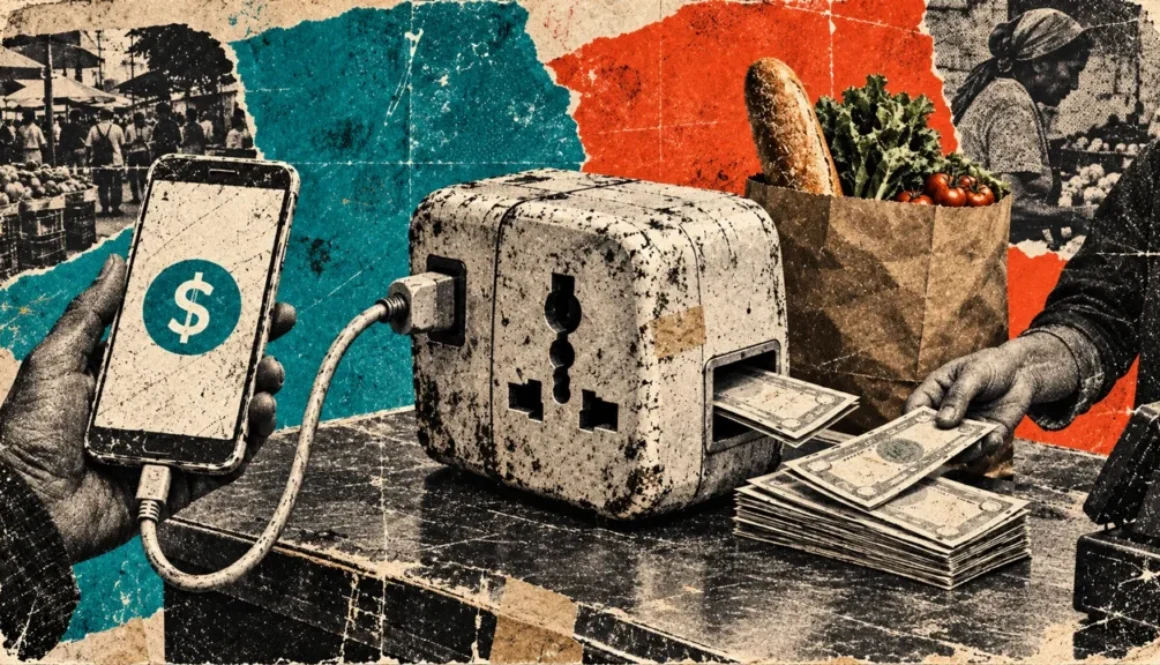
Digital stablecoins simplify money transfers but face obstacles when it comes time to make purchases
Stablecoins can reduce remittance costs, but the total expense depends on conversion fees and exchange rates that extend well beyond blockchain confirmation times. Recipients’ ability to actually spend or convert the money matters more than transfer speed alone.
- Bank of Italy research on $200 USDC transfers found Italy-to-Brazil costs of 2.70% versus 2.21% for the reverse route, showing directional variation.
- Recipients can retain stablecoin balances in dollars rather than converting immediately, gaining control over timing and currency exposure.
- Total payment cost includes exchange-rate margins, local withdrawal fees, and conversion services that blockchain fees alone do not capture.
- 2.70% Total cost for USDC transfers from Italy to Brazil on $200
- 2.21% Total cost for USDC transfers from Brazil to Italy on $200
- $72 Annual savings from reducing all-in remittance cost from 5% to 2%
- July 2024 Publication date of Bank of Italy research examining stablecoin transfer costs
Stablecoins have attracted attention as a tool for reducing the cost of international money transfers, but their actual utility depends on a chain of transactions that extends far beyond the speed of blockchain settlement. While a stablecoin token can move across networks in seconds, recipients still face the practical work of converting it to usable local currency, accessing cash, or maintaining balances in a digital wallet. A Bank of Italy study published in July examined $200 transfers of USDC across routes between Italy and five partner countries, revealing how the convenience of fast token movement masks a more complex cost picture.
Exchange Rates and Hidden Costs Dwarf Advertised Transfer Fees
The path from euros in a sender’s bank account to reais available for spending in Brazil involves multiple conversion points, each with its own pricing. A sender must fund an exchange, purchase stablecoins, transfer them across the blockchain, and then the recipient must sell those tokens and withdraw proceeds into a local account. The blockchain handles token movement efficiently, but every exchange rate and service along that route carries a cost. Exchange-rate margins and withdrawal fees are often built into quoted prices rather than listed separately, making the true expense invisible until the recipient counts how much local currency actually arrives.
The Bank of Italy data illustrates this with concrete numbers. Italy-to-Brazil transfers cost 2.70% of the $200 amount, or $5.40, while Brazil-to-Italy transfers cost 2.21%, or $4.42. The cheaper direction switches depending on which way money travels because buyers and sellers in each country face different sets of prices and available services. Someone selling USDC in Brazil operates in a different market from someone buying it there, with distinct liquidity, spreads, and redemption options. The same stablecoin route produces meaningfully different outcomes based on direction of payment and local market conditions.
Comparison services like Wise, included in the Bank of Italy analysis, showed 2.20% cost for Italy-to-Brazil transfers and 4.68 percent to 4.89 percent for Brazil-to-Italy, indicating that stablecoin routes can outperform traditional services on some corridors but not universally.
Speed Becomes Irrelevant Without Reliable Conversion Access
A stablecoin can appear in a recipient’s wallet within seconds, but that speed provides no benefit if conversion or withdrawal to spendable local currency requires an additional banking step lasting a day or longer. Recipients who need the funds immediately cannot spend a digital dollar token sitting in a blockchain wallet if their local merchants demand reais. Conversion speed depends entirely on the quality of connection between the exchange holding the token and the domestic payment system where money can actually be used. In markets with well-developed stablecoin infrastructure and fast payment rails, the final conversion step can be painless; in others, recipients face delays that dwarf the blockchain confirmation time.
The standard payment services must meet is not how quickly a blockchain confirms a transaction but whether recipients can use the money for its intended purpose. Recipients in Brazil may have no reason to care which blockchain network carried a token if the proceeds become spendable through an app they already use. Conversely, a technically literate person comfortable holding digital wallets may prefer immediate access to the stablecoin balance itself, choosing to hold dollars and convert when rates suit them. The relevant measure is whether the recipient can perform the action they want next, not whether a public ledger recorded the transfer quickly.
Recipient Choice to Hold Dollars Adds Value Beyond Transfer Fees
Traditional remittance services often require converting the entire transfer amount to local currency immediately, eliminating recipient control over currency exposure. Stablecoins offer an alternative by allowing recipients to convert part of a payment to local currency for immediate expenses while retaining the remainder in dollar form. A household receiving $200 might convert $120 to local currency for the week’s expenses while keeping $80 as a stablecoin balance, protecting that portion against local currency depreciation. This separation of movement and holding decisions gives recipients genuine financial control independent of what the sender prefers or which payment system transfers the funds.
Holding stablecoins introduces its own risks: tokens lack the deposit insurance of bank accounts, depend entirely on issuer reserves and redemption policies, and expose holders to the issuer’s operational security.
Circle, the USDC issuer, operates institutional redemption for large holders while retail users typically buy and sell through exchanges or payment providers. Circle’s EEA redemption policy creates a separate redemption route for eligible European holders, potentially giving households direct access to the issuer even without institutional accounts. For remittance recipients, having redemption rights with an issuer works alongside whatever services they can actually reach, and familiarity with local providers carries economic value. Recipients who know the person behind the counter at a neighborhood exchange can ask for help in real time; relatives using the same app can explain unfamiliar steps. Those relationships save time and reduce errors while sparing senders from becoming unpaid technical support for family members unfamiliar with crypto systems.
All-In Cost Comparison Requires Accounting for Both Directions and Actual Usage
Fee comparisons that show stablecoins as cheaper often exclude the work required from both sender and recipient. New customers must verify identity, fund exchange accounts, and determine which blockchain networks their recipient supports before sending anything. Sending to a wrong address or unsupported network can make recovery impossible depending on who controls the receiving account. Experienced crypto users navigate these steps routinely, while first-time customers need support that advertised transfer prices typically exclude. Conventional remittance services impose different friction: cash collection may require travel and waiting, while account access can depend on documents the recipient lacks.
The relevant financial comparison involves monthly costs accumulated over time. Reducing the all-in cost of a $200 monthly transfer from 5 percent to 2 percent saves $6 per transfer, compounding to $72 annually. That savings comes from the combination of lower fees, better exchange rates, and faster completion, and it matters far more than which payment method delivers it. Comparisons must also account for whether the sender is adding fees on top of a $200 payment or deducting fees from it, which changes the actual amount received. Services that offer both conversion options and token retention allow households to decide how much of a balance to convert while explaining costs before commitment. The payment method that works is the one a household can actually use for what they intend to do with the money.
Payment companies can handle much of the technical work themselves by moving stablecoins between their own accounts and paying out ordinary money through local systems, letting customers choose where to spend while the company handles settlement details. The outcome depends on whether recipients can convert stablecoins to usable local currency at reasonable cost and on timing that matches their cash needs, not on whether blockchain settlement speeds measured in seconds impress technical observers.