
IMF Confirms El Salvador’s Bitcoin Program Operates Without State Financial Support
The International Monetary Fund has verified that El Salvador’s government no longer directly funds Bitcoin purchases and has transferred operational control of its Chivo e-wallet to private management. This marks a key milestone in the country’s negotiations with the IMF, resolving fiscal concerns that had stalled a $1.4 billion lending program.
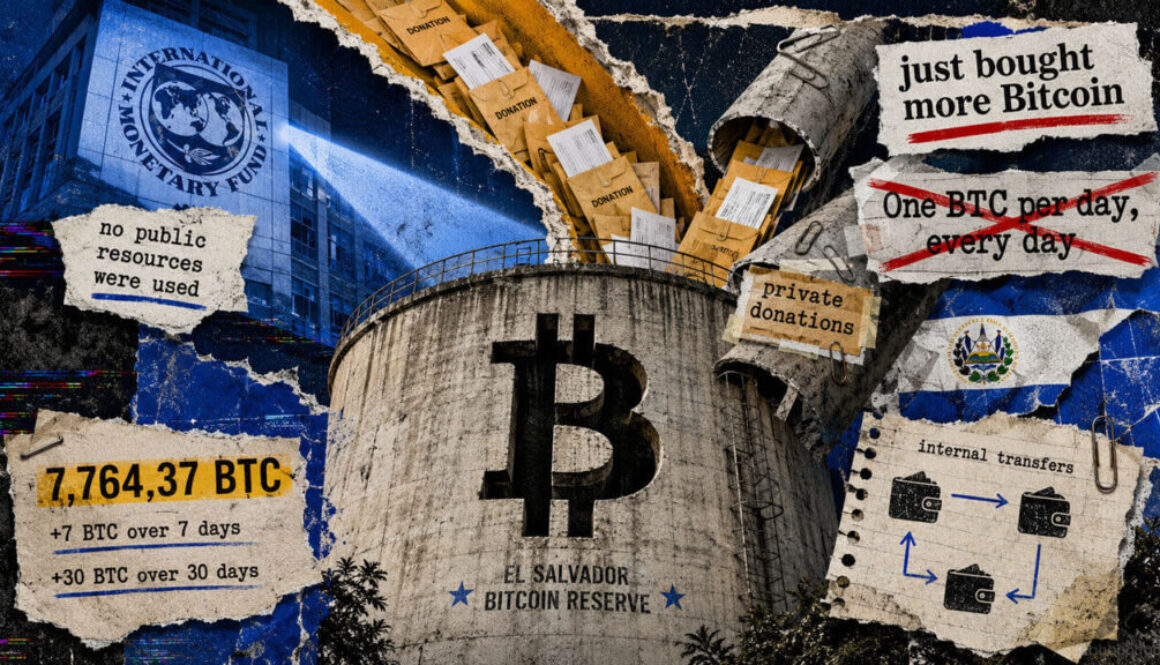
- El Salvador holds approximately 7,764 BTC worth roughly $630 million at current market prices around $81,150 per coin.
- All Bitcoin acquired since the IMF’s last program review came from private donations, not government funds, according to IMF documentation.
- Majority ownership and operational control of Chivo have transferred to a private operator while the government retains only a minority stake.
- 7,764 BTC Total Bitcoin holdings across El Salvador’s National Bitcoin Office wallets
- $630M Approximate value of holdings at $81,150 per Bitcoin
- 4.5% Expected real GDP growth for 2025, exceeding earlier forecasts
- $1.4B IMF Extended Fund Facility program size requiring crypto restructuring
The International Monetary Fund has confirmed that El Salvador’s government has substantially withdrawn from direct management of its Bitcoin holdings and the Chivo digital wallet platform, addressing a central point of contention in the country’s negotiations for international financial support. Majority ownership and day-to-day operational control of Chivo have been transferred to a private operator, leaving the government with only a minority stake and custodial responsibility for customer assets. The IMF has further verified that all Bitcoin purchased since its last program review came from private donations rather than government budgets, settling a long-standing question about how El Salvador financed its crypto acquisitions.
Chivo Restructuring Removes Government From Daily Crypto Operations
The Chivo wallet, launched in 2021 to facilitate Bitcoin transactions and extend financial services to unbanked populations, had become a friction point between El Salvador and international creditors. The platform’s government-controlled architecture raised red flags at the IMF over fiscal transparency and financial stability risks during the country’s economic reform program. The transfer of operational control to private management represents a substantive concession to these concerns while preserving some government involvement through minority ownership.
The restructuring allows El Salvador to maintain a foothold in its Bitcoin initiative while ceding the regulatory and operational risks to the private sector.
This approach reflects broader international trends in cryptocurrency governance, where central banks and sovereigns are increasingly hesitant to operate digital asset platforms directly. Private operators can implement industry-standard compliance procedures, anti-money laundering protocols, and customer protection mechanisms more readily than government entities managing multiple competing priorities. The private management structure also provides a buffer between fiscal policy decisions and cryptocurrency market movements, reducing the appearance that government budgets are exposed to digital asset volatility.
Private Donations Replace Public Funding for Bitcoin Purchases
Documentation submitted to the IMF establishes that no public funds have been deployed to purchase Bitcoin since the fund’s last program review, a distinction central to the country’s efforts to demonstrate fiscal discipline. The clarification that all recent acquisitions came from private donations addresses longstanding questions about the appropriate use of government resources during El Salvador’s economic stabilization program. The IMF staff confirmation of this arrangement removes a key source of uncertainty for international investors and creditors monitoring the country’s financial management.
This shift aligns El Salvador’s Bitcoin accumulation strategy with the fiscal constraints required by its IMF lending agreement.
The reliance on private donations also reflects a recognition that government cryptocurrency holdings present accounting and balance-sheet complications for a country under IMF program monitoring. When sovereign entities purchase crypto with public funds, questions arise about valuation methodologies, reserve adequacy, and whether digital assets should be classified as official reserves. Private donations bypass these accounting questions while still allowing the government to benefit from price appreciation if market conditions prove favorable. However, the implicit backing of these private contributions by government commitment to Bitcoin as legal tender creates ongoing policy ambiguity about the true nature of this arrangement.
New Governance Framework Caps Bitcoin Holdings and Strengthens Oversight
The IMF and El Salvador’s authorities have reached a staff-level agreement that extends beyond Chivo’s restructuring to establish enhanced governance and risk management standards for all public-sector crypto assets. The country has committed to halting additional Bitcoin accumulation beyond the privately donated holdings already received, effectively capping its direct exposure to further price volatility. These commitments form part of a broader update to El Salvador’s legal, regulatory, and supervisory frameworks for digital assets, recognizing that crypto holdings require robust oversight mechanisms comparable to those applied to traditional financial institutions.
The improved framework aims to protect both government finances and individual users from excessive risk exposure. At current holdings of approximately 7,764 BTC worth roughly $630 million, Bitcoin remains a material element of El Salvador’s balance sheet despite the government’s scaled-back acquisition role. Currency volatility continues to present both opportunities and risks to fiscal management under these new constraints.
Stronger Economic Growth Provides Context Beyond Bitcoin
El Salvador’s economy expanded more than anticipated in 2025, with real GDP growth expected to reach 4.5%, according to the IMF. The stronger-than-expected performance reflects multiple contributing factors including investment, consumer spending, remittances, tourism inflows, and capital arrivals, demonstrating that the country’s economic trajectory extends well beyond its Bitcoin experiment. Improved security conditions and rising investor confidence have supported this diversification of income sources.
These developments occur as El Salvador continues executing reforms under its Extended Fund Facility arrangement with the IMF, addressing structural challenges including gang violence and institutional weakening.
The economic growth acceleration suggests that El Salvador’s economy can perform competitively without relying heavily on cryptocurrency policy as an economic driver. This reality may ease tensions between the government’s Bitcoin advocacy and international creditors’ concerns about fiscal prudence. As the country demonstrates macroeconomic stability through conventional growth metrics, the debate over crypto’s role in national development becomes less consequential to overall economic management and IMF program requirements.
As a condition of securing the $1.4 billion IMF program, El Salvador agreed to reduce public-sector involvement in Bitcoin, make private-sector cryptocurrency acceptance voluntary, and curtail elements of its broader crypto initiative. The Chivo restructuring and related commitments represent the practical implementation of these conditions. Investors and creditors will watch whether El Salvador adheres to its commitment to halt additional Bitcoin accumulation and whether the enhanced governance framework successfully manages the country’s existing holdings without triggering new fiscal concerns. Success in this area could demonstrate a model for other emerging markets exploring cryptocurrency adoption while maintaining IMF program compliance and international creditor confidence.