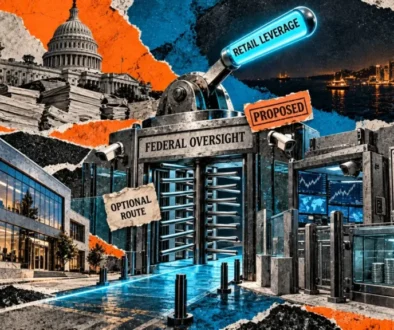
FinCEN withdraws crypto wallet and mixer reporting rules under Trump deregulation push

FinCEN has scrapped two long-pending proposals that would have forced reporting on self-custody crypto wallets and anonymized transaction mixing, citing the Trump administration’s deregulatory stance. The move removes a five-year regulatory overhang for wallet providers while legal risk around mixing services continues to play out in federal courtrooms.
- FinCEN withdrew two proposed crypto rules on Monday, citing the administration’s deregulatory agenda.
- The unhosted wallet rule, pending since December 2020, would have required identity checks above $10,000 in transfers.
- The 2023 mixing proposal relied on a USA PATRIOT Act section 311 finding targeting international money laundering.
- $10,000 transfer threshold that would have triggered wallet identity checks
- $3,000 lower threshold at which wallet recordkeeping requirements began
- $2B in illegal transactions Samourai Wallet allegedly processed, prosecutors say
- 5 years prison sentence given to Samourai co-founder Keonne Rodriguez
The Financial Crimes Enforcement Network rescinded two proposed digital asset rules on Monday, according to CryptoPotato reporting. One targeted self-custody wallets and had been pending since December 2020; the other, introduced in 2023, would have imposed special reporting measures on crypto mixing services. The Treasury bureau’s official announcement cited the Trump administration’s “deregulatory agenda” as the basis for ending both proposals.
Unhosted wallet rule carried a $10,000 reporting trigger
The withdrawn wallet rule, first published on December 23, 2020, targeted what regulators called unhosted wallets, meaning wallets where no bank or financial institution processes transactions on the user’s behalf. Banks and money service businesses would have had to file a report and verify a counterparty’s identity whenever a single transfer topped $10,000, or when multiple transfers to the same unhosted wallet exceeded that amount within 24 hours.
Recordkeeping obligations would have kicked in at a much lower $3,000 threshold. The rule also reached wallets held at foreign institutions operating outside the Bank Secrecy Act in jurisdictions FinCEN had specifically named.
Deputy Director Jimmy L. Kirby signed the notice confirming the bureau will take no further action on the proposal. The notice points to a July 2025 report from the President’s Working Group on Digital Asset Markets as part of the rationale, and FinCEN says it reviewed public comments on both proposals before withdrawing them.
Mixing rule invoked Patriot Act’s primary money laundering finding
The second withdrawn proposal, dated 2023, would have placed a special measure on crypto mixing, the practice of blending coins from many users so their origins become harder to trace. It rested on a finding under section 311 of the USA PATRIOT Act that international crypto mixing qualifies as a class of transactions of primary money laundering concern.
Had it taken effect, covered financial institutions would have had to report any transaction they knew or suspected involved mixing with a foreign link. That would have included amounts, wallet addresses, transaction hashes, IP addresses and full customer identity records.
The Crypto Council for Innovation, an industry group that filed comments opposing the mixing proposal, called both withdrawals “positive for the digital asset ecosystem” in a post on X. The group had warned the proposal’s broad definition of mixing risked capturing legitimate activity, and described the withdrawal as “the rulemaking process working.” On the wallet rule, CCI argued the reversal helps prevent regulators from prohibiting or restricting self-hosted wallet use.
Samourai Wallet founders already serving prison sentences
FinCEN’s retreat from mixing-specific rules arrives as privacy-focused crypto services already face criminal prosecution under existing law. Samourai Wallet co-founders Keonne Rodriguez and William Lonergan Hill pleaded guilty over their mixing service, with prosecutors alleging the platform processed more than $2 billion in illegal transactions and laundered over $100 million.
Defense lawyers had sought dismissal, citing an April 2025 Justice Department memo stating prosecutors would no longer pursue cases based solely on user actions or regulatory technicalities. They later alleged officers withheld internal FinCEN communications suggesting Samourai was not a money transmitter.
Rodriguez and Hill were ultimately sentenced to five years and four years in prison, respectively. At Rodriguez’s sentencing, the judge said he had “used his talent to enable fraud,” while supporters including analyst Kyle Chasse maintained the platform was built to let users send crypto anonymously rather than to conceal wrongdoing.
The BlockWest read. Wallet providers and custody-adjacent fintechs gain certainty they lacked for five years, since a reporting mandate tied to a $10,000 threshold is now off the table for the foreseeable future. But the Samourai prosecutions show enforcement risk for mixing services hasn’t moved to Treasury rulemaking at all; it sits with the Justice Department, under existing money transmitter and laundering statutes, regardless of what FinCEN proposes or withdraws.
FinCEN’s notice states the bureau will take no further action on either proposal, closing both dockets without a successor rule yet announced. Whether the Trump administration pursues a narrower replacement for mixing oversight, or leaves enforcement entirely to criminal prosecutors as in the Samourai case, remains an open question for the industry to watch.
BlockWest is a news publication. Nothing here is investment advice. Read our disclaimer and editorial policy.