
Dan Edlebeck on Sentinel’s decentralized VPN for Web 3.0
In this episode
Ashton Addison interviews Dan Edlebeck, the CEO of Exidio. We Discuss the Sentinel Decentralized VPN service (dVPN) including how the DVPN cryptocurrency token integrates into the ecosystem and rewards users for contributing bandwidth to the Web 3.0. Dan also discusses the upcoming mainnet launch and the move to the Cosmos Protocol for Blockchain Interoperability.
Bitcoin Trading at ByBit Exchange: 10% off the Best Crypto Portfolio Tracker: Get Buy and Sell Signal Indicators built into your charts!:
exidio.co · engineeringrobo.com · binance.com
- Sentinel operates a peer-to-peer decentralized bandwidth marketplace where users can offer bandwidth or access it as a decentralized VPN service.
- Sentinel's dVPN applications have achieved over 100,000 downloads on Google Play, with the official Sentinel dVPN reaching closer to 150,000 downloads.
- Sentinel launched its mainnet on the Cosmos blockchain, enabling monetization of bandwidth contributions and integration with multiple payment chains via IBC protocol.
- The decentralized VPN model addresses privacy concerns by eliminating centralized data collection, as exit nodes are distributed across network contributors rather than controlled by single companies.
- Sentinel targets mainstream VPN competitors like NordVPN and ExpressVPN rather than other decentralized VPN projects, aiming for seamless user experience comparable to traditional services.
Transcript
Read the full transcript
i'm ashton addison from event chain for investmentpitch media in the crypto coin show and today on blockchain interviews we have dan edelbeck the ceo of exidio dan welcome to the show and thanks for taking the time to be here hey thanks a lot ashton uh it's exciting it's very exciting i know exidio and sentinel are both working on some really interesting things right now
so if we can just start off the interview by getting an overview and the focus of exidio and what are the main problems that your team is solving for yeah definitely and so xidio is the software development company building on the sentinel network so in the crypto space people might know sentinel like my shirt a lot more sentinel is the peer-to-peer network
where people can offer bandwidth to the network or people can use that excess bandwidth as a decentralized vpn and exidio the software development arm is building custom applications and integrations on top of the network so i'm leading exidio because sentinel itself is truly a peer-to-peer network very cool and i so essentially this is a peer-to-peer like web 3.0 platform
i know that there are some other people that are working on this and it's a great initiative is there something about sentinel that makes it unique and gives it a competitive advantage as a solid web 3.0 yeah so i think there's lots of important layers to the web 3 stack to your point ashton i think that there's different players that are operating in different parts of
that space so i would say like for a decentralized name base you could look at like handshake network they're doing really interesting stuff or decentralized cloud compute you could look at akash or dfinity is coming out or decentralize middleware you would think of the graph so sentinel really fits at that layer of decentralized bandwidth or decentralized networking and so we're
one of the few that are actually getting a pretty big wide group base of nodes that are offering decentralized bandwidth to the network um there are other players that are looking at decentralized vpn but haven't quite seen the growth as far as um true network and and uh usage and adoption quite yet so i'm pretty excited i think we're leaving the pace in that area definitely that is
exciting and can you talk a little bit more about the the vpn part of the web point 3.0 is it decentralized vpn does that involve hardware or just software and how does that work yeah it's a good question so decentralized vpn is based off of a connection a marketplace of decentralized bandwidth so people that are offering bandwidth to the network and that people that are
using that bandwidth the most obvious use case for decentralized bandwidth marketplace is decentralized vpn because you can route your traffic through other internet service providers um connections and so in doing so um we we can build customized decentralized vpn applications built on the peer-to-peer bandwidth sharing marketplace um and so exidio we we have our own
what's called the sentinel dvpn which is a little complicated but we're working on other applications as well there's another company that's not exidio called elysium and they've also built on top of the sentinel decentralized vpn network and they built their own decentralized vpn called the velocity vpn and even that application has seen over 100 000 downloads in the google
play store um and the sentinel dvpn has seen over 100 000 closing closer to 150 000 on google play um and we also have applications on desktop um and so we're seeing lots of and now as sentinel this is a really big momentous occasion so today is tuesday uh it's been a crazy week and it's going to be even crazier week on saturday we go live on main on cosmos and this is years in the
making so um as we finally go live on main net and sentinel finally has its own uh chain and its own security we'll be able to scale the network and in doing so other companies will be able to uh offer their bandwidth on the network uh as of right now the network is not monetized so people that are offering download to the network are not generating passive income for doing so
but that will happen on mainnet and that's where we really have the opportunity to scale both the supply side and the demand side of the bandwidth marketplace very exciting dan and you touched on a bunch of things that i want to dive into and you you quickly mentioned there about google play having the applications we also said that the inner workings of
the sentinel dvpn are quite technical so is it actually quite easy for people to just go use their phone and download the application or just download the desktop and start using uh the dvpn uh how much technical expertise does that require that's a great question and that's exactly what we're out to do is make for a seamless user experience we're not we don't see like other
players in decentralized vpn um you know orchid or mysterium other projects as as competitors we see nordvpn we see expressvpn we see tunnelbear we see um proton vpn as the true competitors this is the uh it's it's a pretty interesting um industry it's really an oligopoly there's a few different companies that have majority ownership over the vast majority of the products on the market
you don't realize that they all roll up to the same company until you dig a little bit further you know peel a few of the layers back of the onion and also you don't realize that they say that they're end to end encrypted and that they're not logging user data and oftentimes that's actually not the case so instead of offering your bandwidth to your internet service provider who could
then go and resell it or use that information in your metadata you're just passing that down the line to your vpn company that's oftentimes reselling your user data but it essentially does vpn architecture that's actually impossible because the only person with the end metadata is the exit node which is uh you know anyone can be offering bandwidth to the network so as
the network scales it becomes more robust and and um more resilient and to your initial question the the technical architecture is interesting but that's not what we need to do we need to make it stupid simple for the end consumer to be able to enjoy actual product the actual product be able to route their traffic through other other internet um connections and
so that's why i think we've seen a lot of adoption to date is because of the seamless experience of our applications and we're going to be launching our app on ios very soon as well and we have um some exciting announcements coming in that direction so uh there's a lot going on but when it comes down to the actual usage of the application just download the
app and it works seamlessly that's great to know and you mentioned that you're working towards the main net really soon here which is really exciting and that you're also tying into the cosmos network i recently did speak with the cosmos team on the show about the ibc inner blockchain communication protocol that's really exciting uh that you know you'll be able to tie
into all of these different networks can you just give a little bit more in depth on what does it mean and what's going to happen when sentinel dvpn goes into the main net for for the end users yeah so this is the opportunity so as we go on mainnet um it has a few different benefits to end users so payment gateways will be a lot more seamless because we'll be able to
incorporate like you said payments for multiple chains we'll also be able to um incorporate payment via credit card or venmo or alipay so we're looking at different payment providers to be able to make it as seamless experience as possible and the throughput on on cosmos makes that feasible um and then with the ibc we'll be able to incorporate different uh payments so if people
wanted to pay um via whatever coin they that is connected via ibc they they can do so so it really helps scale the network and be able to do streaming payments because you can uh pay for just let's just say you wanted to watch this video and you wanted to watch it and your um service provider you know precluded you from doing that or your nation state precluded you from
doing that you connect through the sentinel vpn and you just want to watch one video maybe it only costs you 10 cents a vpn um you could be able to do that based on the amount of bandwidth you use so the use cases become a lot more interesting when we go on cosmos definitely and you mentioned that it wasn't available right now but what also is coming is that
you can share and earn rewards as well can you talk about how people can become contributors to the network and and how they get rewarded for helping grow the network yeah yeah actually i feel like you you definitely understand it uh very very precisely right away um so the peer-to-peer network is people offering bandwidth and the people that are using it
so uh this is a non-fungible asset that we're using in the eco in that's crucial to the ecosystem of of being able to have network computers and so offering your excess bandwidth by doing so um offering that to the network you can get paid um in sentinel tokens for doing so and um what you'll actually get paid is 80 of the revenue that you're offered to
the network but 20 of that actually doesn't go back to the people that are offering bandwidth but it goes back to the people that are holding and staking the tokens so as um token holders are holding and staking and participating and securing the network not only are they earning staking rewards but they'll also be earning uh 20 of the fees that are generated across
the network very cool and i was going to ask you about the functionality of the sent token it's great to be able to earn rewards for your bandwidth there's also staking those are both very important aspects is there anything else that you we haven't touched on yet in terms of just the functionality of scent and does it really create a sustainable ecosystem
exactly yeah and i think that that's really important and we've done a lot of uh kind of deep digging into what makes a sustainable token and how does that uh play into the ecosystem of within sentinel and so not only does it uh secure the blockchain and uh if by doing uh validation of the blockchain and if you're delegating to a validator or any staking rewards
um but you're also earning rewards as the network grows and so participating in the network but primarily the token is used for payment so as you want to use a decentralized vpn you can use the sentinel token to use payment um and there'll be a discount to use it compared to using other payment mechanisms that's great and this is a big milestone to hit the mainnet here
and it sounds like you are poised for you know the time for exponential growth because crypto as a whole is just taking off right now and this type of service is something that's going to be really needed in the future what what do you think will be some of the main key factors to achieving mainstream adoption and getting a share of this industry that's sort of
controlled by that oligarchy that you talked about yeah exactly so one is a big one that we just hit so uh the snt foundation just raised 3.5 million from a lot of the institutions and bigger backers across the space uh players within the cosmos ecosystem values are in the cosmos ecosystem um big vcs thought leaders so we have a really robust uh support
network that's helping to see us succeed and will help us to get a lot of the right connections that are going to be are necessary as our in our growth and then uh with that kind of now in the rearview mirror and looking forward it's about execution and growth so uh exidio will be growing our team especially on the tech side and on business development side and
another thing is going to be specifically around growing a supply set more people offering decentralized family to the network and we haven't had as big growth a growth on that side um we have over 250 live nodes that are offering bandwidth but they're they're doing all the good there's their heart they're not generating passive income yet but as we go on mainnet and monetize the
network this is where we see huge opportunities for scaling the supply side and then as we scale the supply side we have already have seven different companies that want to build their own decentralized vpn on top of the network and some of those have between tens of thousands and one has over a hundred thousand user base so the opportunity for growth is
significant and it's really gonna come down to executing as a business building out the right tech and uh finding the right companies that want to build on it and especially um growing up the supply side of people offering bandwidth to the network definitely and i could see how having those incentives rather than just the goodness of your heart will will greatly increase the
amount of people on the supply side and there's just so much unused bandwidth from everybody that you know the potential to to grow that to something significant i i feel it it would be quite easy now on the flip side what are some of the challenges that you're going to have to face as you get to that point where you get to the mainstream adoption of being
as big as express or nord yeah so um again i think that really does come back to effective communication and getting access to individuals that want to supply a vpn really i think this is our biggest opportunity is growing the supply supply side even though we're going to be monetizing the network and people be able to earn passive income you still need to educate people on how
to run dvpn node and make that process as seamless as possible we have a couple things up our sleeve in our 2021 roadmap that we haven't discussed that would really minimize the friction and technical know-how to be able to offer bama to the network we want to make that as seamless as possible as well so that will be a huge opportunity and being able to put that into
place will take some work and and some will need to be able to find uh the right partners and being able to achieve that um so really growing the supply side is a huge opportunity and then uh making sure that we're all aligned internally and that we're all operating effectively i feel really fortunate to have the team that we have um sereni vos is our cto
and he's been recognized as one of the top developers in the entire cosmos ecosystem he's really um a wizard and so we're lucky to have him not only as a blockchain developer but as a networking internet networking developer and understanding vpn protocols um and uh now we're building out a lot of the team around him um and so we have a really good core
team our ceo peter uh he finishes nba alongside myself and uh he's really helped us make sure that all operations are hitting on all cylinders and um working with legal and uh you know service providers and banking and uh marketing agencies um so we just have a lot ahead of us and i feel really excited about the road ahead but it's you know the work is far from over
definitely it's going to be a lot of work but uh i i believe that you guys uh will put that effort in because now is the time to succeed and i've been following the project and and i see that it has great potential and this main net is obviously the first huge milestone of many um so we are we are running short on time dan but for the viewers that are interested in
learning more about the dvpn on the supply side uh and the main net launch what's the best way for them to get involved in the community and to learn more awesome thanks so much ashton especially in the community we're really active on telegram if you go to t dot m e sentinel underscore co or um t dot m e slash sentinel underscore announcements those are our active community channel
and our announcements channel and our twitter is twitter.com sentinel underscore co and we're really engaged with everyone in the community across all those channels uh and our website is the sentinel website is sentinel.com and the exidio website is xidio.co um so we'd love to have engaged with you and if you want to learn more about how we're trying to bring decentralized vpn
to the masses uh we'd love to connect great thank you so much dan i will leave those social links and the website links in the description box below as well for the viewers all the best with the mainnet launch and everything else moving forward with sentinel and let's follow up in the near future i love it appreciate your time
More interviews
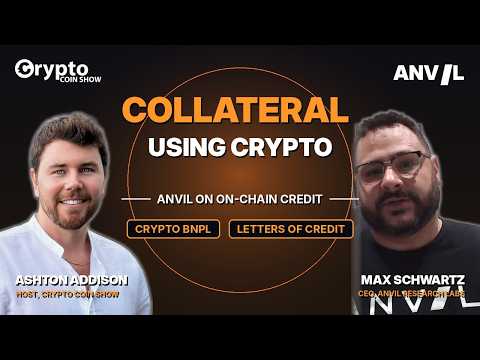 How Anvil lets you use crypto as collateral without sellingOct 6, 2026
 Pawel Mastalerz on how Daski helps AI agents navigate the webOct 6, 2026
 Why banks are building for Web3 in silenceOct 5, 2026
 How TrendTrader Pro raised $1M for a token buyback fundOct 2, 2026
 Illia Polosukhin on NEAR’s privacy features and AI agents in 2026Oct 1, 2026
 How Robinhood built its own blockchain to control compliance and feesSep 29, 2026