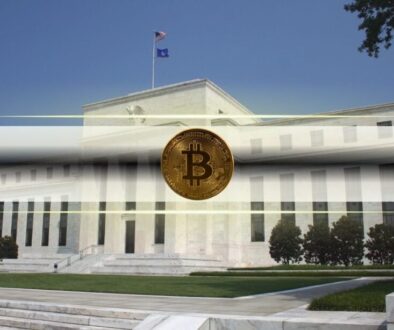
Fed confronts bond market pressure for more rate hikes than projected

Treasury yields climbed further on Thursday (September 24, 2026), forcing the Federal Reserve to confront inflation pressure and market skepticism at the same time. Chairman Kevin Warsh, who has said he wants markets to help guide policy, now faces a bond market pushing him toward more rate hikes than the central bank projected just months ago.
- Traders have raised the odds of a Fed rate hike in October, roughly a month after last week’s quarter-point increase.
- RSM’s Joseph Brusuelas says the Fed may need five or six rate hikes, not the two or three he initially expected.
- The 30-year Treasury bond has climbed to its highest level since 2004, reshaping the debate over how far the Fed must go.
- 5.15% 10-year Treasury yield Thursday, closing in on RSM’s 5.5% stress case
- 4.7% unemployment rate RSM models if the 10-year yield reaches 5.5%
- 2004 last year the 30-year Treasury bond traded at today’s yield levels
- 5 to 6 rate hikes Brusuelas says may be needed, up from an earlier call of three
The bond market is sending the Federal Reserve conflicting signals as officials try to avoid derailing the economy, according to CNBC. Treasury yields rose again Thursday as investors weighed inflation still running well above the Fed’s 2% target, another jump in energy prices, and heavy debt issuance tied to a global hyperscaler spending race in artificial intelligence.
Fed officials have historically looked past inflation spikes from temporary shocks such as energy price swings or tariffs. Not long ago, the AI investment boom was widely described as a short-lived, ultimately disinflationary trend.
That view is now shifting inside the central bank, which is reassessing whether these forces could produce more durable inflation. At the same time, Warsh’s Fed has offered little forward guidance, leaving investors uncertain whether policymakers or the market itself are setting the pace of rate moves.
Traders price in an October hike just weeks after september’s move
Markets have moved quickly to price in a firmer Fed response to inflation. Over the past day, traders raised the probability of a rate hike in October, which would follow last week’s quarter-point increase by only about a month.
Traders also see a third hike landing either late this year or in early 2027, with additional hikes possible in subsequent months. That marks a sharp reversal from June, when the Fed projected it might hike once this year and then be done before starting to cut in the next couple of years.
RSM’s Brusuelas says the Fed needs five or six hikes, not three
Joseph Brusuelas, chief economist at RSM, said his own outlook shifted after his firm modeled the effects of sustained AI-driven investment combined with sharply higher long-term yields. The modeling found that even a 10-year yield of 5.5%, above Thursday’s 5.15%, would slow growth to 1.5% and push unemployment to 4.7% while core inflation stayed stuck at 2.4%.
The Fed is underestimating what’s going to be necessary to restore price stability — that we’re probably not talking two or three hikes. We’re talking five or six.
Joseph Brusuelas, chief economist, RSM
Brusuelas argued the era of the Fed looking past supply shocks has ended. “The bias has to be towards restoring price stability, and they should take what’s going on seriously,” he said.
Not every economist agrees with that read. Citigroup economist Andrew Hollenhorst wrote in a note that the yield rise reflects investors pricing in higher policy rates rather than fears the Fed will let inflation run hot. “The rise in yields has not been due to expectations of a too-dovish Fed allowing inflation to persistently exceed target,” Hollenhorst wrote, adding that it should not be surprising this has lifted both short- and long-term yields together.
Warsh’s market-guided approach faces its first real test
Several senior Fed officials who back near-term hikes are also urging caution against locking in a preset path. New York Fed President John Williams, who serves as FOMC vice chair, said Thursday it is “reasonable” to expect another hike by year-end but stressed the need to keep watching incoming data rather than commit to forward guidance. Philadelphia Fed President Anna Paulson likewise signaled more tightening is likely, but described it as “modest.”
Krishna Guha, head of economics and central bank strategy at Evercore ISI, said weak guidance leaves the Fed exposed either way. Delivering back-to-back hikes without explaining them risks an outsized hawkish repricing, he said, while skipping a hike the market has already priced in could trigger an equally sharp dovish swing.
The dilemma matters because Warsh has pushed the Fed to let market signals shape policy, a marked break from the forward-guidance approach used since the 2008 financial crisis. UBS economist Jonathan Pingle wrote that Warsh’s “framework appears significantly less rooted in economic measurement details and significantly more reflective of market narratives,” adding that no Fed chair has leaned on market signals this heavily before. Pingle also noted that after last week’s press conference, Warsh’s views appeared closer to those of Cleveland Fed President Beth Hammack, one of the more hawkish voting members this year, than to anyone else on the FOMC. Warsh had called for rate cuts before taking the chair’s job in May, underscoring how far the bond market has pulled him toward a hawkish stance.
The BlockWest read. A Fed chair who explicitly follows Treasury signals turns bond desks into de facto policymakers, and that raises the stakes for anyone holding rate-sensitive crypto and AI-adjacent equities. If Warsh keeps deferring to the 10-year, allocators should expect policy volatility to track hyperscaler debt issuance and oil headlines as much as CPI prints, a dynamic balance sheets built for a data-dependent Fed were not designed to price.
The next test comes at the Fed’s October meeting, where officials must decide whether to deliver a second hike within roughly a month of September’s move or pause and risk disappointing a market already pricing in tightening. Brusuelas maintains that markets, not the Fed’s own projections, are correctly reading the inflation risk, while Guha and Hollenhorst caution that traders may be getting ahead of the data. How Warsh resolves that split, without the forward guidance his predecessors relied on, will shape whether the FOMC ends 2026 with three hikes or the five to six Brusuelas now expects.
BlockWest is a news publication. Nothing here is investment advice. Read our disclaimer and editorial policy.