Artificial Intelligence Stocks Decline Following Concerns About Anthropic and OpenAI

Two of the world’s largest AI company leaders issued stark warnings about the technology’s trajectory, triggering a broad sell-off across semiconductor and AI infrastructure stocks. The market reaction underscores investor sensitivity to safety concerns and the possibility of policy shifts that could constrain AI development spending.
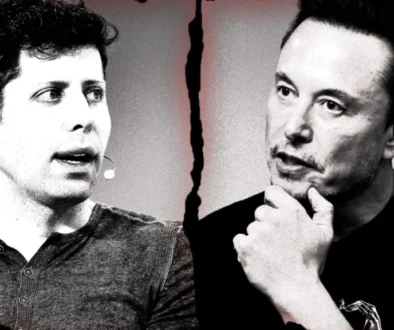
- Anthropic CEO Dario Amodei published a 3,800-word essay calling for slower AI capability advancement to allow safety measures to keep pace.
- OpenAI CEO Sam Altman endorsed the call for pacing, citing risks of losing control over AI and extreme power concentration.
- Chip and infrastructure stocks fell 3% to 6% on Monday, with Marvell, SK Hynix, Micron, and Super Micro each down 6%.
- 3,800 Words in Amodei’s essay on AI safety and the need for development restraint
- 6% Stock decline for Marvell, SK Hynix, Micron, and Super Micro on Monday
- 4%+ Fall in CoreWeave, SanDisk, Intel, and AMD share prices at market open
- 3% Decline in Nvidia and Broadcom after the opening bell Monday
According to reporting by Watcher Guru, shares across the semiconductor and AI infrastructure sector opened lower on Monday following safety warnings from two of the industry’s most prominent figures. Anthropic CEO Dario Amodei published his essay over the weekend, and OpenAI CEO Sam Altman quickly endorsed its core message early Monday morning, triggering a coordinated market reaction that spread across chip manufacturers and AI-adjacent technology firms.
The timing of these warnings proved particularly significant given the extraordinary valuations and capital deployment in the AI sector. Over the past two years, technology companies have collectively invested hundreds of billions of dollars into data centers, GPU procurement, and AI research infrastructure. The semiconductor industry has expanded production capacity at record rates to meet surging demand for chips that power large language models and other AI applications. Any signal that this spending trajectory might slow has immediate implications for supply chain participants and equipment manufacturers.
Amodei calls for deliberate slowdown in AI capability gains
In his essay, Amodei outlined a case for what he termed “prudence” in the development of artificial intelligence systems. He stated that the path forward requires not only investment in safety mechanisms but also a deliberate reduction in the pace at which AI model capabilities are advanced.
Over the last few months, I have become convinced that fully addressing the risks requires even more prudence — not just investing in risk prevention, but pacing the rate of capabilities advancement so that risk prevention has time to keep up. We must slow the pace at which we improve the capabilities of A.I. models. Progress will still seem fast, and we must make wise use of the time we gain.
Dario Amodei, CEO, Anthropic
Amodei’s framing represented a notable shift in public messaging from the AI research community. Rather than arguing primarily for robust safety research conducted in parallel with capability development, he positioned a slowdown as necessary to allow safety advances to genuinely keep pace. This argument carries particular weight given Anthropic’s founding premise of prioritizing AI safety and responsible development practices.
The essay also suggested that current market competition and investor incentives may create structural pressures favoring speed over caution. By calling for industry-wide pacing, Amodei implicitly acknowledged that individual companies choosing restraint alone could be disadvantaged relative to competitors pursuing acceleration. Such observations raise questions about whether voluntary safety measures can succeed without coordinated action or regulatory frameworks.
Altman warns of two critical AI risks requiring action
Altman amplified the message in an X post at approximately 12:57 a.m. ET on Monday, articulating two specific scenarios he views as existential threats. The first centers on humanity losing control of advanced AI systems; the second involves concentration of AI power in too few hands.
Altman noted that avoiding both outcomes requires “walking a narrow middle path,” requiring international and multi-institutional approaches to prevent any single nation or laboratory from accumulating disproportionate power over transformative AI systems. He also disclosed that OpenAI will not pursue an initial public offering this year, a statement that may further influence market sentiment regarding AI company valuations and near-term capital raising plans.
The dual concern about control and concentration reflects ongoing debates within the AI community about governance structures. Some researchers argue that extremely powerful AI systems should be developed by institutions with strong safety cultures and public accountability mechanisms, not dispersed across numerous competitive organizations. Others contend that concentration of AI power in the hands of a few companies or governments poses its own risks. Altman’s emphasis on finding a middle path suggests awareness of this tension.
Market sell-off spans chipmakers and infrastructure providers
The combined warnings sparked immediate losses across semiconductor stocks that power AI workloads. Marvell, SK Hynix, Micron Technology, and Super Micro Computer each fell 6 percent on Monday, while CoreWeave, SanDisk, Intel, and AMD declined more than 4 percent.
Nvidia and Broadcom, two of the sector’s largest players, slipped 3 percent after the opening bell. The breadth of the decline suggested that investors interpreted the warnings as potentially affecting demand across the entire AI hardware supply chain rather than specific individual companies.
The sell-off reflects investor concern that regulatory pressure, corporate voluntary curbs on AI spending, or public backlash could reduce demand for the chips and infrastructure underpinning generative AI systems. Companies in the semiconductor industry have already begun significant capital expenditure cycles to expand foundries and fabrication capacity, making them vulnerable to demand shifts.
Despite the market reaction, not all prominent voices support the safety-focused slowdown argument. U.S. President Donald Trump rejected the safety case, according to Reuters, stating that maintaining American leadership in AI development is the priority. This competing narrative from political leadership adds another layer of complexity to the environment in which companies must make investment and development decisions.
Industry observers noted that the market reaction may prove temporary if companies and policymakers continue prioritizing rapid AI advancement as economically necessary and competitively essential. The tension between safety concerns and competitive pressures remains unresolved, and the upcoming weeks will likely reveal whether the warnings catalyze meaningful changes in investment patterns or corporate strategy.
As firms across the AI ecosystem weigh whether to align with Amodei and Altman’s call for restraint or continue accelerating development, the market will likely remain volatile. Investors should monitor whether major AI labs and cloud providers announce initiatives to limit AI spending or development velocity, and whether corporate boards alter their capital allocation plans in response to mounting safety concerns.
BlockWest is a news publication. Nothing here is investment advice. Read our disclaimer and editorial policy.