Bitcoin Lightning Network vulnerabilities discovered that could enable node operators to lose funds and experience system crashes
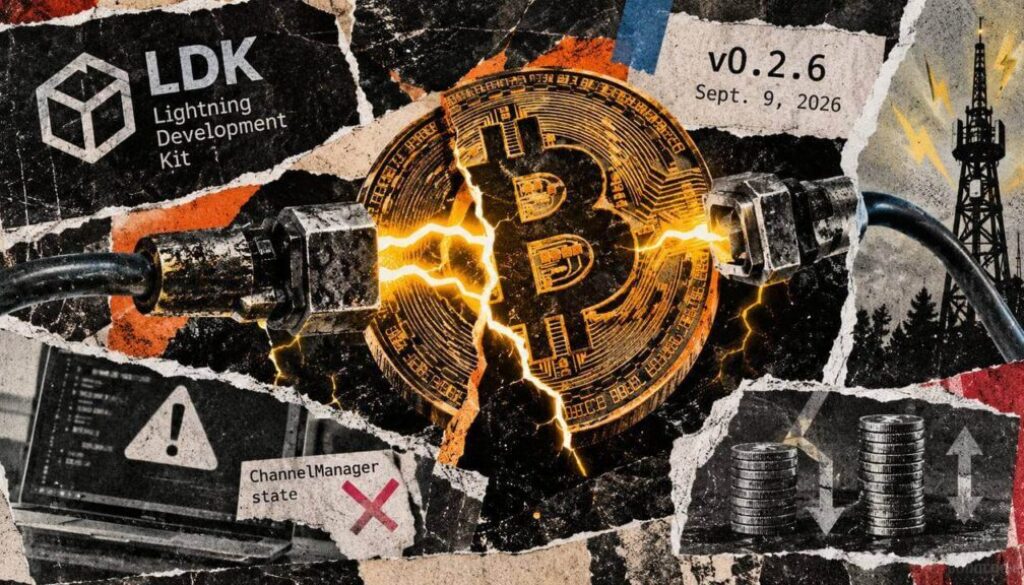
Two critical vulnerabilities in the Lightning Development Kit could have allowed attackers to steal funds from nodes or prevent them from restarting after shutdown. The September 9 security update fixes these flaws, which affected any application built on LDK’s toolkit.
- LDK v0.2.6 released September 9 with fixes for splice fee manipulation and ChannelManager deserialization bugs
- Malicious peers could exploit splice operations to cause excess fees redirected to their own outputs
- Bogus payment contracts could corrupt saved node state, rendering applications unable to restart after shutdown
- Sept. 9 Date Lightning Development Kit released v0.2.6 with critical security patches
- Two Distinct vulnerabilities addressed in the update affecting fund security and node restart
The Lightning Development Kit, a software framework for building Bitcoin Lightning applications, published security fixes addressing two separate flaws that posed threats to node operators. The toolkit, used by mobile wallets and payment infrastructure providers to implement Lightning functionality, released version 0.2.6 on September 9 to patch vulnerabilities that could enable fund theft and operational failures. No losses or exploited applications have been reported, according to the release notice.
Understanding the Lightning Development Kit
LDK represents a critical piece of infrastructure in the Bitcoin Lightning Network ecosystem. Rather than providing a complete implementation with built-in storage and networking components, LDK takes a modular approach, compiling its core protocol logic directly into applications. This design philosophy gives developers greater flexibility and control over how their applications function.
The toolkit has gained adoption among wallet developers, payment processors, and service providers seeking to add Lightning functionality to their platforms. Its architecture allows teams to integrate only the components they need while maintaining responsibility for selecting compatible storage backends, networking layers, and blockchain monitoring solutions.
Splice operations vulnerable to peer-directed fee theft
A splice operation allows a node to add or remove funds from an active payment channel by spending the channel’s existing funding output and replacing it with a new one. This feature enables dynamic liquidity management without closing and reopening channels. The process involves creating a replacement funding transaction with costs shared between both participants.
In a splice operation, the initiating node covers fees for specified transaction components plus its own inputs and outputs. The fee calculation mechanism determines how much of the node’s capital goes toward legitimate transaction costs versus other uses. This process requires both participants to agree on the fee allocation.
The vulnerability allowed a malicious peer to manipulate fee allocation during a splice, causing excess fees to be directed to that peer’s output rather than legitimate transaction costs. The release documentation describes the financial risk as affecting a small amount of funds when a node initiates a splice, though it does not specify a maximum threshold. This flaw creates a window of exposure whenever a node operator attempts to adjust channel liquidity through a splice operation.
Corrupted payment state prevents node restart after shutdown
The second vulnerability centered on LDK’s ChannelManager component, which oversees channel management and payment processing. When two payment contracts shared the same payment hash, and one had already been successfully forwarded, receiving and immediately rejecting a fraudulent copy could corrupt the ChannelManager’s saved state. This corruption made the state unable to load during the deserialization process that occurs when a node restarts.
A node unable to load its saved state cannot complete its normal startup sequence, effectively disabling the application until state corruption is resolved. This poses a distinct operational risk separate from the financial vulnerability. Rejecting the bogus payment alone does not prevent this particular failure state, creating an unexpected path to service disruption.
Implications for node operators
These vulnerabilities highlight the risks inherent in Lightning Network operations. Fund theft and service unavailability both pose serious concerns for operators managing payment channels. The combination of these two issues means that operators faced potential exposure on multiple fronts, with no single exploit necessarily preventing the other.
The good news is that the vulnerabilities required specific conditions to trigger. Fund theft required an active splice operation with a malicious peer, while state corruption required a very specific sequence of duplicate payment hash scenarios. Still, the possibility of either occurrence warranted immediate patching.
Application teams must integrate patched toolkit into production
Cryptocurrency wallet developers maintaining LDK-based applications face the responsibility of updating the toolkit themselves. Because LDK’s modular architecture means that each team maintains their own storage, wallet, networking, and blockchain-monitoring components around LDK’s core, this design provides flexibility but places the burden of security updates squarely on application operators.
Developers maintaining affected applications must integrate the patched v0.2.6 version into the software they operate and deploy the updates to production nodes. The patch release does not automatically deploy across the ecosystem. Each team must independently evaluate their deployment status, determine whether they use the vulnerable version, and manage their own upgrade timeline.
The immediate priority for any wallet provider or payment infrastructure operator using LDK is to evaluate whether their deployments contain the vulnerable version and, if so, to incorporate and deploy the patched toolkit to all affected nodes.
BlockWest is a news publication. Nothing here is investment advice. Read our disclaimer and editorial policy.