Brazil Speeds Up Digital Asset Adoption Through $2 Billion Credit Initiative
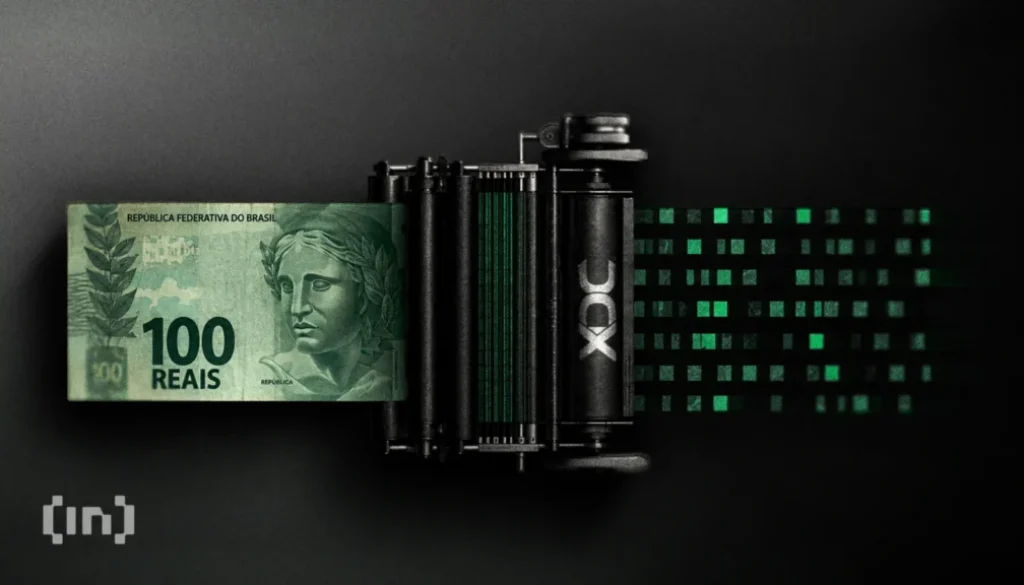
Brazil’s central securities regulator has established a dedicated tokenization working group while Liqi Digital Assets and XDC Network expand their partnership to $2 billion in planned issuance, signaling institutional-grade infrastructure for tokenized credit is moving from pilot phase to operational reality in Latin America’s largest economy.
- Liqi and XDC reached their original $500 million issuance target in 15 months, nine months ahead of schedule set in April 2025.
- Approximately $835 million has been tokenized across 386 series and 60 asset pools using 378 smart contracts on XDC mainnet.
- Brazil’s CVM created a Tokenization Working Group in July with representatives from 14 regulatory areas to design rules for DLT-based securities.
- $2 billion Total targeted tokenized issuance through 2028 under renewed Liqi-XDC agreement
- $1.5 billion Additional planned issuance beyond the completed $500 million original target
- $7.82 billion Total distributed tokenized credit tracked across the broader RWA market currently
- $17.6 billion Ethereum’s lead in distributed RWA value versus competitors including BNB Chain
Brazil’s securities regulator and a leading tokenization platform are accelerating the deployment of blockchain-based credit infrastructure in one of the world’s largest emerging markets. Liqi Digital Assets and XDC Network announced an extended partnership targeting $2 billion in tokenized issuance through 2028, expanding from an original $500 million commitment they say was completed in roughly 15 months. The expansion comes as Brazil’s Central Securities Commission, the CVM, established a dedicated Tokenization Working Group in July tasked with designing a regulatory framework for distributed ledger technology in securities registration, custody, trading, and settlement.
The momentum reflects a broader global shift in financial infrastructure as central banks, regulators, and financial institutions recognize blockchain networks’ potential to simplify issuance, reduce intermediaries, and enable programmable finance. Brazil, home to one of the world’s largest credit markets outside developed economies, has become an early testing ground for tokenized credit instruments. Unlike tokenized sovereign debt or stablecoins pegged to central bank currencies, tokenized credit requires regulators to address how private-sector obligations and collateral pools interact with distributed ledger systems.
Liqi achieved original $500 million target nine months early
When Liqi and XDC signed their initial partnership in April 2025, they projected reaching $500 million in tokenized real-world assets over two years. The companies completed that target in 15 months, suggesting demand from Brazilian financial institutions outpaced early forecasts. According to Liqi, the faster-than-expected pace reflects an existing institutional appetite for tokenized credit instruments paired with newly available blockchain infrastructure.
Currently, approximately $835 million has been tokenized across 386 separate series and 60 asset pools using 378 smart contracts deployed on XDC’s mainnet, positioning Liqi as the largest issuer of yield-bearing assets on the network. The tokenized assets include trade receivables, payroll-deductible loans, debentures, corporate credit and Brazilian receivables certificates, with issuances involving regulated institutions including Itaú BBA, Banco BV, Banco ABC Brasil and Creditas.
For participating banks, tokenization addresses operational inefficiencies in Brazil’s credit market. Traditional issuance of credit instruments involves multiple intermediaries, protracted settlement timelines, and limited access for retail investors. Blockchain-based systems compress timelines and can enable fractional ownership, potentially widening the investor pool for instruments traditionally restricted to sophisticated investors.
We signed the first agreement with a target that looked aggressive: half a billion dollars in two years. We delivered in fifteen months, because Brazil’s structured credit market was already there. What was missing was the infrastructure.
Daniel Coquieri, CEO and co-founder of Liqi Digital Assets
Tokenized credit expands within broader RWA market
Tokenized credit instruments now represent a meaningful portion of the real-world assets market beyond early-stage Treasury products. RWA.xyz currently tracks $7.82 billion in distributed tokenized credit and an additional $37.73 billion in represented credit assets across more than 2,500 instruments globally, encompassing corporate credit, structured credit, specialty finance and other non-sovereign debt categories. Liqi’s issuance sits within this expanding segment rather than competing in the more established but commoditized Treasury space.
The distinction matters for market maturity. Tokenized government bonds, while growing rapidly, remain relatively simple instruments with minimal smart contract complexity. Tokenized credit requires infrastructure capable of handling collateral management, multiple tranches with different risk profiles, yield distribution mechanics, and subordination rules. Liqi’s deployment across 378 smart contracts reflects this complexity and demonstrates that platforms supporting such instruments must handle institutional-grade functionality.
For XDC Network, securing the extended partnership strengthens its position in the RWA sector amid intensifying blockchain competition for tokenized asset volume. Ethereum currently leads with approximately $17.6 billion in distributed RWA value, followed by BNB Chain, Solana and Stellar. XDC’s exclusive partnership with Liqi provides exposure to institutional-grade credit issuance in a jurisdiction where regulatory clarity is beginning to emerge, though the network remains specialized compared to Ethereum’s broader ecosystem.
Regulators define rules as commercial activity accelerates
Brazil’s CVM Tokenization Working Group, launched in July with representatives from 14 regulatory areas, is engaging with industry organizations including ANBIMA, ABCripto and ABToken to establish standards for how distributed ledger systems should interact with existing securities-market rules. The group’s mandate extends to custody arrangements, asset registration, trading mechanisms and settlement procedures for tokenized instruments. This multidepartmental approach suggests regulators view tokenization as requiring coordination across enforcement, market surveillance, and prudential functions.
The CVM’s effort parallels regulatory initiatives elsewhere. The European Union’s Markets in Crypto-Assets Regulation and Singapore’s approach both attempt to integrate blockchain-based securities into existing oversight frameworks rather than creating parallel systems. Brazil’s model, by involving multiple regulatory areas, may produce more comprehensive rules but could also extend the timeline before formal guidance emerges.
Meanwhile, Brazil’s Central Bank has separately developed Drex, a DLT-based environment designed for regulated financial intermediaries exploring programmable financial services. Drex focuses on payment and settlement infrastructure rather than securities issuance, but the two initiatives create complementary tracks for institutional blockchain adoption. A bank could potentially issue tokenized credit through Liqi and XDC while settling payments through Drex infrastructure.
The $2 billion extended commitment between Liqi and XDC represents a forward target with $1.5 billion still scheduled for on-chain deployment through 2028. Whether Liqi maintains its nine-month acceleration rate will indicate whether tokenized credit can progress from isolated deployments into routine issuance involving multiple regulated banks and established financial originators. Success would validate that blockchain infrastructure can address friction in institutional credit markets beyond developed economies.
BlockWest is a news publication. Nothing here is investment advice. Read our disclaimer and editorial policy.