
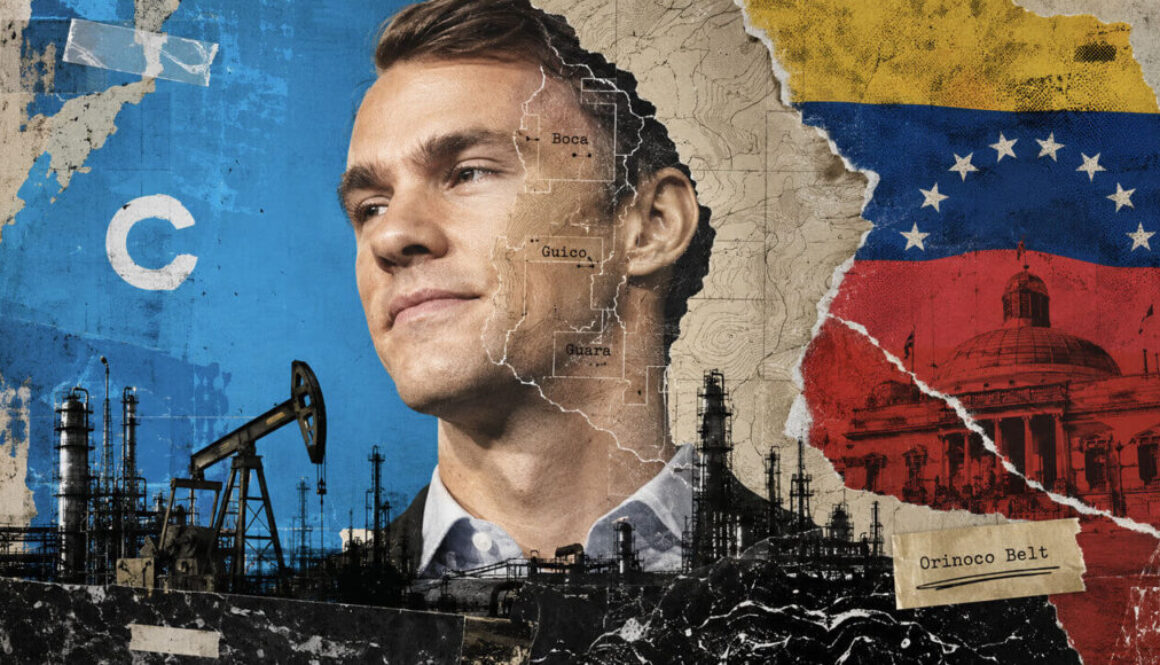
Coinbase co-founder participates in competition for Venezuelan oil holdings through recently established US-supported program
Coinbase co-founder Fred Ehrsam’s investment vehicle is pursuing control of Venezuelan oil fields as the country restructures its energy sector under US oversight. The move illustrates how cryptocurrency-derived wealth is flowing into state-mediated commodity allocations in politically contested jurisdictions.
- Primavera, Ehrsam’s investment firm, is seeking control of three oil fields in Venezuela’s Orinoco Belt operated by Alvorada Heavy Industries.
- The White House granted North American Blue Energy Partners 100-year concessions covering 17 fields with a 35% US government equity stake.
- No blockchain or cryptocurrency component has been established for the Venezuelan energy transactions despite Ehrsam’s crypto industry ties.
- 3 fields Alvorada-operated blocks Primavera is reportedly targeting in the Orinoco Belt
- 17 fields Covered by North American Blue Energy Partners’ 100-year concessions from interim Venezuelan authorities
- 35% US government equity stake in the North American Blue Energy Partners arrangement
- 100 years Term length of concession grants to North American Blue Energy Partners
Fred Ehrsam, who co-founded Coinbase and currently serves as a director of the exchange and co-founder and senior advisor at venture firm Paradigm, is moving to acquire oil production assets in Venezuela through Primavera, his separate investment vehicle. According to reporting on September 2, Primavera was among companies expected to sign Venezuelan energy agreements that day. The specific targets are three oil fields in the Orinoco Belt’s Boca, Guico, and Guara blocks, all currently operated by Alvorada Heavy Industries, according to Bloomberg’s reporting citing unnamed people with knowledge of the nonpublic discussions.
Ehrsam’s Venezuelan Oil Pursuit Shows Crypto Capital Redirecting Into Commodity Assets
Neither Coinbase nor Paradigm has been identified as a participant in the Venezuelan energy negotiations, and no blockchain, cryptocurrency, or digital asset component has been disclosed as part of the reported transaction. The arrangement instead represents a straightforward pivot of personal capital accumulated through the crypto industry into traditional hard-asset ownership in a politically contested jurisdiction.
Ehrsam discussed cryptocurrency opportunities and Venezuela’s financial sector at a digital-finance event hosted by Banco de Venezuela in Caracas on May 13, laying potential groundwork for broader economic engagement. His interest in Venezuelan energy assets reflects a broader pattern among technology entrepreneurs of deploying capital into sectors where geopolitical disruption creates acquisition opportunities.
The Venezuelan oil sector has operated under significant constraints for decades. Production has declined sharply from historical peaks due to underinvestment, sanctions-related limitations, and operational challenges. Foreign investment in Venezuelan energy has been complicated by US sanctions regimes and political uncertainty surrounding the legitimacy of the Venezuelan government.
For investors like Ehrsam, the current moment represents a potential inflection point. If interim authorities succeed in establishing new concession frameworks that receive US government backing, the legal and operational risks associated with Venezuelan energy assets could diminish substantially. The involvement of US government equity stakes and preferential purchase arrangements signals a commitment to stabilizing the sector under new management.
US-Backed Energy Restructuring Creates Framework For Asset Reallocation
The Venezuelan government’s reallocation of energy assets is occurring under a wider US-backed restructuring. On August 31, a White House fact sheet announced that interim Venezuelan authorities had granted North American Blue Energy Partners concessions covering 17 fields with terms designed to protect US interests: a 35% equity stake for the US government, preferential purchase rights over production, and veto power over board appointments.
The legal authority underpinning these long-term grants has become contested. The Associated Press reported that analysts questioned whether acting President Delcy Rodríguez possesses the unilateral power to grant 100-year oil-field concessions and noted that the National Assembly had not approved the broader arrangement. This uncertainty extends to other energy negotiations occurring within the same restructuring framework.
The dispute over legal authority reflects deeper questions about governance and legitimacy in Venezuela. Multiple competing claims exist regarding who holds legitimate power to allocate national resources, creating substantial risks for foreign investors. Concessions granted by one government faction could theoretically be invalidated if political circumstances shift again.
Primavera’s targeting of Orinoco Belt assets places the investment within a sector that requires significant capital expenditure and technical expertise to maintain production. The Orinoco Belt contains some of the world’s heaviest crude oil, requiring specialized processing infrastructure and substantial operational investment.
Primavera’s execution of a final agreement covering the Boca, Guico, and Guara fields would signal whether Ehrsam’s pursuit converts from negotiation into operational control; until then, the terms, asset specifics, and legal enforceability of the transaction remain unresolved. The outcome will provide important signals about investor appetite for Venezuelan energy assets and the viability of US-backed restructuring efforts in the sector.