
Inflation Data Rises, Dampening Expectations for Lower Interest Rates and Presenting Bitcoin Investors with a Costly Choice
Stronger-than-expected inflation readings across consumer and producer prices in August have dimmed expectations for near-term interest rate cuts, extending the period of elevated borrowing costs that pressures leveraged Bitcoin positions. The data shift could keep Treasury yields elevated and reward investors holding cash over those financing crypto positions through debt.
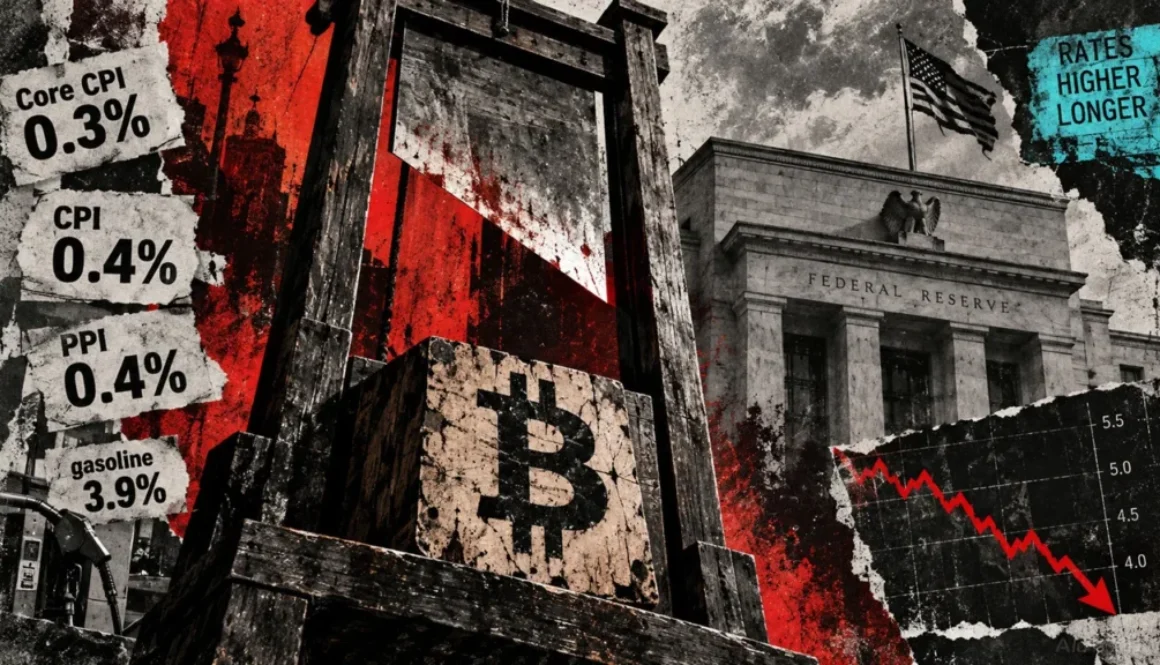
- Consumer prices rose 0.4% in August, double the 0.1% July increase, while annual CPI held at 3.4%
- Core CPI excluding food and energy accelerated to 0.3% monthly from 0.2%, even as the annual core rate eased to 2.4%
- Producer prices climbed 0.4% monthly and 5.4% annually, with energy driving over three-quarters of the final-demand goods increase
- 0.4% August monthly CPI increase versus 0.1% rise in July
- 0.3% Core CPI monthly gain, up from 0.2% the prior month
- 5.4% Annual PPI growth, a significant acceleration from the monthly 0.4% reading
- 3.9% August gasoline price increase, accounting for over one-third of CPI gains
The August inflation data released Friday strengthens the Federal Reserve’s case for maintaining restrictive monetary policy ahead of its September 15-16 meeting. While annual core CPI eased to 2.4% from 2.5%, the monthly acceleration in both headline and core measures signals that disinflationary momentum may be stalling. Energy prices accounted for much of the headline surge, but the pickup in core CPI outside food and fuel indicates that price pressures are broadening across the economy beyond temporary commodity swings.
Market expectations for rate cuts have shifted notably in response to this data. Futures markets that previously priced in multiple cuts through year-end have now adjusted to reflect a more patient Fed stance, with some projecting rates could remain elevated well into 2024. The shift reflects a fundamental reassessment of inflation’s trajectory and the persistence of price pressures that monetary tightening has failed to fully extinguish.
Core Inflation Accelerates Despite Cooling Annual Rate
The monthly core CPI reading presents a particular challenge for rate-cut advocates.
Core prices rose 0.3% in August compared with 0.2% in July, countering the narrative that inflation is steadily easing toward the Fed’s 2% target. While the annual core rate of 2.4% appears closer to that objective than prior months, the acceleration at the monthly level reflects recent pricing behavior more directly. Analysts had expected a 0.2% monthly increase before Friday’s report; the 0.3% reading suggests underlying consumer inflation remains sticky despite the Fed’s restrictive stance since 2022.
This pattern of slowing annual rates paired with accelerating monthly readings has become increasingly common in recent months, frustrating policymakers who need to distinguish between trend and noise. The divergence typically reflects base effects from elevated readings a year prior, as higher prices from earlier in 2022 cycle out of annual calculations. However, when monthly momentum reverses upward, it raises questions about whether the underlying inflation rate has truly cooled or merely benefited from temporary factors.
Producer price data reinforces this picture. The PPI excluding food, energy, and trade services slowed to 0.3% monthly from 0.4%, offering some reassurance that wholesale cost pressures may be moderating. However, services prices rose only 0.1%, a weak contribution that still leaves the broader monthly PPI up 0.4% and the annual PPI up 5.4% compared with a year earlier. Services inflation matters particularly because it tends to reflect wage pressures and labor-intensive activities that monetary policy influences most directly.
Energy Concentration Masks Persistent Cost Pressures
Energy’s dominant role in August’s inflation reports creates an interpretive dilemma for policymakers. Gasoline prices surged 3.9%, accounting for more than one-third of the monthly CPI increase, while energy prices in the producer report rose 4.2% and comprised over three-quarters of the final-demand goods acceleration. This concentration theoretically gives the Fed cover to look past headline numbers, since fuel price movements reflect supply dynamics largely outside monetary policy’s reach.
But sustained energy costs can embed themselves into broader inflation through transport and manufacturing expenses.
Delivery companies facing higher fuel bills may raise customer charges, while manufacturers may pass elevated logistics costs into their selling prices. This secondary transmission mechanism has historically extended the inflationary impact of commodity shocks well beyond the initial energy price spike. The degree to which these cost increases reach consumers hinges on contract terms, competitive pressures, and corporate pricing power in various sectors. Airlines, trucking firms, and chemical manufacturers all face different constraints on passing fuel costs forward.
The challenge for officials is distinguishing between temporary energy shocks and the beginning of a secondary round of price increases that could delay disinflation and necessitate persistently higher rates. Historical precedent shows that commodity-driven inflation waves often prove more persistent than initially expected, as businesses initially absorb costs and later adjust pricing when competitive conditions allow.
Higher Rates Extend the Window of Expensive Borrowing for Bitcoin Investors
For Bitcoin market participants, Friday’s inflation data extends the timeline for elevated financing costs. Investors holding cash can continue earning interest on government securities, making the opportunity cost of holding Bitcoin more explicit when Treasury yields remain elevated. Those borrowing to accumulate or maintain crypto positions face direct drag from interest payments, which reduce potential gains from Bitcoin price appreciation or amplify losses.
This dynamic has significant implications for leveraged trading activity in digital asset markets. When borrowing costs exceed expected returns or when risk-free rates become highly competitive, rational investors shift capital away from speculative positions toward safer alternatives. Margin call risks also increase when positions remain financed at elevated rates over extended periods, potentially forcing liquidations if Bitcoin prices weaken.
Expectations alone move market conditions even before the Fed acts. Inflation releases shape bond yields and lender willingness to extend credit, altering investment calculations immediately rather than waiting for official policy moves. Bitcoin’s long-term narrative as a hedge against currency debasement can coexist with short-term sensitivity to real interest rates and the returns available from alternative assets. The Fed’s September meeting will bring new employment data and guidance that could clarify the central bank’s timing for rate adjustments, directly impacting how investors weigh the carrying costs of leveraged Bitcoin strategies against passive Treasury holdings.
Officials will weigh Friday’s inflation data alongside employment figures and their own assessment of how long current price increases will persist when they convene September 15-16. If energy prices stabilize or decline, policymakers may view the core acceleration as temporary noise and eventually ease policy. Conversely, if core inflation remains elevated or secondary cost pressures begin appearing in transport and manufacturing margins, the Fed could maintain restrictive conditions longer, keeping Treasury yields high and leverage expensive for Bitcoin investors.