HIFI raises $37 million to build rails for tokenized capital markets
HIFI, the New York stablecoin payments and tokenization company, has raised a $37 million Series A led by Left Lane Capital, The Block reported on Thursday. It is the company’s first priced round, according to Cointelegraph. Other participants and the valuation were not disclosed.
The money goes toward scaling HIFI’s tokenized capital markets infrastructure and widening its product suite. The more interesting part of the announcement is not the round size. It is where HIFI already sits: inside the plumbing that large institutions are using to move securities and dollars on-chain.
What HIFI actually sells
HIFI describes its product as a single API that combines money movement, compliance and settlement across bank rails and digital assets. In practice that means converting dollars to stablecoins and back, paying out over US banking rails and to cards, and settling tokenized repo and Treasury transactions.
The company says it processes more than $7 billion in annualized volume across 87 countries. Chief executive Zach Walsh put the figure at “approximately $7 billion in annualized volume directly through its platform.” That is a modest number next to legacy payment networks, but it is real flow rather than a pilot, and it is the base Left Lane is underwriting.
A seat at the DTCC table
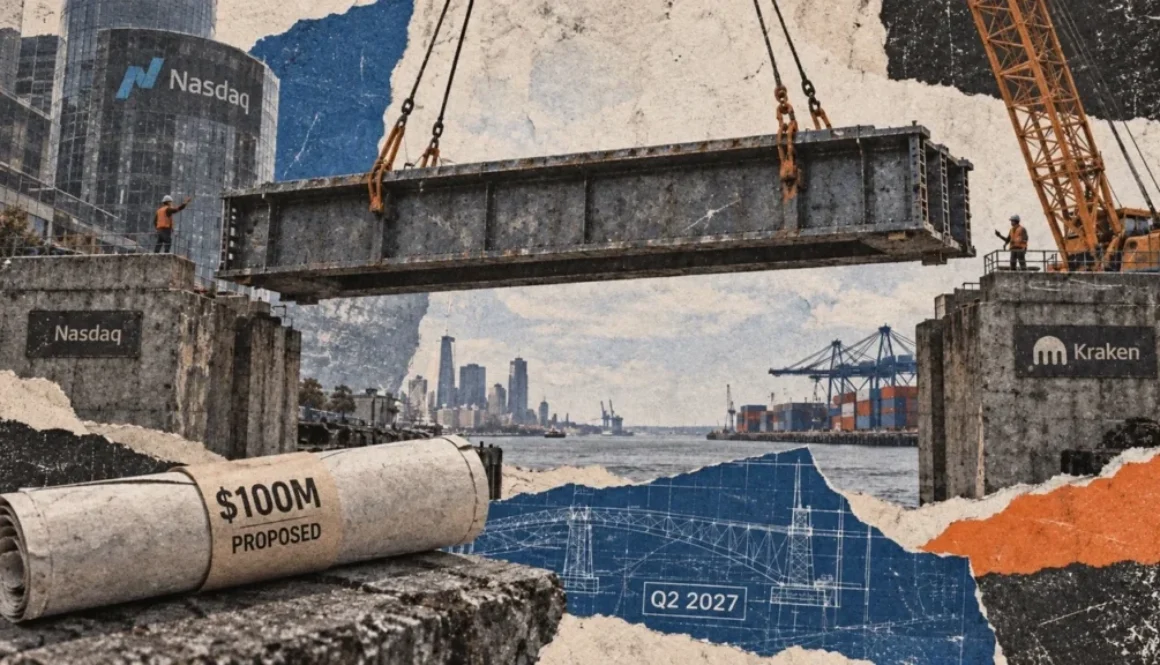
The credential that matters most is HIFI’s role in the Depository Trust & Clearing Corporation’s first production trades using DTC-tokenized assets. In its July 15 announcement, DTCC said trades covering collateral pledges, securities lending, Treasury repo delivery-versus-payment, equity settlement and CCP margin workflows had been processed on its private Besu network and on Canton. HIFI is named among more than 30 participants, alongside BlackRock, Goldman Sachs, J.P. Morgan, Nasdaq, Citadel Securities, Circle and Vanguard.
DTCC plans to officially launch its Tokenization Service in October. When that happens, the firms that already ran production trades have a head start on onboarding clients who want tokenized collateral and 24/7 settlement without building the stack themselves. That is the market HIFI is raising into.
The Visa leg
In September, HIFI partnered with Visa to extend its stablecoin settlement platform to money transfers and card payments, supporting payouts to more than 4 billion Visa cards, according to The Block. It fits a broader Visa push: the network launched USDC settlement in the US in December 2025 at a $3.5 billion annualized run rate across its stablecoin pilots, and The Block reports that figure has since reached $20 billion.
For HIFI, the card leg is the consumer-facing end of the same pipe. A business can take in dollars, hold or move them as stablecoins, and push them out to a bank account or a card anywhere Visa reaches.
Why the timing works
The backdrop is supply. Dollar-pegged stablecoins now exceed $295 billion, with USDT at about $183.4 billion and USDC near $76 billion, per The Block’s data. Cross-border stablecoin flows reached $220.3 billion in the 12 months to June 2026, up 77.5% year on year, according to figures cited by Cointelegraph.
Stablecoins have become the settlement asset. Tokenized Treasuries and equities are becoming the collateral. The companies that sit between the two, handling compliance, conversion and final settlement, are the ones institutions will pay. HIFI is one of a small group of vendors trying to be that layer, and it is not alone: BVNK also powers stablecoin payouts for Visa Direct, for example.
The BlockWest read. We think the DTCC credential is worth more than the $37 million. Series A money in stablecoin payments is no longer scarce, but a place in DTCC’s first production trades is. The test comes in October: if the Tokenization Service goes live and HIFI turns that access into repo and collateral clients, this round will look cheap. If volume stays mostly in payouts, it is a payments company with a tokenization story.
What to watch
- DTCC’s October launch of its Tokenization Service and which participants move from test trades to client flow.
- Whether HIFI discloses the rest of its investor syndicate or a valuation.
- Growth in the $7 billion annualized volume figure, and how much of it comes from tokenized securities rather than payouts.