
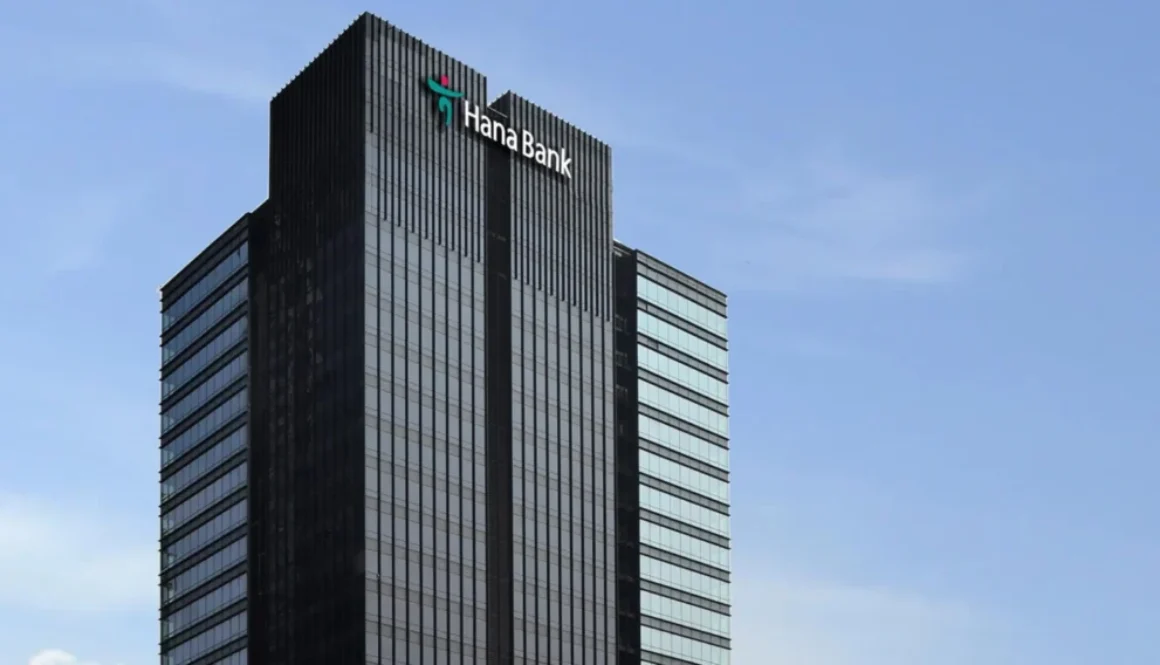
Hana Bank issues $100M digital bond through Euroclear blockchain
Hana Bank has become the first South Korean financial institution to issue a digital bond directly on Euroclear’s blockchain infrastructure, settling a $100 million transaction on the same day it was issued. The deal offers an early test case for how Korean lenders might plug into global tokenized-securities rails ahead of a national framework due in February 2027.
- Hana Bank issued a $100 million digital bond through Euroclear’s Digital Financial Market Infrastructure platform.
- The bond settled on T+0, compared with the three to five business days conventional bond settlement typically requires.
- Hana Bank ranks second in South Korea with nearly $500 billion in client assets under management.
- $100M Size of Hana Bank’s digital bond issuance via Euroclear
- T+0 Settlement time versus three to five days for standard bonds
- $500B Hana Bank’s client assets, ranking it second in South Korea
- Feb 2027 FSC deadline for South Korea’s tokenized securities framework
Hana Bank issued the $100 million digital bond through Euroclear’s blockchain settlement platform and completed the transaction the same day, according to reporting by CoinDesk, which cited a report from the Yonhap News Agency published Monday. The bank said it was the first time a Korean financial institution had directly used Euroclear’s distributed ledger infrastructure for a bond deal.
Euroclear is a Brussels-based financial services firm and one of the world’s largest central securities depositories. Its involvement gives the transaction international settlement standing rather than a purely domestic pilot status.
Bond Settles Same Day Through Euroclear’s D-FMI Platform
The bond was issued through Euroclear’s Digital Financial Market Infrastructure, or D-FMI, which handles issuance, registration and settlement of securities on a distributed ledger rather than through conventional book-entry systems. Bond allocations and payments were completed on the issuance date itself, replacing a settlement cycle that ordinarily takes three to five business days under legacy infrastructure.
The D-FMI platform connects to Euroclear’s existing settlement network, meaning institutional investors can buy and trade the bond through their current Euroclear accounts without adopting separate systems. Hana used documentation from its existing global medium-term note program to structure the deal, and Standard Chartered served as the sole lead manager.
Hana Bank Calls Deal a Step Beyond Funding Diversification
Hana Bank, South Korea’s second-largest lender by client assets under management with nearly $500 billion, framed the issuance as more than a treasury exercise. A Hana Bank official told the Korea Herald that the transaction reflects a deliberate push into blockchain-based capital markets infrastructure.
“The $100 million digital bond issuance and implementation of T+0 settlement represent a significant step beyond simply diversifying our funding channels, as they bring blockchain technology into the capital market. We will continue to adopt advanced infrastructure and explore innovative funding solutions that meet the needs of global investors.”
Hana Bank official, quoted by the Korea Herald
Hana Bank and Euroclear did not immediately respond to a request for comment from CoinDesk. Neither company has independently confirmed further details of the deal’s terms beyond what was reported by Yonhap and the Korea Herald.
February 2027 Deadline Sets the Pace for Korean Tokenization
South Korea’s Financial Services Commission has set February 2027 as the launch date for a comprehensive tokenized-securities framework, and domestic institutions are moving ahead of that deadline rather than waiting for it. Hana’s bond shows a Korean bank can settle a live, foreign-currency debt issuance on established global blockchain rails today, more than a year before domestic rules take effect.
That timing gap raises a practical question for regulators: whether cross-border platforms like Euroclear’s D-FMI will need to interoperate with, or eventually give way to, the FSC’s own tokenized framework once it launches.
The BlockWest read. The deal signals which side of the tokenization race Korean banks are betting on now. By plugging into Euroclear’s existing settlement network rather than building or waiting for a domestic ledger, Hana Bank sidesteps years of infrastructure buildout. Other Korean lenders eyeing the FSC’s 2027 deadline now have a template that skips the wait for local rules to catch up with global custody rails.
The next test comes as South Korea’s Financial Services Commission finalizes the rules for its February 2027 tokenized-securities framework, a process that will determine whether deals like Hana’s remain exceptions routed through foreign infrastructure or become the model for domestic issuance once local rules take effect.