
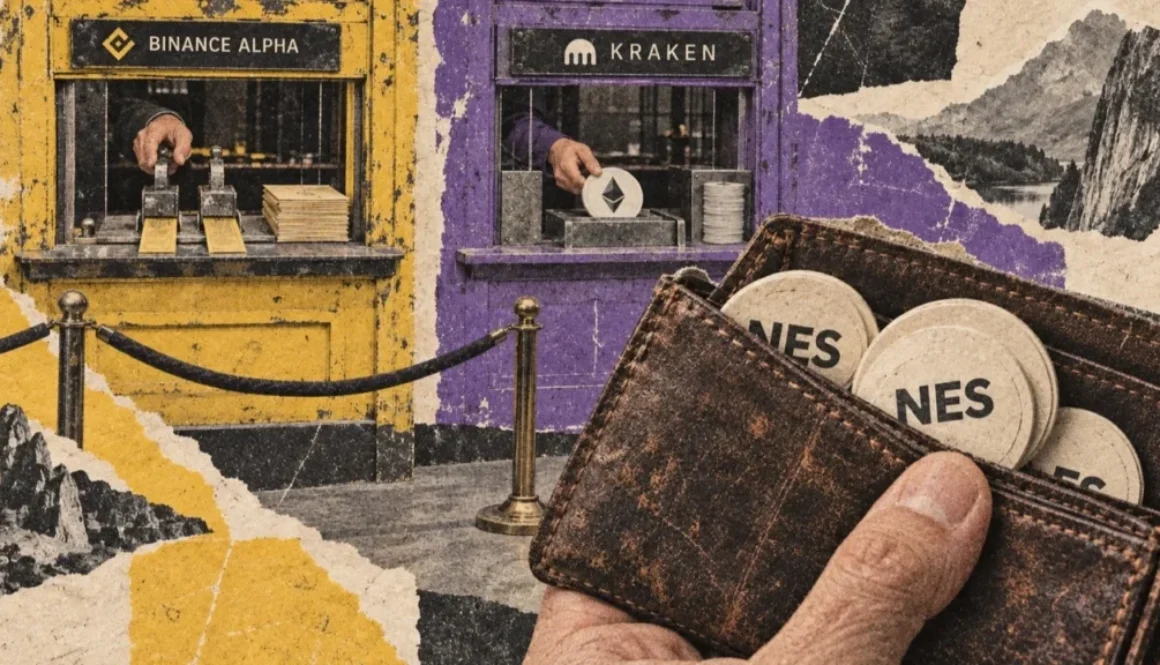
Cryptocurrency exchange recovery policies create disparate outcomes for NES token holders following $286M security breach
Two major cryptocurrency exchanges have restored trading in NES tokens following an August security incident, but they are using divergent recovery processes that create different outcomes for users across platforms. The fragmented approach leaves self-custody holders without clear guidance on how to migrate their tokens to new contracts.
- NES token trading resumed on Binance Alpha and Kraken on September 10 after an August 24 security incident halted operations.
- Binance Alpha uses two snapshot dates to determine 1:1 swaps versus refunds, while Kraken migrates Ethereum-based NES 1:1 to a new contract.
- Self-custody holders lack official migration instructions from Nesa, creating uncertainty about recovery steps for tokens held in private wallets.
- Aug. 24 Date of the token-contract security incident triggering exchange-level trading suspensions
- Sept. 10 Trading resumption date across both Binance Alpha and Kraken platforms
- $286M Size of the exploit affecting NES token holders and exchange operations
- 1:1 Swap ratio offered by both exchanges for eligible token holders during recovery
Nesa’s NES token resumed trading on Binance Alpha and regained Ethereum funding support on Kraken on September 10, ending venue-specific halts linked to a security incident affecting the token contract on August 24. The two exchanges have announced distinct recovery frameworks that treat their user bases differently, and neither extends a unified solution to holders maintaining tokens outside their platforms. Binance Alpha has implemented a two-snapshot system to distinguish between users eligible for 1:1 swaps and those receiving refunds, while Kraken will automatically migrate Ethereum-based NES holdings to a new contract on a 1:1 basis.
The divergent approach reflects how centralized exchanges manage recovery independently when token contracts are compromised. Major exchanges typically establish snapshot dates to prevent users from depositing tokens post-incident to claim compensation, while protecting those who held funds before the breach. The $286 million exploit created an urgent need for both platforms to restore confidence and allow normal trading to resume, but the lack of coordination between them highlights a broader challenge in the cryptocurrency industry where no single recovery standard exists across venues.
Binance Alpha’s Dual-Snapshot Recovery Divides Eligible and Ineligible Holdings
Binance Alpha requires users to satisfy two conditions to receive a 1:1 swap on NES tokens. Holders must have owned NES before August 24 at 14:51 UTC and maintained an eligible portion when trading suspended on September 5 at 04:00 UTC. Any NES acquired after the August 24 cutoff falls outside the 1:1 swap and will be subject to a separate refund process.
The dual-snapshot mechanism serves two functions in Binance Alpha’s recovery plan. The first snapshot establishes a baseline of holders at the moment of the exploit, while the second snapshot taken during the trading halt prevents users from acquiring additional tokens before the recovery mechanism closes. This approach aims to compensate legitimate holders who experienced losses while deterring speculation or arbitrage attempts during the incident period.
Binance Alpha stated that users with eligible net purchases during the specified window would receive an email with refund details within seven business days. The exchange did not disclose the complete refund formula or confirm that every affected holder would be made whole. Trading was scheduled to reopen at 08:00 UTC on September 10, and Binance urged users to verify which snapshot category applied to their balance and monitor their registered email address.
Kraken Completes Ethereum Migration While Disabling BNB Chain Support
Kraken announced that NES on Ethereum would migrate 1:1 to a new contract, with deposits and withdrawals returning at 14:00 UTC on September 10.
The exchange marked its funding incident resolved 12 minutes after deposits and withdrawals resumed. However, Kraken stated that NES funding on BNB Chain would remain disabled and only Ethereum-based NES would be supported going forward. Customers moving NES to or from Kraken must select Ethereum and verify the new contract address in Kraken’s official notice before transferring funds.
Kraken’s decision to disable BNB Chain support reflects the complexity of managing compromised tokens across multiple blockchain networks. If the exploit affected both Ethereum and BNB Chain versions of NES, the exchange may have determined that restoring only the Ethereum version reduces the risk of further complications or user confusion during recovery. This approach simplifies Kraken’s operational footprint but narrows options for users who preferred BNB Chain transactions for reasons including lower fees or faster block times.
Self-Custody Holders Left Without Official Migration Guidance
The recovery processes managed by Binance Alpha and Kraken do not apply to NES held outside these exchanges.
As of press time, Nesa’s official website and general wallet documentation did not provide incident-specific migration instructions for self-custodied holders. Without published or verified guidance from Nesa, holders storing tokens in private wallets should not assume that either exchange’s snapshot windows or automatic migrations apply to their balances. Holders should verify any contract address and migration process through Nesa’s official channels before approving a contract interaction or moving tokens from the old contract.
Self-custody represents a fundamental feature of cryptocurrency ownership, allowing users to control tokens without relying on exchange intermediaries. However, it also creates a recovery challenge when token contracts are compromised because no single entity manages holders’ balances. Token projects typically publish migration instructions and new contract addresses, allowing self-custody holders to swap old tokens for new ones themselves, but Nesa has not yet released such guidance in the aftermath of the August 24 incident.
Until Nesa publishes direct self-custody migration steps and verifies contract details, holders outside Binance Alpha and Kraken remain without a clear path to recover their tokens from the security incident.