Key takeaways
- Lamina1 aims to create a creator-owned platform similar to YouTube but governed by creators and validators rather than a single corporation.
- The platform currently supports 2D digital assets with approximately 25,000 pieces of artwork uploaded since its late last year launch.
- Upcoming features include Spaces for IP-specific fan communities with token-gated content, AI co-creation tools, and marketplace capabilities.
- Traditional tech platforms prioritize hardware and software sales cycles over creator prosperity, misaligning incentives with creative storytelling goals.
- Creators need ownership of their audience, IP, and monetization outside ad-driven business models to remain prosperous in the AI era.
Why creators need to own the platform
Ashton Addison: What is Lamina1, and how does it relate to the creator economy?▶ 00:42
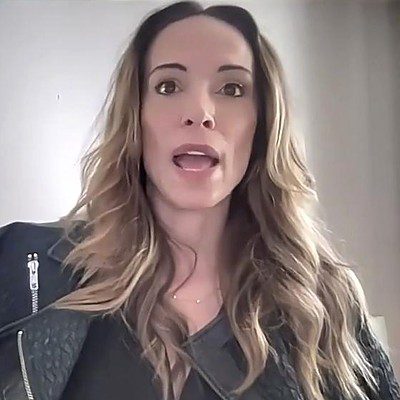
Rebecca Barkin: I co-founded Lamina1 with Neal Stephenson, who I worked with at Magic Leap, where I ran the studios, to develop IP for augmented reality. He coined the term metaverse in 1992 in Snow Crash. We founded Lamina1 to be a creator-owned platform and built-in economy for direct-to-consumer IP incubation, distribution and monetization. The easiest way to describe it: imagine if YouTube, instead of being owned by Google, was owned by the creators and the validators that ran the network. That's what we're after, and I think its time has come.
Ashton: Why does the alignment of incentives matter so much for creators, especially with AI?▶ 05:26
Rebecca: Many of the tech platforms funding content and the creator economy need that content to make their business model work. But they're often driven by a software and hardware buying cycle. Why did Apple start a studio, or a music service? To sell more hardware and software. That's a very different perspective from a true creative who wants to deliver a story to the world. That's not to say Apple doesn't care. They have great people who know how to make great content. But in the age of AI, it's important that creators remain in charge and can prosper. We're going to see a kind of desensitization to all the work that anyone can now create with AI. The incredible stories that stick with us and define humanity still need space and oxygen. We have to give them that outside the constant pressure of a tech-driven or ad-driven business model.
Imagine if YouTube, instead of being owned by Google, was owned by the creators and the validators that ran the network.
What the platform does today and who it's for
Ashton: What can a creator do on Lamina1 today, and what's coming next?▶ 07:47
Rebecca: We launched both a platform and a protocol, which is almost like driving two different products. Today there's what we call the Hub: web2-style onboarding, a home base for managing your assets, primarily 2D assets for now, and content discovery. About 25,000 pieces of artwork have been uploaded since we launched late last year. Next comes Spaces, which are IP-specific fan communities with premium features. These include sharing a wider range of media files, AI co-creation tooling, token-gated content, storefronts and marketplace capability. We're not building all of that ourselves. There are a million protocols and lots of people doing specific things well, but nobody with a problem this technology can solve knows how to put it all together. So we focus on smooth integration of the best of them into one consistent platform. The token can be used for gas fees, but it also drives governance. That includes a monetary authority that determines release and unlock schedules, and the Open Metaverse Arts Council, a community-elected board.
Ashton: How do you serve creators who don't understand or care about decentralization?▶ 16:23
Rebecca: You want to keep them in the space they're good at, which is developing stories. We just announced a project from the creators of Bob's Burgers. They're Emmy-winning writers and directors who had offers and opted out of the traditional system. They wanted to build community first and retain their rights, so they could make the decisions that are best for the content rather than for the network. It helps that they have the following and credibility to try a different path. The bottom line is you need a couple of really great examples and creators with high credibility to lead the way. It isn't important whether it's blockchain or how they talk about the token. What matters is a platform that lets them keep direct ownership of their IP and their audience, and then incentivize that audience to keep spreading the word.
AI, franchises and fan creativity
Ashton: How will maturing AI tools affect creators who want to monetize their work?▶ 23:46
Rebecca: I think major franchises like DC or Marvel will start to embrace fan and creator-driven creativity, with guardrails. They stay in control of how fans use AI tooling to create derivative works. Those works can then drive rev-share opportunities that generate passive income for the studios and give them a reason to stay engaged with communities. I think the first wave of NFTs missed that. What was the ongoing incentive for studios to keep feeding an NFT past the initial sale? They lacked utility and didn't continue to grow in value. Franchises could allow fans to make new trailers, derivative artwork or even mini films about peripheral characters, as long as the franchise has mechanisms to protect its quality. You have to be respectful of what it took to build a studio and a distinctive creative direction. AI isn't going anywhere. We just need creatives more involved in driving the technology in a way that's rewarding for them. Otherwise there will be a lot of work that just sits in the middle and isn't great, and we'll quickly tune it out.
The bottom line is you need a couple of really great examples and creators with high credibility to lead the way.
Roadmap and how to get involved
Ashton: What's on the roadmap for the rest of 2025?▶ 31:36
Rebecca: Our first step was establishing governance and the token and ensuring stability. We did that with native crypto and web3 projects that don't need as much handholding. The bigger creative projects take a lot of handholding and have a longer sales cycle. In Q3 we'll roll out Spaces and some major IP partnerships that drop within them, and start rolling in AI co-creation tooling. We want to integrate partners like Tribute and Republic. The project from the creators of Bob's Burgers will roll out in a Space. We're also announcing a huge partnership with Numidia Valley, a project from the government of Algeria with an investment from them, focused on developing Africa and its young people through curriculum, sports and gaming. They've chosen us as their official platform partner. Spaces will probably roll out later in Q3. Right now is a crazy time in the market. You can't get a headline to save your life, and a lot of projects are delaying launches. So we've taken the time pressure off. It's okay to build slowly and release in the fall, when I think it will be a more favorable time.
Ashton: How can creators learn more and get involved?▶ 36:39
Rebecca: On the Lamina1 site you can play around, set up a wallet and see what functionality is there now. It's a little misleading, because right now it feels a bit like an NFT marketplace without the marketplace functionality. There's a lot of 2D art and a lot of projects getting set up. But you'll get a sense of the experience and the web2-level onboarding. If you have a project that's well suited to this, reach out to our ecosystem team. We're also still deploying creator grants. You can submit your project, and if we think it's aligned with the market and what we can support, we issue grants. We're also in the process of electing a community to vote on how those funds and resources are deployed.
This interview has been edited for length and clarity. Recorded June 2025.