
How Fireblocks is building blockchain infrastructure for banks and CBDCs
In this episode
Ashton Addison speaks with Francois Schonken, Tokenization business lead at Fireblocks, on how they are working with financial institutions to build digital currencies, CBDC, and digital identities. We discuss what blockchains they use, how they set it up, and what are the hurdles for more businesses to adopt blockchain technology.
CBDC’s and DID is coming. The more you know, the better off you are!
- Fireblocks provides custody and tokenization infrastructure serving over 1,800 clients including exchanges, banks, and asset managers across crypto and traditional finance.
- Central banks are collaborating on CBDC projects like Project Mariana, which bridged independent private networks onto public networks for cross-currency exchange.
- Tokenization adoption lags behind cryptocurrency adoption due to long budgeting cycles at large institutions, but interest is growing in stable coins and yield-bearing assets.
- Fireblocks developed reference smart contracts and architectures enabling customers to launch tokenized units of account, money market funds, and bond issuance in short timeframes.
- Effective tokenization requires expressing only value-adding elements on-chain rather than replicating entire traditional banking workflows in blockchain systems.
Chapters
Transcript
Read the full transcript
I'm Ashen Addison from the cryptocoin show and today on blockchain interviews with Francois skunkin tokenization business lead at fireblocks Fran welcome to the show and thank you for taking the time hi ason thank you for having me um welcome I I would love to before before we start I would love to just sort of get a refresher for those people who have been in crypto for a while or
they're just starting and they haven't heard of fire blocks you know I've personally seen the name quite a bit around but um I think you guys have a specific clientele that's sort of very specialized and a lot of people don't really know the full scope of fire blocks I know you guys do a lot of stuff and then i' would love to dive into the tokenization focus with you and your
Specialties after absolutely happy happy to touch on that so fire blocks is a custody and tokenization infrastructure company um we we started back in and 2018 if I'm not mistaken um we honed and refined uh MPC based uh key custody control uh we have a
derivation there of NPC CMP that we had open source uh we have very very deep technical expertise around the securitization or the securing and management of um custody in the back end talking to our clientele well it's a pretty broad Gam but uh we very much take a a infrastructure perspective so we have in our 1,800 plus clients um many many of the largest exchanges uh
many large Banks um many large FM fmis and asset managers so we really we really span the Gambit from uh from crypto to defi to more uh CI um and we we pride ourselves on that and the fact that we have the flexibility to to interact on those various Dimensions um people much more eloquent than myself could probably make a better case for
exactly what the nuances on the on the crypto side is but on the codyy side is but in my technical assessment it's it's it's a very strong platform to build tooling upon great thank you for the intro franois and on the the business side and just what we're seeing with the landscape so far in 2024 I think Bitcoin is now making its way into the news with the ETF approvals uh
more businesses are going to be saying hey you know we want to get involved in cryptocurrency but also blockchain and hey how can we also use it in our business I think tokenization use cases are going to come from all Industries uh public private every direction would love to hear a little bit on what your focus is with relating to that then we can dive into those
details uh absolutely so um I Heard A wise man used the quote people say uh Bitcoin is the tide that lifts all boats I think his name was Ashton um the yes I have said that our our expectation is that as engagement in this environment takes up uh we will probably see a correlate um uptick in tokenization now I say
correlated I'm not thinking oneon-one um there's there is a lag because what we find is large institutions have such a large or large budgeting and planning window that it takes them a long time to direct it's the old adage around a a oil tank I mean it's it's big it'll get there but it takes a while to get turned and go into the direction but what we do
see is we see a lot of Renewed Energy around corporate dat exces um there's a lot of energy around unit of account so when I say unit account I mean stable coins and deposit tokens um interestingly enough over the last six months or so we have seen a lot of Renewed Energy in joint ventures between uh Mary um Banks wanting to create
currencies within local domains and surface those on exchanges so that they can create a a set of collateral that folk can can easily interact with we see this in Europe South America and and in other places um and then something that given the higher interest rate environment we're seeing a lot of is people showing interest in yield bearing assets so in low interest
environments people just hold on to their stable coin as a as a means of getting ready for speculation on other instruments uh given given that you're in a high interest environment are you going to keep it there or you're going to just put in the bank and get your 5% uh to that end yield bearing instruments and even things like money market funds where there's interest in using that as
a unit of account or unit of trade we see a lot of uptick there um the the usual entrance are in there as well Bank guarantees Supply train Finance but the the energy around them tends to be the same uh these are the the ones I mentioned with a on of kind of peek up mhm it's a good insight and I know that there are many banks central banks private Banks governments probably
all working on some kind of unit of account based on the blockchain cbdc of sorts and you're you're right about that that tanker analogy that yeah this is something big you know if it's going to affect the whole country um or the whole banking system it's not something that they can just do in a week you know it sort of has to be taking cautious steps
steps towards it and transitions towards it what are some of the things that you and the team at fireblocks are doing to help lower those barriers to entry or to lower those barricades to help get them over the Finish Line I'll address that in um in two aspects uh first I'd like to call out a project that we had the
privilege of working on so um for your for your audience I I'll take a moment and go through what bis is so bis is the Bank of international settlements uh so we we're Trad F absolutely um and they have a division called The Innovation Hub The Innovation Hub is a spinoff where they engage with New Frontiers in Tech they their mandate is to create patterns not
really develop product so the bis Innovation Hub recently this is in last year we helped them on a project called project Mariana uh project Mariana for a tech like me very very interesting uh the tagline for this for the project was deep liquidity and basically what you had is you had three um central banks they had their own independent private networks uh two Hy jazu one Quorum uh
these Banks were uh Bank to France representing Euro uh Swiss National Bank representing the Swiss frank and then Mas representing the Singaporean dollar uh we helped Implement a cbdc that cbdc we we bridged onto a p onto a public network uh then inside the public network we used an amm to do uh exchanges between the currencies so obviously this is not t targeting myself
or yourself this is large financial institutions moving billions of dollars around and wanting to do that level of Exchange uh now what was interesting in that was that uh we were afforded the option of working with Michael igov he was the he is the original author of The Curve protocol and because you've got curve you get to have three currencies instead of just pair currencies with
routing uh which yields a a bit of a bonus so to your question where are we focused we have a division that's focused on that side of the market and engaging with central banks in everything up to the the the hypothetical research down to implementations of something called uniformity of money now when we think about uniformity of money in the uh I think in the early no it's mid 2021 and
Europe they released a paper talking about the notion of uniformity of money and one of the pieces of data in there was this idea of the money flower which basically says that you need to think about your unit of accounts in way where it's interchangeable the same way a dollar is that you would hand from your wallet to me now if you have a plurality
of stable coins which seems inevitable you need a mechanism whereby you can enact that uh we're working with folk in South America and some folk in Europe where we've implemented a cbdc backed unit of account that does that Exchange in a real time basis or on transaction basis uh for folk that have a bit of Central Banking knowledge basically we execute intime exchange settlement
accounting um so that's the the hyp theoretical perspective then on the more uh tools and offering to get companies up and running we have a set of opinionated reference smart contracts that is the product of the last 2 and a half years of our consultation distilled into what makes sense in a high leg environment and we have a set of reference
architectures how you can bring that to bear so we can now in a in a pretty shortterm take a customer that is commercially ready from zero tokenization into having their own unit of account having their own uh money market fund and their own Bond issurance uh with a what we believe to be a very healthy balance of the on and off chain expression um when we think about
tokenization uh we we We've joked we're going to get this tattooed on ourselves but Express on chain only that which adds value on chain um we find that when people are new in this environment uh they tend to want to express the full workflow the same that they would in traditional banking systems and that's not where you Garner your um your benefit out of this
environment whilst technically possible it doesn't get you to a positive space now if you focus on the bantine fault tolerant nature so the the lacer double spending risk you have in these assets and you focus on the elements that have value not to yourself but to your customer then your your projects in our experience tends to take up and and tend to run pretty well H very interesting uh
and with some parts that you mentioned there uh with the author of The Curve uh paper and talking about the amm sort of makes me look into you know from a crypto perspective Defi and and how it is now is there a major difference in how these Banks and the digital dollars that you're working to build with them are integrating into a sort of hybrid trafi banking of defi or is it very
similar to what you would experience on curve for transferring lending borrowing that kind of stuff um I'd say there's there's material differences uh and the material differences tend to inform be informed by the operating pattern of the respective entities so if we and don't write this in in any form of thesis but if we think about
what a bank does typically they take deposits they hold the deposit and then they make loans on the back of it and assuming they're regulated there's a ratio a reserve ratio P 10% that needs to be held at Central um now if you reason about that the incentive for a bank is to interact with capital off their balance sheet not lock Capital into pools so the likes of an amm for
your average Bank isn't very appealing because it's a capital inefficiency um this is why you will find that whenever um you do significant uh FX transactions you always tend to get a spot price because these spot price is related to what they can achieve and what is happening on their balance sheet at the time now if you take that little bit the notion of holding light reserves and
taking yield on the back of that isn't very appealing to X there's mechanisms around that and ways you can work with that um but it does get very very complex and you blink and then all of a sudden you need a super complicated uh Oracle set of infrastructure to hopefully make that Interlink possible now that's on the on the FX side but when you think about the
the settlement and the settlement efficiency side on that side there is enormous excitement from A banks perspective using traditional rails if you're a bank and you're a Premier Bank and you do a a intercountry uh settlement that if it goes well takes 3 and 1 half hours now there's a bit of fees associated with it and a fair bit of admin if you look at the option of
having units of account as your subledger doing these large settlements and then subl ledgering them out this now takes the amount of time it takes for your selected blockchain to mine a transaction I have had the great Fortune of sitting in a room with um with people that run treasury at pretty large Banks and just seeing that aha moment when they for the first time see a
transaction executed and they realize and this is one of the pieces of beauty of large at scale um uh let's say attack resistant uh public um blockchains you can have a large entity let's call it the Acme bank and the Acme bank has branches and I'll go my my jurisdiction will go Australia and Singapore and then you can do a transfer between those two they different legal
entities but the confidence in the expression of the asset on something like ethereum M it is such that you can run the subledger and then pipe that back into your own accounting and then do larger netting off this is just one example where some of that defi um defi power is very very appealing to traditional markets that's incredible and you mentioned there ethereum the main net
and we've been talking about private networks public networks as well I'm guessing that a lot of these banks at least with the testing probably in the production as well they're using some kind of private networks or private blockchains is that based off of ethereum uh language and then if they're moving into public networks is that also on ethereum or is it layer twos on
ethereum or other blockchains actually I'm I'm going to respond from a a energy and Market participation perspective because obviously there's there's exceptions uh but the bulk of what we see is that customers are gravitating towards evm um and it doesn't have to be ethereum but just evm and if it's evm 1.0 you're probably okay it's it's it's it's more
than stable enough um we had a example where mid of last year we worked with Tel Aviv Stock Exchange now Tel Aviv Stock Exchange is partnered with the Ministry of Finance in Israel and contained within the Ministry of Finance is the um is the the account General and the account General is responsible for all debt issures so that's government bonds now telev Stock Exchange has a
very very interesting relationship with the uh account General where Bond issuances are enacted using a make a checker process so what I mean by that is that the account General will put forth a proposal for a bond Tel Aviv Stock Exchange will approve that proposal and then upon receipt of approval the auditor general will issue the bond out into market so project Eden
was about running that process on a block chain and then having 12 primary dealers so these are wholesale Banks uh five domestic seven International I think uh uh Goldman uh really really large Banks participated in this and they would they would run their bids because you would do this authoring a collaborative authoring cycle we would pipe it out to a Bloomberg um test asset
we would do auctioning on Bloomberg then pipe the results back and then we'd execute on the um uh on the atomic settlement now to question what they did in that instance is they started out with a VMware EV evm engine um just under a week prior to the live date VMware announced that they would deprecate the engine on the back of their their acquisition and we converted the entire
solution from evm to I Bas in sub 48 hours because it's really a deployment action it's not a a development we use the same Assets Now to that end their Vision was that they could start out with private and then go public and if they've got assets that could go public assets that are evm compatible that makes life a lot easier mhm now that being said over the last I want to say
18 months I've seen a shift in our larger uh let called FMI asement banking customers where you would almost have people in the R3 very very constricted has to be has to be private I'll concede maybe hyper Leger Bas an evm Camp all the way over to now they realize well public infrastructure is where the power is at and uh the benefit they're hoping to
glean will be capitalizing on secondary markets when they come into play um so I also feel that oil tanker is slowly turning towards understanding these public ledgers have value now the moment you go there uh the entire question of pii so personally identifiable information becomes Central uh to your to your challenges um but I mean that's just a technical challenge you you take
it on the chin you run with it yeah no great insights franois and uh I I've heard many Enterprises before working on R3 or hyperledger but it's great to hear that they're sort of evm focused and from what I'm seeing on the crypto side the amount of large players that have raised hundreds of millions you know multiple hundreds of millions uh these layer twos that are coming out it sounds
like evm is here to stay and they're making it faster and cheaper than ever on the public network side so I'm looking forward to seeing where they go and what networks they choose now you mentioned at the end there about the pii I'm guessing that it's important for these institutions you're working with especially Banks to have some kind of identity attached to it whether it's on
the blockchain or uh attached to that I know that fire blocks as well they also recently uh got a top reg former top regulator that's helping with the identity side of it maybe you can talk a little bit about how that fits into the the the scene with these Banks or with all of the companies that you're working on to organization with absolutely um and it's a it's a near uniform
uh consideration so I'll use a very simple example uh let's assume in your average um common law jurisdiction that you have a debt issuance if the parcel size is above a certain size let's call it $100,000 the typical structure in most common law jurisdictions is that you need some mechanism of having the investor be a qualified investor now
it's not a very high bar but it just means that the investor has to sign an attestation I understand this is a speculative instrument I understand I'm incurring some type of risk this is not uh not akin to a bank deposit where I know that a federal entity would cover me if the bank goes under um and then there's usually a a small component of just means validation but that's that's
continent upon the jurisdiction now that is just common place and has been common place for decades in in these types of issuances when you go to on chain you now have a problem you have no privacy in terms of what's expressed on chain now what you could do is you could just say I've done all of this offchain and I take Ashton's address and we say Ashton's address is
contained in the set of of proofs and that's that's pretty good but it only holds true for binary evaluations things like is Ashton in this list or not once we start extending that to uh let's call it multivariant considerations uh is Ashton in this jurisdiction is there any of these claims and it's just a once it becomes a little bit more of a constellation of consideration that
strategy tends to fall over a little bit um now what you'd like to do is you would like to express the same type of data points that Banks and asset managers and fmis traditionally hold on to about their customers you would like to express that onchain but that which is expressed on chain is there forever I mean that's the that's the beauty and the the the scary
thing about blockchains now if you think about something like the gdpr regulation out of Europe and uh we've got similar regulations all over the world a large component of that is the requirement that I have the option of bowing out of my information being used that's a a very hard proposition in this context and this is where the idea of privacy pre preserving uh digital
identity comes into play and simply put what you do is you build a set of proofs offchain and then you Lodge the proof and then you can use a onchain mechanism to confirm that that proof holds true so that proof could be are we confident that France is older than 21 years so France is allowed to buy beer or or whatever our consideration is there now
our approach to this is that that that research and that environment in terms of executing it at a scalable Manner and that's important cuz uh just expressing a proof on chain you can do it today but it tends to be very very costly so we are investing uh a lot of energy in terms of building things that are market and scale ready uh we have however in
our set of opinionated reference contracts brought to bear a pattern which we call Access registry and it's a generalized pattern around allowing for the holding and participation on assets and our first example an allow list which is is a white list and a deny list which is a blacklist is already in play but the architecture is built such that that is
consumed as a service on chain and then when your privacy preserving did comes into effect you can just swap that service out um and this seems like a a minor consideration but once you have a plurality let's call it two dozen um assets you don't want to be managing access on a per asset basis and that's something that we do find people sometimes get tripped up on
great insights and yeah I'm glad that there is a focus on privacy as well especially when you have these public blockchains and for people that are using you know just the main net ethereum it's like once you have an address then you're looking into your account and if you there's no sort of standard for giving your identity to prove something and and if the security around that is
not secure then you know you're you don't really know what you're getting into I feel like there needs to be uh some some more strength to the security level so I'm glad that fire blocks is helping with that now France while we don't have a lot of time left what I want to look forward towards the future 2024 I'm optimistic and five and six and what you and your team the vision that
you have for the future of tokenization as impact on the financial services industry and how you see fire blocks playing a continued role in that um so I I think some that up in a in a single sentence I would say that we are very excited about making available pieces of infrastructure and building blocks and then seeing how our customers get to
Delight their customers uh now you pick up that's just us borrowing a page out of the AWS strategy but obviously that's where you would borrow it it's the right place um now if you think in terms of of asset classes we are very encouraged in terms of the worth of assets that are now being explored and expressed on chain um we are really really excited by uh the
development of secondary markets now when we think about this in-house and I'm I'm I'm borrowing this this phrase uh for the longest time people would argue focus on minimum viable um product to us this is a minimum viable ecosystem plan so we do not go in and just sell you on the idea of using our piece of
infrastructure now you've got the wallet or you've got the token a dedicated division within fireblocks is the fireblocks network it provides a set of technical tooling that makes it possible to transfer and have confidence of your your counterparty so it mitigates almost all of your counterparty risk in terms of understanding who your counterparty is
but built on top of that from an organizational perspective we lean into working with our customers and finding counterparties that could help them um execute on their on their larger Vision cuz if you're going to tokenize you're probably going to tokenize because you want access to a a new market or you want a a greater level of retention uh just leaning into that cheaper better
faster U commonalities and I'd say the thing that excites us most is the energy we're seeing around the network and around businesses having the option of engaging and the creative ways in which they engage to bring new Financial offerings to Market very exciting thank you so much franois and I completely agree on the expansion of tokenization I see that you
have a big big picture of it uh that what I think 2024 may be part of the year of more real world Assets in new Industries becoming tokenized as well and more markets to trade them with lower friction through the blockchain technology so it's a very exciting time I really thank you so much for all the insights into this part of the industry that I'm not as familiar with um looks
like fireblocks is doing an incredible job keep up the great work and I would love to follow up in the near future absolutely and thanks for having me really appreciate it
Related coverage
 OpenPayd plans Nasdaq listing by year-end to fund U.S. expansionOct 3, 2026
 Fiserv launches dollar-backed token on Solana for 90 North Dakota banksOct 2, 2026
 Goldman Sachs makes Treasury fund available to crypto firms through LynqSep 28, 2026
More interviews
 Why banks are building for Web3 in silence: Kresus’ Dr. Jordan KnechtOct 5, 2026
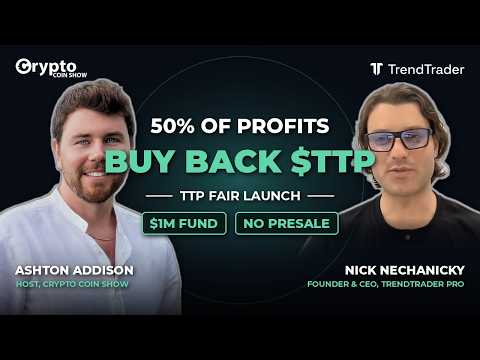 How a $1M fund is meant to fuel a token buyback: TrendTrader Pro’s Nick NechanickyOct 2, 2026
 Illia Polosukhin on NEAR’s privacy features and AI agents in 2026Oct 1, 2026
 How Robinhood built its own blockchain to control compliance and feesSep 29, 2026
 Geo Protocol founder Yaniv Tal launches Geo Debates, its first productSep 28, 2026
 How Brave is expanding beyond ad blocking with Drew PotterSep 27, 2026