
Baxter Hines on tokenization and how blockchain will disrupt finance
In this episode
Ashton Addison speaks with Baxter Hines, CIO of Honeycomb digital investments and Author of the up and coming book “Digital Finance: Security Tokens and unlocking the real potential of Blockchain”. Baxter talks about the major shifts happening in the financial industry, and how Blockchain technology will truly disrupt the entire industry eventually. We focus on some of the topics of his new book including Tokenization of securities, Decentralized finance and how Blockchain can democratize access to capital. Digital Finance is being released on November 17, 2020.
Bitcoin Trading at ByBit Exchange: 10% off the Best Crypto Portfolio Tracker: Get Buy and Sell Signal Indicators built into your charts!:
digitalfinancebook.com · engineeringrobo.com · bit.ly
- Blockchain technology enables tokenization of traditional financial assets like stocks, bonds, and real estate, creating better, faster, and cheaper trading mechanisms.
- Security tokens allow private companies to issue tradable shares without going public, enabling wealth creation and employee retention through stock options.
- The number of public companies has declined over twenty years, reducing investment opportunities in small-cap growth companies that historically drive wealth creation.
- Programmable blockchain infrastructure can automate compliance mechanisms and eliminate market frictions, reducing costs while maintaining investor protections.
- Decentralized finance democratizes access to capital by lowering barriers to entry for both investors and companies seeking to raise funds.
Transcript
Read the full transcript
i'm ashton addison from eventchain for investmentpitch media and fintech news network and today on blockchain interviews with baxter heinz the cio of honeycomb digital investments and the author of the book digital finance baxter welcome to the show and thanks so much for taking the time to be here thank you addison for setting this up i really appreciate the time
you're very welcome i'd love to just kick off our time by first hearing a little bit of your background in finance and what led you to start writing digital finance sure i feel like i've got a very unique background for writing a book like this when i first got out of college i worked with reuters in the financial market data business working with a lot of financial
companies with their their data feeds with their systems and analytics tools and then i went back to business school and got uh into the traditional asset management business where i've been for the last 15 years i worked as an analyst for the teacher retirement systems of texas which is one of the biggest institutional money management plans here in the state
and then for the last dozen years i worked for a company here in dallas called nfj investment group uh which later got bought by alliance global investors and there i was a portfolio manager for long-only stock portfolios where we focused on income strategies for our investors which included clienteles such as pension plans mutual funds and high net worth in individuals i was
one of six of the portfolio managers there we oversaw almost 45 billion dollars in assets and so i think my my broad experience gives me a very interesting perspective on how these financial systems works and where i can can really spot these inefficiencies so you know in terms of how i got into blockchain based assets i really started researching the crypto
market several years ago and i got fascinated just absolutely fascinated with the technology behind bitcoin and ethereum the blockchain itself and i realized that if you could take a bitcoin or you could take uh something like a digital currency like say tether you could put that on the blockchain you could do it for anything in the financial industry whether it was a
fund shares in a corporation you name it and so i realized that this technology was going to have widespread ramifications for our financial system and it was going to start to affect mainstream assets like stocks bonds real estate intellectual properties it was going to open up all kinds of better faster ways and cheaper ways of trading these these
assets so that really got me excited and i wanted to learn as much as i could about the topic definitely and that's a great background thank you baxter and there is so much changing right now in finance especially throughout 2020 with the pandemic and the markets becoming hot and it seems like uh bitcoin and the blockchain industry has also become quite the topic of discussion and
with all the experience i i'm you've seen the shift from the beginning you know to the end and people like us that haven't been involved in the traditional finance industry before it can be very confusing or you know can be technical if you haven't studied it for a while but there are a lot of people that are getting interested right now and so what specifically you know
there's so many things to cover in digital finance there's so many different industries especially with blockchain that it's going to affect but can you talk a little bit about what you primarily are writing about in the book and why is it so important right now that people are reading it absolutely so you know the the focus of the book is how this new better faster cheaper
technology the blockchain is going to disrupt the financial system and i focus on really the three broad categories of digital assets so cryptocurrencies digital currencies and uh finally security tokens which is the the vast part of the book and i also cover a lot of the ecosystem that goes around it so the trading the custody the um you know all the other
other other intricacies that that are necessary for a fully functioning uh financial system and i think it's extremely important right now because what this technology can do is bring down a lot of the costs out of the system we are seeing right now enormous opportunities to to facilitate the elimination of frictions out of the market because of the
programmable nature of the blockchain you can automate all kinds of processes you can embed all kinds of compliance mechanisms and all of that is going to lead to world-class investor protections all kinds of world-class servicing and and provide these assets that a lot of people are already familiar with but just again having them delivered in a much
more efficient manner and that is going to again create cheaper ways of doing business as well as creating the option for liquidity around these these assets that so many people want to get in these uncertain times in the financial markets definitely and liquidity is definitely key and security tokens have been a huge topic in the blockchain industry since 2018
when they're started popping up with security token conferences specifically talking about the tokenization of all stocks and derivatives and the market for that is is huge so it really hasn't come to fruition yet and of course everything takes time and it's really just still in its infancy but there are some companies that are taking a step forward and
trying to move towards that direction now if i was running a public company and i had stock on a market and you came to me and said you know you really need to be thinking about tokenizing this stock i and i didn't really understand the blockchain industry i would ask you know why what's in it for for the company and for the investors and maybe you can elaborate on that
and how that would actually the changes that would help a public company great question so the first thing that i would say is that if you look back over the last 20 years the number of companies that are that have gone public has been going down over time so my last job i worked with a a group that ran probably the largest if not one of the largest if not the largest
small cap mutual fund in the country and my colleague paul magnusson and i used to talk about all the time how his investment universe was shrinking just the number of companies are getting smaller and smaller and smaller and smaller over time that's because a lot of companies want to stay private they don't want to deal with exchanges but these companies that are
small and that are growing they need capital not only to invest in a company but they also need to retain talent and get the right people on board how do you do that you usually do it by issuing stock and you do that by issuing stock options well there are difficulties if you're not a public company in doing that how do you value the companies when you're
awarding these stock options or these studies uh stock brands how do you uh record that what if the investor what if the the the employee wants to leave or wants to sell his or her shares how do you do that so by tokenizing one of the great things that you can do is that you can have this audible immutable uh better faster cheaper way of having a a tradable stock but you don't have to
be public and go through all those things that people don't want to to get involved with i think for the broader society that is a terrific thing because over time one of the best wealth creation uh devices that we've had in in western economies are these small cap companies if you look at something like say microsoft in 1986 when it went public it had about a 200 million dollar market
cap today yeah the company trades it uh with a market cap in the trillions of dollars and something like 50 million people were able to participate in the wealth creation that microsoft brought about well if the number of small companies are going away that's a big problem for us as as a society and so you know you look today at a lot of companies that go public it's not the
people that invested in the ipo that get rich off of it it's the people who get in uh before that and so i think having a broader investment class and again being able to get these assets out to more people again as i keep using this phrase better faster cheaper way it's a tremendous wealth creation tool that's about to really change uh you know how we invest
in the way we invest our money yeah it's super interesting and i'm starting to see some companies use it as an investment tool and in your book you also talk about how it's you know decentralized finances democratizing assets to for people that are raising money but also for investors as well and just like lowering the barriers to entry i guess you touched on having that
exchange you know you really go to the exchange because you need liquidity and you need access to the capital and so can you elaborate on how that's shifting on you know if i'm a startup trying to raise capital or if i'm an investor i don't have to go to an exchange and i can look for the tokenization of these kinds of assets yeah sure so i think the democratization of assets is
all about leveling the playing field for everyone to be able to have the same kinds of access to to investments and the blockchain is going to be able uh to do that in a major way so that is something that is is really exciting you know if you look back over over time uh technology has been the way that um has taken uh tools that may have been available to one person uh or to people
who are who are wealthy enough to afford them and then making them available to everyone and i see the security tokens and this blockchain based finance really doing that uh in in in in a huge way you know i think back to like you know if you think about who are the elites in finance you know sort of gordon gekko from the movie wall street he was really the
you know somebody that really embodied that and in that movie there's a scene where he's walking down the beach with a huge cell phone and he's talking to charlie sheen's character about all these exotic assets that he's bought you look at just say his cell phone uh that was a status symbol in 1987 when that movie came out today people have much better cell phones than
what he had back then and they get them at a better price the same thing is going to happen for these vehicles that uh the the only the wealthy can get now by putting these private equity vehicles and alternatives on the blockchain anyone's going to be able to go onto different websites or different new alternative trading systems look for assets that fit their criteria
and be able to participate again in these wealth creation vehicles that are so important to a diversified portfolio into a portfolio that has the best risk adjusted returns available that's super interesting and especially right now because of this decentralized finance and you know defy growth throughout 2020 and having interest bearing accounts that you know you don't need a bank
account you know somebody that's unbanked could get access to a micro loan or they can have a few dollars and put that into a smart contract and all of a sudden have interest-bearing accounts that seem to be much higher than the banks right now as well and the amount of value locked into this defy contracts has gone from under a billion dollars at the beginning of this year
to over 10 billion dollars now in a short amount of time do you see this defy movement as a step in the right direction towards what you're writing about in the book you know i think the future for defy is incredibly bright and what you just mentioned about this this breakneck growth i think it just shows the tremendous appetite that the market has for these kinds of
products by taking down those barriers to entry and by taking out intermediaries they're fewer costs if they're fewer costs somebody whether it's the lender or the borrower is going to get a better deal and usually there's some sort of sharing between those economics and so in this time where interest rates are very low um in traditional markets you can get very
attractive risk adjusted returns in the the decentralized space so i think you know it's a it's long-term it's it's incredibly great i think that we've got to take a very measured approach to how we do this because again it's decentralized it's uh it's new there is sort of this wild west kind of mentality what i don't want to see is a lot of bad headlines coming out of
uh this is this new marketplace you saw with like the yam protocol that came out uh you had bugs in the the system some basic things like somebody checking computer codes uh making sure that all the coding was right something something didn't didn't you know uh all match up there you had with the case of uh sushi swap with uh the creator taking a lot of the the
money that was that was locked up so i don't want to see a repeat of the icos and in the sense that we get bad headlines because once that mentality gets embedded into the public's mindset it's hard to get out so you know again i'd like to see a measured approach i was an early adopter of some of the protocols such as block fi to a lesser extent with celsius i've been extremely pleased
with those products especially given the volatility uh in in the marketplace um this year so there are definitely good options out there that are that are um you know more uh established i would say to people that want to get into the the latest and and newest crazes just do your homework make sure that you you know what you're getting into um before jumping in you know head first
definitely good advice and to touch back on the tokenization of securities and using blockchain in multinational corporations there are many multinationals that are already starting to integrate this technology into their businesses you know the enterprise ethereum alliance has 500 to 600 of the top companies in the world already working with private ethereum blockchains
there's ibm their hyperledger you know amazon and google cloud and microsoft azure you can all whip up uh blockchain nodes and start running infrastructure but with all that there still hasn't been a massive acceleration towards using this technology in the finance industry in the other industries is there something that else that needs to be done to continue
accelerating this trend sure i think you just have to realize that there are a lot of moving parts that go into uh you know making the financial system work and so it's gonna naturally just take some time you're right i mean the list of companies that are involved right now is is huge and it's growing every day i get i get very excited reading the headlines
on a daily basis and just seeing you know more and more examples with companies from all over the world that are you know putting technology and resources and money into making this this uh this blockchain based financial system work and so i think that's going to going to continue but again there are a lot of different pieces that have to fall into place and
these big companies they don't want to risk their reputations or their other revenue streams without making sure this technology is totally rock solid um what i will say is that you know it's been incredible how fast this marketplace has been been uh prospering so like a year ago when we were looking at custody there was absolutely nothing for things like
for bitcoin for any anything today you got all kinds of world-class custodians whether it's gemiini whether it's you know goldman sachs has bitco you're getting uh those announcements from the occ that they can have federally chartered banks starting to get get involved and so i think the infrastructure has really been developed and so if you couple the
development and infrastructure along with more regulatory clarity that's what you're going to need to really get it going because the benefits are going to sell this technology in and of itself i mean i look at something like what uh figure technologies has done with putting uh home equity lines of credit mortgages onto their to their blockchain they've been able to cut
the origination time of a home equity loan from about 45 days to five that is that's tremendous i mean you you you don't you rarely in a lifetime will see that big of a leap in terms of of efficiency and and there are so many other cases that are like that that are going to unfold over the next five to ten years um so it's just you know i think just
get give it time um it's a little bit like watching a penny double it goes from one cents two cents and you know after about eight periods it's whatever it's 64 cents or something it's not a lot of money but the growth is just is is huge and so just give it some more time and and uh people are really going to start to notice uh this you know how big this is
going to be definitely and the benefits are clear it's just a matter of as you said having that implementation but making sure that it's rock solid and not you know having multinationals um tarnish their reputation if there are any you know side things that happen uh but right that that's also good for investors and you know prospectors that are interested in this industry
because the benefits are clearly there and the path to what this is heading into is clearly there and we're still early on and you know if you get involved at that point then obviously the upside is a lot larger right so yeah so we're running out of time baxter but for people that are interested in learning more about tokenization of securities and digital finance
what's the best way to get access to the book and follow your work sure i would encourage anyone to go to amazon barnes noble if you're in europe go to waterstones or foils in asia open trolley is selling our book so we're being published by john wiley and sons so we've got a global global reach you can find the book really in any corner of the world
it's called digital finance security tokens and unlocking the real potential blockchain so so check it out also we have a website digital finance book we've got all kinds of web updates on what's going on on in the space and updates around the book and its release which is set to launch on november 17th so in about a month's time from now very exciting baxter uh well i will
leave those links in the description box below as well for the viewers all the best moving forward with the book launch and let's follow up in the near future thank you so much for your time really enjoyed talking with you today you
More interviews
 Why banks are building for Web3 in silenceOct 5, 2026
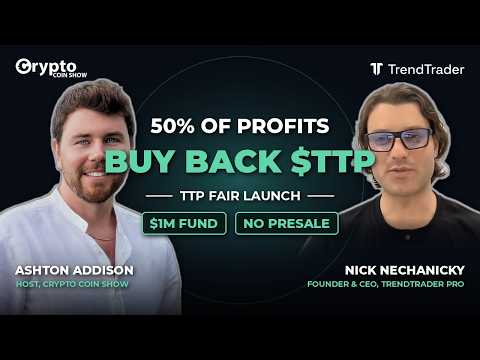 How TrendTrader Pro raised $1M for a token buyback fundOct 2, 2026
 Illia Polosukhin on NEAR’s privacy features and AI agents in 2026Oct 1, 2026
 How Robinhood built its own blockchain to control compliance and feesSep 29, 2026
 Geo Protocol founder Yaniv Tal launches Geo Debates, its first productSep 28, 2026
 How Brave is expanding beyond ad blocking with Drew PotterSep 27, 2026