10-year Treasury yield hits 5.23%, highest since 2007
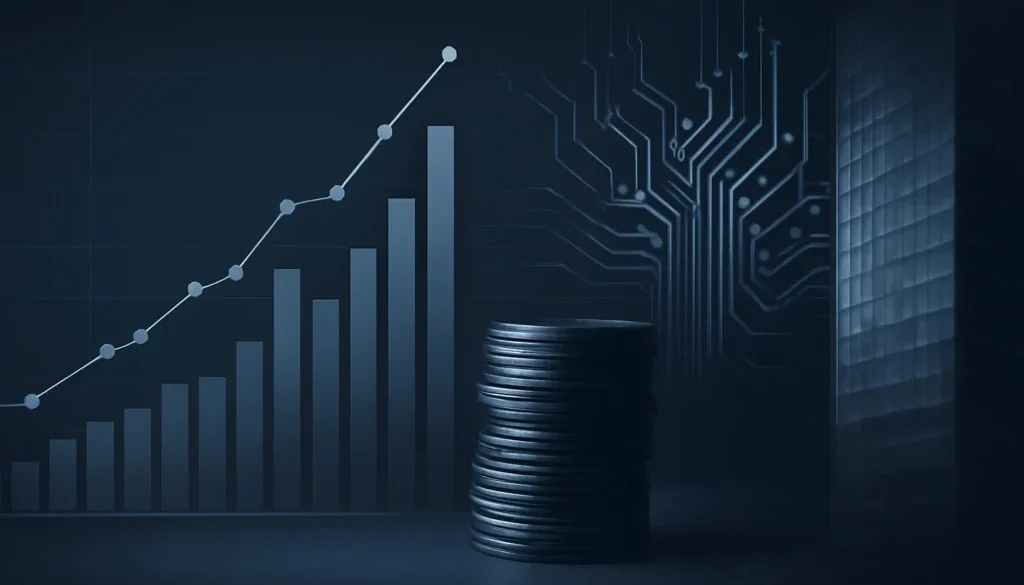
The 10-year Treasury yield jumped to 5.23% on Friday, its highest level since 2007, as bond investors weigh both sticky inflation and a wave of new debt tied to the artificial intelligence buildout. The move matters for BlockWest readers because higher yields raise borrowing costs across markets, from mortgages to the corporate debt now funding AI data centers.
- The 10-year Treasury yield hit 5.23% on Friday, up from just below 4.8% earlier in September.
- Fed funds futures show a 64% probability of an October rate hike, per the CME FedWatch tool.
- Vanguard estimates Alphabet, Amazon, Meta, Microsoft and Oracle issued about $132 billion in debt through July.
- 5.23% 10-year Treasury yield Friday, highest close since 2007
- 64% odds of an October Fed rate hike, per CME FedWatch
- $132B big tech debt issued through July versus $35B prior yearly average
- $570B potential AI-linked debt issuance sector-wide this year, per Vanguard estimate
The benchmark 10-year Treasury yield, which shapes mortgage rates and corporate borrowing costs, climbed to 5.23% on Friday (September 25), according to reporting by CNBC. That level had not been reached since 2007. The yield stood just below 4.8% as recently as early September, meaning it has climbed more than 40 basis points in a matter of weeks.
Bond yields and prices move inversely. The rapid ascent above 5% reflects investors pricing in a longer stretch of Federal Reserve tightening than they expected a month ago.
10-year yield reaches 5.23%, the highest since 2007
Stubborn inflation readings are one driver behind the move. The University of Michigan’s consumer sentiment survey showed year-ahead inflation expectations rose to 4.6% in September, up from 4% in August and the highest reading since June.
Fed funds futures now show a 64% probability of a rate hike in October, according to the CME FedWatch tool. That marks a sharp shift from earlier expectations that the Fed’s tightening cycle was largely finished, and it helps explain why long-term yields have moved faster than short-term policy changes alone would suggest.
Bond supply, not just inflation, is driving the climb
Thierry Wizman, global FX and rates strategist at Macquarie Group, told CNBC that the inflation narrative only explains part of the surge. He pointed instead to the sheer volume of new debt hitting the market from both the federal government and corporations.
I think this year it has more to do with the bond issuance than the inflation story.
Thierry Wizman, global FX and rates strategist, Macquarie Group
Wizman told CNBC that current yield levels are not unusual on their own, since they are not paired with extreme inflation expectations or an aggressively tightening Fed. What is unusual, he said, is that the economy is in the middle of a very strong investment cycle, with the federal government financing a large deficit at the same time companies borrow heavily for AI infrastructure.
Vanguard tallies $132 billion in big tech debt issuance
The AI spending boom is adding a new source of competition for buyers of Treasuries. Vanguard estimates that Alphabet, Amazon, Meta Platforms, Microsoft and Oracle together issued roughly $132 billion in debt through July. That compares with an annual average of about $35 billion for the same group between 2020 and 2024, a substantial increase in borrowing.
Vanguard projects broader AI-related debt issuance, spanning data centers, semiconductor makers and utilities, could reach between $300 billion and $570 billion this year. Wizman said hyperscaler capital spending plans are likely to keep bond issuance elevated through the rest of this year and into next.
The BlockWest read. Corporate treasurers and bond allocators now face a market where Treasury yields and AI-linked corporate debt compete for the same buyers, pushing borrowing costs higher across the board. Companies financing data centers with debt rather than cash are locking in rates near multi-decade highs, a cost that eventually shows up in AI infrastructure pricing and equity valuations tied to the buildout.
Wizman told CNBC that with hyperscaler capital spending unlikely to slow, “these yields could go higher.” The next data point will be whether the Fed’s October meeting delivers the hike that futures markets are now pricing at 64% odds, a decision that will test how much of the yield’s climb is inflation-driven versus supply-driven.
BlockWest is a news publication. Nothing here is investment advice. Read our disclaimer and editorial policy.