
Sergey Gorbunov on Axelar’s cross-chain solutions and developer tools
In this episode
Ashton Addison speaks with Sergey Gorbunov, CEO & Co-Founder of Axelar Network, on their cross-chain blockchain solutions, the close of the $35M Series B fundraising, how they’re lowering the barrier to entry for developers to build cross-chain, and the next stages in the Axelar network growth.
Bitcoin Trading at ByBit Exchange: 10% off the Best Crypto Portfolio Tracker: Get Buy and Sell Signal Indicators built into your charts!:
axelar.network · bit.ly · coinjar.com
- Axelar is an overlay network providing uniform routing, translation layers, and security across different blockchain ecosystems without requiring pairwise bridges.
- The network launched mainnet in phases starting with validator onboarding and basic asset transfers, with the Satellite application enabling simple token transfers between chains.
- Axelar closed a million Series B funding round to expand chain integrations, grow the team, and support application developers building cross-chain solutions.
- The platform uses Cosmos SDK with an open validator set model, gradually increasing validator participation as network performance and robustness improve.
- Developers can build on their preferred blockchain platform without learning new languages, with Axelar handling cross-chain interactions through SDKs and documentation.
Transcript
Read the full transcript
i am ashton addison from block west capital for investmentpitch media and the cryptocoin show and today on blockchain interviews once again we have sergey gorbanov ceo and co-founder of xlr network sergey welcome back to the show and thank you so much for taking the time hey ashland great to be back likewise there's been a lot that's going on i've been following axl our network
your team has some huge surprises that i'm looking forward to discussing in this episode but for the viewers that didn't see our first interview and people that want to get familiar with axl our network can you start off by giving us a high level overview of xlr and then we can dive into the details yeah for sure so axler is a blockchain interoperability network that was
designed to connect different blockchain ecosystems applications and users right and the basic problem that we're trying to solve is to allow users and developers to interact and compose across multiple ecosystems in an easy way and so we're building a decentralized network and a set of sdks and services around it to to solve that great and yeah i think that's a huge
issue uh with the isolation of blockchains and you know cross-chain solutions uh i feel like there's going to be some breakthrough where we can all be one big family and you know blockchains don't have to have all this extra work to communicate with each other um and there are a few other solutions you know that have been trying to do this um because you know
blockchains have been isolated for like 10 years now um maybe you can talk a little bit about the what makes axillar networks special in its cross-chain solution and why you think it's going to be the best solution for cryptocurrency in a whole yeah for sure i mean i think a lot of the solutions that you you've seen you know previously in the market they tried
to solve the problem in an ad hoc way right so they've been built things like pairwise bridges between ecosystem and ecosystem b you know or some other protocols that don't really scale across different blockchains and so the way we've designed actual network from the ground up is that you can think of it on a high level as an overlay network that serves three
purposes one it's uh it provides a uniform routing across different blockchains right so no more pairwise connections okay that you have to manage b it provides a translation layer that you can use to go from let's say a chain like cosmos to an edm chain those chains speak very different languages they have different smart contract supports and you want to be able to translate
messages and go from one of these ecosystems to another and so that functionality is baked into the axle network um and c is the security right i think at the end of the day you know if we have lots of different blockchains and you want to connect them together you're gonna have to rely on some you know some intermediate processor services protocol that helps you do that
and so by having a systematic and uniform way uh to deal with uh various uh security threats attack models we're able to improve the security of the overall cross-chain environments definitely thank you for the elaborating on that um because yeah there's a lot of intricacies involved in cross-chain solutions and it is not something that can be done overnight i know your team's
been working on this for a long time and there's different stages and it's almost a never-ending progression as you continue to reiterate and make things better can you talk a little bit about where you're at now with all the work that's been done in 2021 uh where is xlr network at right now yeah so most of the 2021 was spent building you know some of the core pipes
for this technology right so the axle network itself um some of the core functionalities behind it we've ran multiple test networks we had you know close to 100 validators participated over a thousand developers that were you know playing with the network experiment and perform various cross-chain calls and last month we announced that we're starting the rollout of the main network
right it's going to be a phase rollout where um you know that will involve a few different phases the initial ones include just validator on board in right uh turn it on basic asset transfer flows we opened up a simple application on top of the network satellite a couple of weeks ago that allows people to do simple token transfers from one ecosystem to another but this is just
you know some of the sample functionalities and we're going to continue um rolling out and opening up more of them over the coming months on boarding new chains onboarding more validators and then working directly with the developers to help them go across chain this is really our ultimate mission is to allow any application to go cross chain and that's what we're
after definitely and i think that's a great mission and i want to talk about the developers in a minute but you spoke there first about the validators the nodes and running the network and i'm curious in your team's work as you continue to grow out the network you talk about adding more validators how do you balance and manage you know validators versus
decentralization versus scalability and making sure that everything runs smoothly great question i think you know no matter what you do is always a trade-off that you have to make right in some sense between security speed of processing right decentralization and so on and so forth i mean our goal and our philosophy from day one has been to look at projects that establish
successful you know security models in the past and it's really the only solution that we know is by having a decentralized validator set right and an open consensus mechanism and so you know axle network was designed around the cosmos sdk so we follow like an open validator set where anybody can join anybody can run a node anybody can participate um you know we're set in
with an initial validator uh parameter which will continue you know increasing as we get more performance on the network and as we um you know improving some of these robustness features but yeah i think um it is i guess we carefully observe in the network right we have various tools that uh been built on top of it for monitoring uh including like explorers
including dashboards and so on and so forth and as we get more confidence as we get uh more functionality support which is gonna keep on increasing decentralization keep on in the validator set because ultimately that's the only way to get security in the space definitely yeah well said and as you continue to increase those numbers i saw that the team and the project is
expanding hot off the press today in the news i saw that xlr was closing a 35 million dollar series b which is incredible uh so first of all congratulations on that yeah and now with that raise closed what are the next steps uh with that capital and i guess moving towards the next stage of the development yeah uh i think we're going to continue expanding on three different um avenues
i think one you know we want to continue uh growing the number of integrations right that we're supporting through the axial network so more chains um we have designed the stack to be able to onboard the new chain in a very easy way like for an avm chain it's actually like 10 15 commands that you that you run the network and that's it for other chains
there's a little bit more work that we have to do if they speak like another different consensus language so we'll have to do this translation layer for them but uh you know definitely we're going to continue expanding on that b we're going to continue expanding just the team overall that continues building the the core project everything from engineering to you know business
development content creation uh documentation that's very critical for the project um and see we are just starting to work with you know a lot of the uh application builders that want to go cross chain and so we're going to continue supporting them building you know sdks documentation and we'll use uh you know parts of the funds to scale those directions as well
incredible yeah i was going to ask you about the developers making dapps cross chain is going to be amazing for the interoperability but i think building those dapps is is the first step and making sure that the development ecosystem is really easy to use and understandable how is your team helping lower those barriers to entry to actually increase the development and
want people to start building with axler yeah the first objective that we wanted to achieve is to make sure the developers don't have to learn another language right to interact and go across chain so the axle network has been designed with the principle that as a developer you can go and build on any platform that you're most comfortable with right if you like evm chains and
solana or or you know avalanche you can go and build there uh and you can interact with um what we call as gateway contracts in the same language as you write in your data right so there are additional function calls that you would have to execute from your application to our gateway contracts uh but from there our gateway is effectively unlock for you composability
and communication with the rest of the ecosystem and you don't have to do anything else right so that's why we're building the network and the set of services around it to make it easier for the developers to uh so that they don't have to like relay transactions pay multiple gas fees across different chains right wait on confirmations and so on and so forth so
we're building all these sets of auxiliary services on top of the network to make it easier for the developers to uh to execute those calls uh without learning new language and without having to perform all of those additional services that that are required to actually scale cross chain um and you know as you said it's not it's not an easy journey uh it requires
building certain stacks along the way um but uh you know i think we're we're here to stay and continue building definitely yeah i feel like axillar and all these like layer one protocols are like asteroids like flying through space and the and they may collide at some point but the timing has to be right as well because you know you're trying to integrate all these
different block chains and at the same time the teams at those protocols are working to continually expand and grow their protocols so do you communicate with the other protocols and like try to make sure that you guys are on the same page with this cross chain communication or how does that work uh we definitely communicate right i think uh you know when we started a year and a
half ago we sort of had a bet on the multi-chain ecosystem right last year we spent the time you know building most of it um and today every project is figuring out what is going to be my interoperability across chain strategy right from layer ones that are talking about like bridges to application developers that are thinking how do i scale my application right like
how do i get more users to access it how do i get better distribution and the only answer is to you know go cross chain right and you know in some sense um i think it's a sort of it's it's a requirement for some of these applications to continue growing and surviving right definitely and do you i feel like 2021 people were saying you know it's the year of nfts becoming mainstream and
you know d5 continuing to explode do you see or foresee in the next year or coming years like one of these it's going to be the year of cross-chain integrations finally like there's a holistic family of all the blockchains are able to speak to each other or will it be like some gradual integration that you don't really think about i do think you know it's starting to be
one of the top topics right i think you know this year we're probably still going to see a large uh footprint of various like bridging technologies right and just people explicitly moving assets from chain a to hnb but there are a lot of projects that are you know integrated directly where this bridging functionality is so obfuscated from the users and they don't have to explicitly
you know move their tokens back and forth um is there going to be a moment where we're all going to say oh we need to go cross chain i do think so and i i don't know when it would be you know probably over the coming years and the reason for this is that you know first applications that start having cross chain support are just going to have so much advantage compared
to the applications that don't have it right it's going to be access to more liquidity access to more users and access to more distribution right and for an application developer that's what you're seeking for and so as soon as first you know category of projects let's say like dexes integrate and every other decks have to do the same otherwise they're just not going to be
competitive in the market and not have the same you know liquidity or same user distribution so um you know maybe not all projects will embrace this at the same time but i expect categories of different players we've seen um to kind of embrace it around similar time frames and follow one another definitely yeah great point sergey and i think we'll probably look back you know years
from now and and laugh when we saw that you know decentralized exchanges that could only trade ether tokens between each other and and none of the other ones were isolated and we'll think wow that was crazy but right now we love it right yep yep i think you know the the end goal is that users you know have any assets see an application just go and interact with
it right then i think um you know i do think we're gonna get there definitely and you mentioned as a part of the raise you're expanding the team and continuing to work on development i'm curious for outside people listening in are you guys looking for more you know in-house developers are you also looking for other people to help contribute that aren't coders or they can help in other
ways as well yeah i think we're looking for contributors on all fronts right everybody from uh you know joining the team full time to continue to the core development of the network but also have a very vibrant ecosystem of developers around the project right so some of the tooling dashboards uh validator kind of monitoring tools have been built by outside community
you know that contributing like full request to our repositories we have people that uh have built you know demos of various bridges on top of the network and and starting to see early applications uh um prototyping and uh you know figuring out their integration paths we also have lots of folks that helped us build uh just educational material right around the network how do
you spin up a node what does this network look like how do you relay transaction actions from one network to their um so when we're continuing to look for folks to help us create content create education around the network it is a complicated stack and we'll have you know it will be uh so until we make it easier and more accessible and build very simple apis on
top of it and so there's a you know a long journey ahead of us and we're looking for folks to to help us get there definitely yeah and you know you mentioned bridges a few times and i know many people that are familiar with you know bridging uh from ethereum to polygon or from any chain to another chain it seems like it's the best technology that we have to make this
intermediary for for cross chain right now what are your thoughts on is that the best technology we have and i i feel like there's still a lot of flaws in bridges yeah i mean i think a lot of the you know bridges that that people have built they're either centralized right or they are pairwise which doesn't really uh allow you to continue uniformly scale
the ecosystem so you know as an example uh we have built uh kind of a bridging application on top of the actual network which is satellite but it already has lots of advantages where you you know as a user a you don't have to pay like multiple gas fees and transaction fees um it has this uniform routing capability where every new chain that gets added gets automatically
interconnected with all other chains right so it's kind of a it's it's a huge uh you know uh networking effect uh from that perspective uh but it's you know just a sample application i do think we'll i do think bridges will sort of stay in some sense because at the end of the day you know some people need to move you know large parts of liquidity from chain
a to a chain b right or just rebalance their books in the back end or whatever that is but i think retail users are going to start accessing cross chain applications um you know a lot more over the coming year or two definitely yeah thanks for that uh insight and pretty much um i've been following the axler updates and it looks like you guys are uh doing amazing work so far i think
2022 is going to be a huge year for the viewers that want to also follow along with these updates and also get involved with the community in the ways that you mentioned what's the best way for them to follow along yeah i think a good starting place is our website right axle.network uh from there folks can find links to various uh developer communities that we have
including discord i think we have over or you know forty thousand on discord right now um social channels like telegram we have uh twitter that's you know where we constantly post updates it's at axl core um and we have links to various uh developer ecosystem programs um so people can submit applications we're gonna review them on the back end um invite them to their channels and
help them in any way we can amazing thank you sergey i will leave all those links for the viewers in the description box below i appreciate you coming on um to speak about xlr once again congratulations on all of the growth since our last video and look looking forward to following up again so let's definitely follow up in the near future sounds great thanks for the invite it
was great chatting ashton you
More interviews
 Why banks are building for Web3 in silenceOct 5, 2026
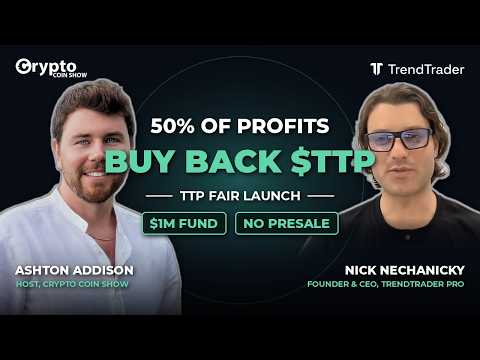 How TrendTrader Pro raised $1M for a token buyback fundOct 2, 2026
 Illia Polosukhin on NEAR’s privacy features and AI agents in 2026Oct 1, 2026
 How Robinhood built its own blockchain to control compliance and feesSep 29, 2026
 Geo Protocol founder Yaniv Tal launches Geo Debates, its first productSep 28, 2026
 How Brave is expanding beyond ad blocking with Drew PotterSep 27, 2026