
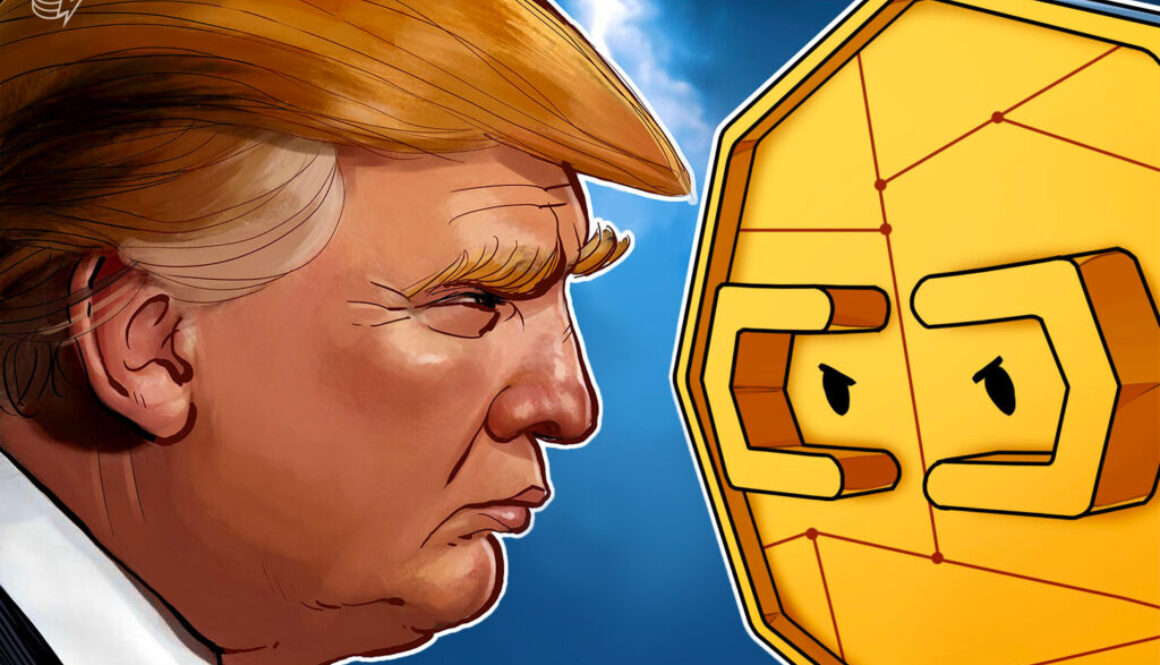
Trump-backed company promotes GOLD cryptocurrency ahead of digital currency crash
Real Trump Coins, a brand associated with the former president, promoted a token called GOLD before subsequently removing related posts from X, the platform formerly known as Twitter. The promotion came as wallets connected to the project’s team liquidated 224.5 million tokens while the asset’s market value declined approximately 99%. This sequence of events raised significant concerns within the cryptocurrency community about the alignment between public promotional activities and private asset sales by insiders.
The cryptocurrency industry has experienced substantial growth over the past decade, attracting both institutional investors and retail participants seeking exposure to digital assets. However, this expansion has also created opportunities for promotional schemes and conflicts of interest, particularly when high-profile figures lend their names and reputations to cryptocurrency projects. Celebrity and political figure-backed tokens have become increasingly common, with some achieving legitimate utility and adoption while others have faced criticism for prioritizing promotion over substance.
The sequence of events surrounding the GOLD token raised fundamental questions about the coordination between the public promotion of the token and the behind-the-scenes sales activity. The timing of the posts’ deletion and the concurrent token depreciation suggest potential concerns about how the project communicated with its investors and the broader cryptocurrency community. In typical investment scenarios, transparency regarding insider sales and project fundamentals is considered essential for maintaining investor confidence and market integrity.
The 99% decline in token value represents a catastrophic loss for retail investors who may have purchased GOLD based on the promotional messaging associated with the Real Trump Coins brand. Such dramatic depreciations are not uncommon in the cryptocurrency space, where volatility can be extreme and projects frequently fail to deliver on their stated objectives. However, when significant insider selling occurs simultaneously with public promotion, questions naturally arise about whether team members possessed information suggesting the token’s collapse that was not immediately disclosed to the general investing public.
Real Trump Coins had leveraged the former president’s brand recognition to market the cryptocurrency venture, demonstrating the powerful marketing potential of association with well-known political and cultural figures. The use of such associations has become a standard practice in cryptocurrency marketing, with projects often highlighting the involvement or endorsement of celebrities, athletes, or political personalities to build credibility and attract investors. However, the details surrounding the project’s leadership structure and governance remain subjects of scrutiny, with questions about who held decision-making authority and how fund flows were managed.
The substantial token sales by team-associated wallets occurred as market conditions for GOLD deteriorated sharply. In cryptocurrency markets, large token sales by insiders can significantly impact price dynamics, particularly for projects with smaller market capitalizations or limited trading liquidity. When such sales coincide with the continuation of public promotional messaging, they can create asymmetric information situations where insiders potentially possess better knowledge of market conditions or project viability than external investors.
The removal of promotional posts from X further complicated the narrative surrounding the project. Social media platforms have become primary communication channels for cryptocurrency projects, enabling direct engagement with potential and existing investors. The deletion of posts can be interpreted as an attempt to limit the historical record of promotional claims or to distance the brand from the project as problems emerged. Such actions raise questions about accountability and the preservation of information that investors may have relied upon when making financial decisions.
The incident reflects ongoing tensions within the cryptocurrency space regarding transparency, promotional practices, and the responsibilities of projects that rely on celebrity or political figures for marketing purposes. The industry has evolved significantly since its inception, but regulatory frameworks have not kept pace with innovation, creating gaps in oversight and investor protection. Projects operating in this regulatory gray area face fewer constraints on promotional activities and disclosure requirements compared to traditional securities offerings.
Such episodes have drawn increased attention from regulatory bodies and investor protection advocates monitoring the digital asset landscape. Government agencies including the Securities and Exchange Commission and the Commodity Futures Trading Commission have begun scrutinizing cryptocurrency projects more closely, particularly those involving promotional activities and claims of future value. Regulators have expressed concerns about the potential for fraud and manipulation in markets where retail investors may lack sufficient information to evaluate project viability independently.
The cryptocurrency community itself has developed resources and tools for evaluating projects, including blockchain analysis platforms that can track token flows and insider transactions. However, retail investors often lack the technical knowledge or analytical sophistication to utilize these resources effectively. Educational initiatives and improved standards for project disclosure could help address information asymmetries, though such improvements have faced resistance from projects concerned about increased compliance burdens.
The GOLD token incident serves as a cautionary tale about the risks inherent in cryptocurrency investments, particularly those heavily dependent on promotional activities and celebrity associations. It underscores the importance of investor due diligence, skepticism toward outsized promotional claims, and careful consideration of insider incentive structures. Moving forward, the cryptocurrency industry may benefit from strengthened norms around transparency, more robust governance structures, and clearer disclosure requirements that would help protect retail investors while preserving innovation in the digital asset space.