Key takeaways
- Structure Fi aims to provide global access to any asset at any time by eliminating barriers like cost, complexity, and requiring mobile-first design for markets without widespread computer access.
- High-inflation countries like Nigeria, Venezuela, and Argentina show strong demand for reliable asset access to preserve savings rather than hold deteriorating local currency.
- Structure Fi operates in over 80 countries and strategically targets markets based on regulatory alignment and local fit rather than expanding uniformly across all regions.
- KYC and AML compliance are non-negotiable requirements that Structure Fi implements to protect users, despite these processes creating barriers for unbanked populations in some regions.
- Geographic proximity does not determine regulatory environment or cryptocurrency adoption attitudes, as demonstrated by Philippines and Indonesia having nearly opposite approaches to crypto despite similar locations.
Opening global markets
Ashton Addison: What is Structure trying to build?▶ 02:11
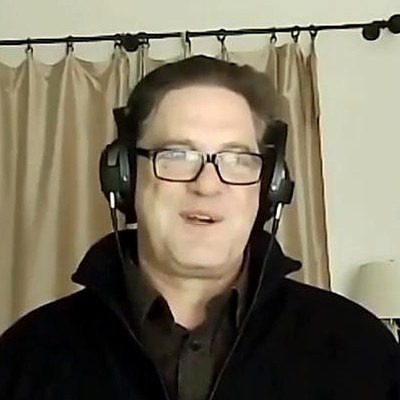
Wes Cecil: The goal of Structure is any asset, anywhere, at any time. It's simple in concept and difficult to execute. In the developed world, in the US and Europe, you have fairly decent access to markets, although Robinhood showed that even in the US all kinds of issues kept people out. When they made it simple and fractionalized ownership, millions more people suddenly participated. We're trying to do that on a global scale. In much of the world there are no reliable markets, investments or assets for the average person to access. So we're eliminating barriers like cost and complexity, and we're making it mobile first, because in a lot of the world people don't have laptops, but everybody has a smartphone.
Ashton: Which countries are most eager to get in?▶ 04:28
Wes: It's a mix. In a high-inflation country, you may want to move some savings into a reliable asset because your savings are deteriorating. It could be a stablecoin, Bitcoin or Tesla. Your first goal may not be to make money, just not to lose it by holding local cash. Regions like Nigeria, Venezuela, Argentina, Latin America and Africa fit that. The other side is regulatory compliance. With several hundred countries come several hundred regulatory environments, so we look for countries where the rules and our approach fit well. We're available in over 80 countries, and my challenge as chief strategy officer is choosing which markets to target with limited resources. Even the Philippines and Indonesia, which look similar on a map, have almost opposite approaches to crypto and money. So local knowledge and people on the ground are our focus right now.
The goal of Structure is any asset, anywhere, at any time.
Compliance and responsible growth
Ashton: How do you balance easy onboarding with collecting the information you need?▶ 08:42
Wes: We don't balance it, because KYC is a given. Know-your-customer and anti-money-laundering rules are real. In some places they're a huge barrier, in others not so much. We've been surprised by good clearance rates in some parts of Africa, where you'd expect problems. When you have a motivated user base, they tend to clear at a pretty good rate. Some countries don't have standard photo IDs, which makes it harder, but there's no hedging on KYC. Some companies have cut corners, and we're not one of them. When companies try to cut corners it damages everybody. Users get exposed to risk, and it looks bad in the press.
Ashton: How much choice do users have today, and where do you draw the line?▶ 10:15
Wes: Right now we're focused on the biggest blue-chip stocks and crypto, names you recognize. Part of that was to test our system globally, and we have to test it many times. We now have good confirmation, and by the end of the fourth quarter this year we'll add several hundred more assets from around the world. We also need to educate our clients, because we don't want people randomly investing in things they've never heard of. So we're building a responsible system of education and outreach. When we add a class of stocks, say from the Frankfurt exchange in Germany, we'll show the big ones, their background, why they may or may not be good investments and the market return over time. We could throw up a thousand assets and say knock yourselves out, but that may not be the most responsible approach.
How Structure differs from an exchange
Ashton: If someone already buys Bitcoin and a stock on an exchange like FTX, what's the difference?▶ 12:55
Wes: Trades are free, so there are no fees coming or going. We'll also have vastly more stock assets, plus all the crypto an exchange like FTX has, and over time we want to add bonds and commodities. For us it's a bandwidth and education issue. We don't want to add something like forex trading too early and then have bad things happen to our users. The other difference is tokenization, which opens up a whole range of possibilities. Say I have nephews who just graduated from college. I could send them some Apple stock and some Google stock in their wallet. It's their wallet, held by them. They can use it as a gift or a payment, and in the future put it into DeFi protocols.
When companies try to cut corners it damages everybody.
Tokenization and DeFi
Ashton: Will Structure offer DeFi, such as earning yield or accessing liquidity pools?▶ 15:35
Wes: We don't have that integrated on the platform right now. But when you tokenize a stock, the user can take it anywhere and interface with any DeFi protocol they want. We'll partner with some in the future as we integrate more closely and as the protocols develop, because tokenization of stocks is all new. Look at how wealthy investors are served. If you have a hundred million dollars at BlackRock, they don't put it in a shoebox labeled Apple stock. They borrow against it, leverage it and run sophisticated earning strategies that small investors don't have access to. With tokenization and DeFi, that world opens up. It will be a subset of our users who want to explore it, but the opportunity will be there. We think the little person should be able to do this.
This interview has been edited for length and clarity. Recorded November 2022.