Key takeaways
- Mighty Bear Games has shipped five games in four years with major partnerships including Apple and Disney before pivoting to Web3 gaming in early 2022.
- Mighty Action Heroes is a battle royale game inspired by 1980s and 1990s action movies launching in 2022 with planned inclusive playtests.
- The studio priced its 5K NFT collection at 0.013378 ETH to attract genuinely engaged community members rather than speculators seeking quick dumps.
- Web3 gaming requires balancing decentralization ideals with accessibility for millions of players, as current infrastructure creates friction for mainstream adoption.
- Mighty Bear Games plans NFT fusion systems and locking mechanisms that accumulate in-game currency, integrating blockchain assets seamlessly into gameplay rather than as yield farming.
From Candy Crush to all-in on Web3
Ashton Addison: What has Mighty Bear built, and what pulled you into Web3?▶ 00:44
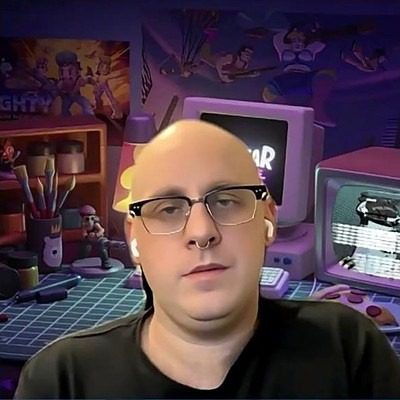
Simon Davis: Mighty Bear was founded in early 2017, so we've been running for just over six years. The core of the team came from King, the originator of Candy Crush, so it's a team with a strong Web2 gaming pedigree. I've been in this industry close to 20 years. We've shipped five games in the last four years. One was a food-fight game we made with Apple, where a tsunami of butter comes in and you hit people. It got attention from the wider media, and with a relationship with Disney going back some time, it helped us land the collaboration for Disney Melee Mania. That's a mobile League of Legends-style game with 16 Disney and Pixar characters who can all fight and collaborate together. Around late 2021, I could see where the games industry was going. I'd been making free-to-play games as a service for a long time, but I understood instinctively how important asset ownership is to players. I used to make MMOs, and I'd been in crypto since 2015. I looked at what was happening with NFTs and it made a lot of sense to me. We've been all in on Web3 since the beginning of 2022, and last year we announced a token raise led by Framework Ventures.
They have been almost like yield farming in disguise.
Keeping the game fun and the chain out of the way
Ashton: How do you bring in digital asset ownership without the token overtaking the gameplay?▶ 03:57
Simon: The financialization of games is a real issue in our space. It's a cliché on crypto Twitter that you just need fun games, but it's more nuanced than that. The truth is that a lot of the games so far have not been that fun. They have been almost like yield farming in disguise. We have decades of pedigree as game developers, so I have no fears on that front. The interesting challenge, which other studios are starting to run into, is how important traditional Web3 ideas like decentralization are if you want to onboard millions of players. I think there has to be a bit of a trade-off. To make things accessible, you have to present them in a way that's easily understood, and the infrastructure and tech aren't quite seamless from the user's perspective. We're trying to mitigate that, so the experience is truly fun and the on-chain stuff doesn't get in the way.
Ashton: You've released NFTs before the game launches. How has that worked, and what will they do in the game?▶ 06:43
Simon: We released the Genesis Pass last year. It covers all the games in our ecosystem, so holders get NFTs in all our future releases. For Mighty Action Heroes we did a limited 5K PFP collection to onboard the first 5,000 players. It was priced very cheaply, at 0.013378, which was about eight or nine dollars at the time. The problem with free mints is that you get a lot of people who just want to dump them immediately. Having a very small price got the right community in. People have been stacking them and getting involved in the play tests. It's still early days, but we have a very engaged fan base, and there's a lot of feedback because it's building with us. We're also looking at merging NFTs to create new assets, and maybe a fusion system. There's a locking mechanism too, where you accumulate in-game currency based on how long you've held your NFTs, and it can be redeemed for in-game items. We're trying to gamify the whole NFT collection part and plug it into the game in a way that makes sense.
Asia moves first, the West watches
Ashton: Is interest in NFT games still growing, and what are you seeing across the wider industry?▶ 08:40
Simon: It's a nuanced picture, and it's not consistent across the board. The big studios are looking at it. Sony just registered a patent that is basically about transferring NFTs. The Japanese publishers and the Koreans are looking at this very aggressively, and they've announced moves. One thing this industry has taught me is that it happens in Korea, and then it happens in the West six or seven years later. We're seeing that play out right now in Web3. The Asian studios are generally going pretty hard, and the Western studios are taking more of a wait-and-see approach. That's a bit sad, because it's like mobile, where they'll be playing catch-up in six years. The mania of a year ago has cooled, and some of the more opportunistic people have pivoted to AI. But it's still there, it's still vibrant, and we've got good teams shipping.
Ashton: Why have gamers pushed back on big-studio NFT plans, and how should studios approach it?▶ 10:32
Simon: The industry hasn't always treated gamers well. So it's not surprising that when they see monkey pictures traded for six and seven figures, they don't react well to the possibility of that coming into gaming. They haven't yet understood the possibility. I'm optimistic that a few developers will integrate this in a very thoughtful way that is additive, and then people will feel better about it. The first major one was announced at GDC: CCP, the makers of Eve Online, said they would be doing something with NFTs. They've been making massively multiplayer online games for about three decades, they know what they're doing, and they're community-led. I'm absolutely certain they'll show people a full and value-adding way to do this. Perceptions change. For many people, free-to-play was a red line because they'd seen scammy Facebook games. Now Fortnite and League of Legends are the two most popular games in the world. Perceptions change, but you need to deliver good products.
It happens in Korea, and then it happens in the West six or seven years later.
Browser, mobile and the retention challenge
Ashton: Will Mighty Action Heroes be a desktop game or mobile casual?▶ 12:37
Simon: The game is currently playable in the browser. That was a deliberate choice to make it as accessible as possible, so anyone with a PC, Mac or even Linux can play without a high-end rig. A mobile version is also coming in the second half of this year, Android first. We'll keep an eye on how things develop at Apple. Mighty Bear has always been a mobile-first studio, because that's how you reach the most players. If you want to reach millions and billions of gamers, you have to be on mobile, just like Fortnite and League of Legends. It's possible we'll also do a more comprehensive PC client, like more traditional PC games.
Ashton: How will you keep players engaged after launch, so interest doesn't fade after the first month?▶ 14:06
Simon: Every game developer has to consider that. Less experienced developers will just focus on the cool game, the one you jump into for five, 10 or 20 minutes at a time. But retention comes first, and if you want retention you have to think about the metagame: progression, crafting and all the stuff that sits outside the game. We know we can make a very solid and fun core gameplay experience. So from a product perspective, maybe 70 to 80 percent of my time is spent thinking about the metagame and about systems that will scale and keep people playing for five, 10, even 15 years.
This interview has been edited for length and clarity. Recorded April 2023.