Key takeaways
- Nevermined enables NFTs to become interactive and composable, allowing users to merge, remix, and create derivative works with automated royalty distribution.
- Current NFTs are one-dimensional, primarily offering liquidity through buying and selling, but lack utility for combining assets or creating new derivative value.
- The platform orchestrates multiple services including data storage providers, schema providers, and AI modelers to create end-to-end pipelines for data asset utilization.
- AI-generated art raises IP ownership questions that can be addressed through fine-grained provenance tracking and royalty flows back to original artists and source material.
- DAOs funding research can use Nevermined to manage IP rights, fund researchers, and share resulting datasets with other researchers in their field.
Moving NFTs beyond trading
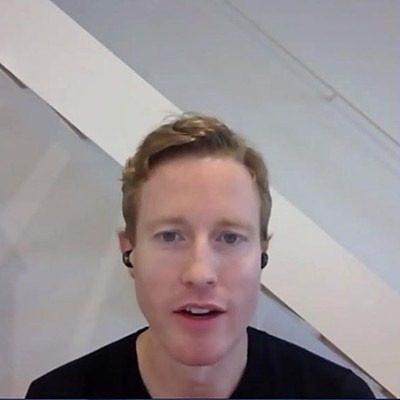
Ashton Addison: What are you and your team working on at Nevermined?▶ 00:46
Don Gossen: We're working on Web3 asset interactivity. It may sound obscure, but the concept is unlocking the latent value attached to these assets. Existing NFTs are quite one-dimensional. You can buy a Bored Ape and sell it to me, and the utility is in the liquidity: we can trade it, and that's all we can do with it. What if you had a Bored Ape, I had a Bored Ape, and we could merge them into a new derivative work? Then what do the rights look like? What's the royalty regime if we sell that derivative, and who gets what from the inputs to that output? That's what we're working on. We're adding mixing and matching, merging, slicing and dicing of these underlying assets and their associated payloads, so you can create net-new derivative works. That applies to the art most people associate with NFTs, but also to the data assets behind those NFTs and to payloads like IP NFTs.
Ashton: Could this help with liquidity, for example by fractionalizing expensive NFTs?▶ 02:40
Don: It could be fractionalization, for sure, but that just takes the one-dimensionality and magnifies it. What we're focused on is making these assets interactive amongst themselves. That creates a dialogue between actors in the ecosystem and a more tightly coupled ecosystem. It's conceptually like derivatives in finance, but with data assets instead of securities. You can combine inputs into net-new data sets that benefit everybody who contributed. That's not just the data owners but also the infrastructure providers, such as Filecoin and Arweave, which host the assets, and Ceramic, which may provide the schemas that make them searchable. It also includes the data scientists and AI modelers who build the models that compute across these assets. We orchestrate those services so they can talk to one another, find the relevant assets and services, and execute the whole solution end to end in one pipeline.
Ashton: How long have you been building this, and where does it stand?▶ 06:11
Don: We built in stealth for three years and came out of stealth earlier this year. We closed our funding round in April, and we've been making the product more consumable, as well as putting together marketing collateral, PR and outreach to grow the user base.
What if you had a Bored Ape, I had a Bored Ape, and we could merge them into a new derivative work?
AI art, attribution and DeSci
Ashton: Who do you see using this technology?▶ 07:08
Don: Broadly, we see everybody as a user of the platform. But take creatives. With Stable Diffusion you type everyday language into an interface, say a man looking at the moon on a starry night, and the AI gives you a set of entirely synthesized images. You can do it in the style of different artists, which has started a conversation in the art community about who owns that art. If a model was trained on images from a contemporary artist, the output will have that artist's look and feel, and they may feel you're infringing their IP. Can we address that lack of attribution? Yes, by providing fine-grained fidelity on the provenance of the source material. If you have the reference images the model was trained on, and someone uses them to create a derivative work and sells it, royalties or some other form of attribution can flow back to the point of origination, which in part is that artist. The same applies in DeSci. VitaDAO, for example, funds early-stage longevity research and buys the IP rights to it. The DAO can then open those assets, such as CSV or Excel files, to other researchers, giving them net-new data sets they might not otherwise know exist or be able to access.
Ashton: Creators are almost competing with AI that improves very quickly. How do people compete?▶ 12:28
Don: That's the point we want to address: do you need to compete? In a perfect world it would be collaborative. As an influencer, you select the AIs you want to leverage to enhance your community and your ecosystem. It's about enabling the identification of the service, whether it's an AI, computation or storage service. That way an influencer, maybe in Web2 just on Instagram, can discover net-new services that otherwise may not be available to them and make their end product even better.
Royalties, governance and DAOs
Ashton: Smart contracts already let creators program royalties. How big a shift is that from Web2?▶ 13:47
Don: Royalties come back to being the digital manifestation of a governance structure. That's the real USP of blockchain: the ability to digitize governance and make it a more fluid, liquid experience. Provisioning liquidity is interesting, but it only goes so far. The real game changer, beyond native digital payment, is the ability to govern on top of that, with transparency across all the actors in the ecosystem if you so choose.
Ashton: DAOs are becoming important for businesses. Where do they stand, and where are they heading?▶ 15:58
Don: I think you're right, especially in a Web3 context. At the very least, you need to understand the decentralized organizations being established in your sphere of influence. We've been part of a number of DAOs, some good and some not so good, and it's a learning curve. There are still inefficiencies, and the world is set up for centralized organizations, so it's easier to operate in that context right now. But if you're willing to deal with the shortcomings, the long-tail benefits will be massive. In the future, they'll be ubiquitous, and they'll represent some of the largest organizations on the planet. We'll associate more with ecosystems than with brands. Imagine if Elon had come into Twitter, scrapped the executive team and put a DAO in, where every member gets a vote. I don't know if it would fall over entirely, but it would be an amazing experience. I think the next five years will be early-stage organizational development, and after that we'll see real inroads into more structured commercial opportunities. Right now the successes are in underserviced areas like early-stage research, which is notoriously underfunded. That's where Kickstarter-style collective engagement makes sense.
In the future, they'll be ubiquitous, and they'll represent some of the largest organizations on the planet.
What's next for Nevermined
Ashton: What milestones is the team targeting for 2023?▶ 20:18
Don: There are three areas. First, we're extending the simplification model with interfaces that make it easy to embed the technology in your existing website, whether that's your own art gallery or a full marketplace. If you can't currently mint and deploy NFTs, you'll be able to, and publish them. If you have a marketplace with an NFT engine, you can integrate with it. After that come the more advanced computation features for the interactivity I described. Second, we're working with a number of DAOs, particularly in DeSci, to enable analytics functions in a more decentralized fashion, rather than just funding projects in their area of focus. Third, on the creative side, we'll keep exploring Stable Diffusion and the proliferation of AI, and how it relates to artists, consumers and the governance of Web3 assets.
This interview has been edited for length and clarity. Recorded December 2022.