Key takeaways
- Matrix is a regulated cryptocurrency exchange licensed by FSRA of ADGM in Abu Dhabi, the first to launch under the 2018 virtual asset regulatory framework.
- The exchange targets institutional and high-net-worth clients with spot trading, planned derivatives, and OTC block trading for larger volume transactions.
- FSRA requires rigorous product approval processes including independent third-party verification and direct regulator oversight, distinguishing Matrix from unregulated exchanges.
- Matrix operates with real-time market surveillance by regulators to detect market abuse, spoofing, and fake volumes, protecting institutional investors from unfair trading practices.
- The platform currently offers six approved cryptocurrencies with plans to add thirty more assets under FSRA supervision in the coming weeks.
A regulated exchange built for institutions
Ashton Addison: What is Matrix, and what are you working on?▶ 00:23
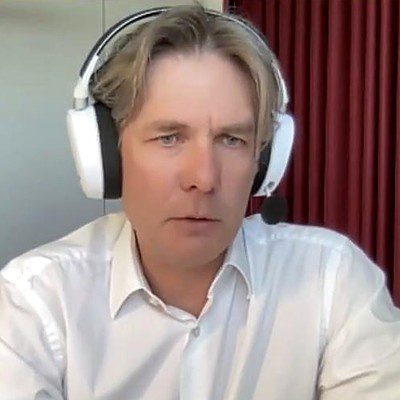
Vasja Zupan: We are a regulated cryptocurrency exchange. We're regulated by the FSRA of ADGM, where we hold a multilateral trading facility license and a custodial license. ADGM is a free zone in Abu Dhabi with its own regulation, and in 2018 it was the first to introduce a framework specific to virtual assets. Matrix was the first to go live and start accepting customers under that framework, around the middle of last year. We target professional, institutional and high-net-worth customers. We can accept retail customers too, but our focus is on the institutional side. We launched with the first four approved products, and a couple of weeks ago we added two more virtual assets. We're now in the process of adding another 30. The regulator prescribes a detailed process for every new product. We have to assess it against set criteria, the regulator does its own checks, including calling the teams involved, and it asks for independent third-party verification of volumes and concentration of assets.
Ashton: What products does Matrix offer today, and what's coming?▶ 03:33
Vasja: Currently we offer a plain, simple spot exchange. We've started working with the regulator to introduce derivatives, futures and options, because we believe a professional trader needs them in a highly regulated, controlled environment. We offer six assets, from Bitcoin to Litecoin and XRP, which are the most expected top-of-the-line products. Extending those is the next step. In the coming weeks we'll also introduce an OTC RFQ product, the first in this regulated environment. Customers will be able to trade bigger blocks in single trades, connected to up to three to five of the biggest liquidity providers globally, who present the best quote for the request. That matters because the professional and institutional clients we target need it, especially in the UAE and the Middle East, where there are a lot of investors.
Volume by itself doesn't tell you the quality of liquidity.
Volume, surveillance and institutional money
Ashton: Is trading volume a key factor for spot trading on Matrix?▶ 06:16
Vasja: Volume and liquidity matter, but volume by itself doesn't tell you the quality of liquidity. It's more important to look at the structure of the market and the order book. We have professional market makers providing liquidity, and we're adding more as we add products, to increase depth and quality. In the past there was a lot of talk of fake volumes and spoofing. Here, the regulator is plugged directly into our market with its surveillance tools and monitors it 24/7 for potential market abuse. Any fake-volume attempt would be at the top of the alerts immediately. We would detect it with our own tools as well, and we would act on it with the clients involved. On non-regulated exchanges there is a huge risk of being treated unfairly by other traders or by the exchange itself, because they all have their own trading desks and you don't know what's happening in the background. Institutions cannot afford to place a hundred million dollars into a trade where they don't know who is on the other side. Retail was necessary in the beginning to drive innovation, but I think proper institutional money is still not there. To get the market truly mainstream, you need an environment like Matrix. I'm super bullish about that.
Dubai, Abu Dhabi and who you're really signing with
Ashton: How do you see the UAE developing as a crypto hub?▶ 10:34
Vasja: I'm happy that Dubai is introducing its own framework, also at central government level and not just in the free zones. That will help the industry grow. I'm in favor of competition, and there's enough space for multiple players. Virtual assets will play a significantly important role in the region given all the economic and financial development going on. But there's a lot of noise. Recent announcements have talked about in-principle approvals and licenses in Dubai, yet the Dubai World Trade Center license doesn't exist yet and the regulation isn't published. It will take a lot of time. For illustration, Matrix needed more than two years to get from in-principle approval to going live, with hundreds of points to fulfil. I'd also tell retail investors to be careful who they are actually signing a contract with. Someone may claim to be regulated in Dubai or Abu Dhabi, but you end up onboarded to a different entity somewhere like Seychelles. That doesn't give the same security. Just because the name is the same doesn't mean it's the same thing.
Institutions cannot afford to place a hundred million dollars into a trade where they don't know who is on the other side.
Surplus energy and the road ahead
Ashton: Is sustainability part of Matrix's thinking in the region?▶ 13:58
Vasja: We're looking closely at this space, and I'm a great supporter of sustainability. When I first came across Bitcoin and read the white paper, I thought it was consuming far too much energy. I left it aside for a couple of years before returning to the industry in 2014 on a different project. I do believe we're now seeing positive development, even for proof-of-work products, toward working in a sustainable manner. The UAE has huge electricity demand, but only for part of the year. In the summer it's 45 degrees and humid and you can't survive without air conditioning, while in winter you switch it off. With nuclear power, I think the second reactor was switched on some weeks ago, you can't just dial production up and down. It's more economic to keep it running. So you could invest that surplus energy into mining. At the end of the day, Bitcoin's value is energy. If you can store this energy in the form of Bitcoin, that's also beneficial, because otherwise the same electricity would be produced and simply dumped.
Ashton: What's on the Matrix roadmap for the next six months?▶ 17:09
Vasja: First we're focusing on the basics: catching up with additional virtual assets, so more products and more pairs. Derivatives will come towards the end of the year. We've also started looking at NFTs. The regulator published a consultation paper on them a couple of weeks ago, and they're covered, so we'll be able to develop a platform for them. We're also looking at ETFs because we see demand in the region and globally. For institutional investors, depending on their mandate, an ETF is sometimes an easier way into a new asset class than going straight to spot trading and holding the keys yourself. We already have the spot platform and custody, so expanding into these new products is the way to go.
This interview has been edited for length and clarity. Recorded April 2022.