Key takeaways
- Centralex combines a regulated centralized exchange with custodial DeFi access, allowing users to trade on-chain protocols through a simple username and password interface.
- The platform partners with Fireblocks for key management, splitting private keys between Centralex and Fireblocks to prevent fund loss in case of breach.
- Centralex targets mainstream adoption by simplifying DeFi access for non-technical users who find self-custody and seed phrase management too complex.
- The exchange offers spot trading with 14 pairs and integrates multiple DeFi protocols including Uniswap, 1inch, NFT marketplaces, and staking services.
- Centralex implements KYT (Know Your Transactions) and works with Chainalysis to align with emerging AML regulations in the European Union.
A custodial gateway to DeFi
Ashton Addison: What is Centralex, and what are its main solutions?▶ 00:45
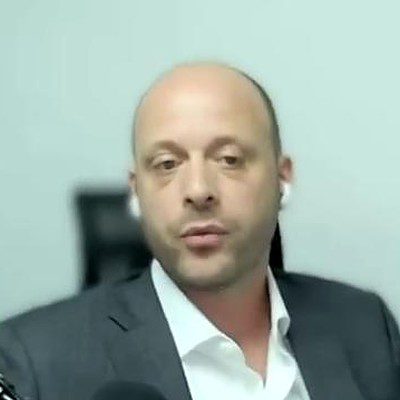
Tristan Roozendaal: Centralex is a licensed and regulated centralized cryptocurrency exchange that combines trading with decentralized finance, housing decentralized applications within the Centralex ecosystem. In short, we are the gateway to the world of DeFi. We want to be the bridge between two worlds, so users can seamlessly benefit from DeFi, including newly released protocols and projects that often aren't yet available on mainstream centralized exchanges. Today we offer a spot exchange with 14 trading pairs, deep liquidity and a fast matching engine. It runs on the web and on mobile apps for Android and iOS, which we released earlier this year.
Ashton: Self-custody makes DeFi hard for newcomers. What advantages does Centralex have over other exchanges?▶ 01:53
Tristan: On a centralized exchange, users trade at low maker and taker fees instead of paying expensive on-chain network fees. But we can't list hundreds of tokens, and customers still need access to assets that aren't listed. So we built a solution, for newcomers and advanced users alike, that gives access to DEXs such as Uniswap and 1inch, plus NFT marketplaces, staking, lending and yield. It's all accessible through our custodial solution with a simple username and password. There are no complex browser extensions and no seed phrases written on paper or stored in the cloud. People forget where they put their keys, and people lose paper. We learned from Web 2.0. People can reach their funds from any device, anywhere. People in the industry keep saying let's onboard the next million to Web3. Why do we have to think so small? Is a million really going to make a difference in the DeFi industry? I don't think so. We're ready to onboard the next billion by making it accessible for my mom, my dad, my uncle and everyone else who thinks Web3 is too difficult to use.
Ashton: What challenges in DeFi are you trying to tackle?▶ 16:38
Tristan: There are hundreds of decentralized applications, new projects launch every day, and each has its own solution to a problem. But those solutions are difficult for the masses to find. We all know Uniswap, PancakeSwap and OpenSea, but there are many more. So why not house them under a single platform and become the default aggregator, in a licensed and regulated environment, accessible with a single username and password? We are the first platform designing custodial DeFi from scratch. We also want to serve advanced traders who are used to self-hosted wallets, so they can connect their own wallet. They still have to complete our KYC and AML and whitelist their wallet on our platform, which keeps us compliant with AML regulations in the European Union, for example.
Is a million really going to make a difference in the DeFi industry? I don't think so.
Keys, custody and trust
Ashton: How does Centralex secure users' funds and information?▶ 04:32
Tristan: First, we do due diligence on every staff member. We don't want to hire a black-hat hacker, a script kiddie or a developer who just keeps forking projects on GitHub. Our staff come from the banking industry and understand that security has to be up to spec before we launch a product like this, because we manage customers' assets and they must be secured at all costs. We partner with Fireblocks, which uses MPC technology, so we don't hold the customers' private keys. The key is shared across the Fireblocks network, with us holding one part and Fireblocks the other. Even in a breach, customer funds are still secured. We also use KYT, which stands for know your transactions, to align with the AML regulations coming in the European Union for self-hosted wallets. We chose not to host and manage our own wallet nodes, because hosting wallets and storing customers' private keys is a huge security risk. With Fireblocks, I can sleep at night.
Ashton: DeFi users are traditionally focused on self-custody. Why is a custodial approach right for the market?▶ 07:36
Tristan: Centralized platforms are under fire from the industry at the moment, and the right steps need to be taken to regain trust. Self-custody is not meant for everyone. It has a steep learning curve, and a mistake with a self-custodial wallet is unforgivable. I've tried to explain it to a dozen people and they just don't get it, much like explaining the benefit of Bitcoin. Self-custody also brings risk, because people have to store their private keys securely or use hardware wallets, which are cumbersome. I believe we need to create a combination of centralization and decentralization to bring blockchain to the mainstream. Don't get me wrong. I've been in the industry since 2016 and had my own mining facility with over 250 machines. I respect the people who hold to the philosophy of my keys, my crypto. But it doesn't onboard the next billion to Web3, and it doesn't bring crypto to the mainstream.
Licences and compliance
Ashton: How does Centralex approach regulation, especially across multiple jurisdictions?▶ 10:12
Tristan: We were licensed from day one, starting with our Estonian crypto license, and we've since expanded to multiple jurisdictions. That means we follow rules set by regulators, show them we have the right KYC and AML policies, and are audited and monitored. Requirements change from country to country, and we have a framework to adapt our KYC and AML processes when needed. Our headquarters are in Hong Kong, where we hold Type 1, Type 4 and Type 9 licenses: dealing in securities, advising on securities and asset management. We hold customers' assets and manage them, but we don't lend them out or play with them. Licenses in Estonia now require a huge amount of capital, which we have already put on the table. We are not just a bunch of cowboys shooting in with blazing guns in the Wild West. Crypto is the Wild West, and it's time to make the change.
Ashton: As you expand, how important is it to choose the right jurisdictions?▶ 13:11
Tristan: At the moment there isn't a right or wrong jurisdiction. What matters is operating from where the local traders you want to onboard are, and following local requirements. Compliance is evolving fast and will keep evolving faster. We've seen quite a few companies falling over in recent months, and the industry has to go through a stage where bad actors are weeded out, leaving room for regulated businesses. The industry has gone from needing no license, to one license acting as a global one, to relevant licenses in each jurisdiction where you onboard local users. The financial and banking industries have been through regulation for a very long time. We took the lead and didn't wait for every regulator to publish a playbook. User protection is unbelievably important to us.
We are not just a bunch of cowboys shooting in with blazing guns in the Wild West.
The roadmap ahead
Ashton: Where do you want Centralex to be in the next six to 12 months?▶ 22:23
Tristan: We have a huge roadmap ahead. We're upgrading our trade engines, which can currently run around 150,000 trades per second. That won't be enough to onboard the next billion, so we're moving to 84 million trades per second. The onboarding flow is also getting an overhaul, and we're looking at a two-step system. We've already integrated Uniswap and 1inch, and over the next six to 12 months we want to integrate Curve, SushiSwap, Balancer and Orca Finance on the DEX side. We're also looking at staking and at lending protocols such as Aave, Compound and Venus. For NFTs, we're in the final stages of integrating OpenSea, which will be announced very soon, and we're looking at Magic Eden. We're also applying for more licenses. We already have an MSB license in the US and the same in Canada, and we want to offer crypto-to-fiat, which requires applying for additional licenses.
This interview has been edited for length and clarity. Recorded August 2022.