Key takeaways
- Sweatcoin launched in the USA after a governance vote by 380,000 users, with over 300,000 Americans opting in on day one to convert past activity to crypto.
- The app requires only a smartphone and legs, is free to download, uses minimal battery, and does not monetize user data due to European GDPR compliance.
- Sweat Economy chose the NEAR blockchain after years of evaluating alternatives because previous blockchains like Bitcoin and Ethereum were too slow and expensive for microtransactions.
- Users can earn cryptocurrency rewards for steps taken, with the app tracking and verifying physical activity over nine years of development and millions of users.
- The move-to-earn model addresses human nature's tendency to conserve calories by providing instant gratification through cryptocurrency rewards for everyday physical activity.
Why Sweatcoin went on-chain
Ashton Addison: You've built fitness and tech apps before. What led you to Sweat Economy?▶ 00:22
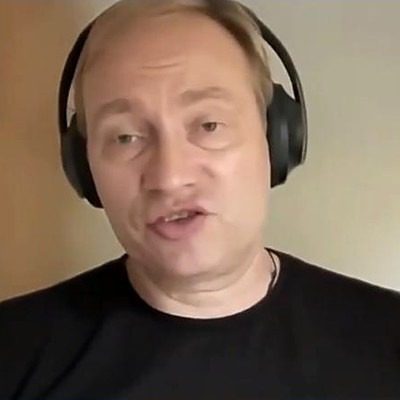
Oleg Fomenko: In 2014 we started asking why we aren't as physically active as we want to be. Everyone cites motivation, money, time or energy, but the real culprit is none of those. It's nature. Nature did not build us to be active. It built us to survive, which means preserving calories as opposed to spending them. Unless there was a very good reason, like a mammoth showing up or a tiger about to make food out of us, we would sit around the fire. Food is abundant now, but we still sit unless we do a lot of hard work. Nature also suggests the answer, which is instant gratification. So we asked what would happen if we created a new gratification for every step you take. We wanted Sweatcoin on blockchain back in 2014, but Bitcoin was the only blockchain then and it was too slow, cumbersome and expensive. We spoke to Vitalik in 2015, but Ethereum was also too early, so we launched centralized. Every year we analyzed blockchain tech and the answer was no, until last year when we discovered Near. We looked at more than a dozen projects, but we chose Near and launched in September last year in many geographies outside the US. Our US users started asking why the rest of the world could walk into crypto while they had to keep playing the centralized point system. The more of that we heard, the more we realized it was a mistake not to include the United States. Our users outside the US held a governance vote, with 380,000 people casting a vote. It's by far the biggest Web3 governance vote ever, and it gave the green light to the US launch and allocated a budget for it. Yesterday we pushed the button, and more than 300,000 Americans opted in. These were people with significant Sweatcoin balances, and they converted their past physical activity into sweat.
Ashton: Your market is anyone who moves. What does it take to join, and what happens to users' data?▶ 06:38
Oleg: You need a smartphone and legs. These are the only requirements that we have. Unlike a lot of move-to-earn projects, we're not charging you at the door for some NFT. The apps are free and don't consume much battery, so the opportunity cost is zero. A lot of our users join thinking, "They pay me to walk? How is that possible?" Then they realize it works. We also don't sell data, which is extremely important, because in the US it's very typical for businesses to monetize data. We're based in Europe, data is stored in Europe, and we're subject to GDPR, which is the most Draconian privacy-protecting legal framework in the world. Philosophically, we also don't believe data is ours to share or sell.
Nature did not build us to be active. It built us to survive, which means preserving calories as opposed to spending them.
How steps become sweat
Ashton: Walk me through how it works when I go for a walk.▶ 07:56
Oleg: The entry point is Sweatcoin, our original health and fitness app. It has more than 200 million installations and you can find it on both the App Store and Google Play. Over nine years we've perfected tracking your steps and, just as important, verifying them. As soon as you pay for steps, people try to shake the phone, put it on a dog and let it run in the park, or put it on top of a dishwasher. There's even a funny website, unfitbits.com, that teaches you how to fool your phone into believing you're active. We had to deal with all of those cases and many more. If your movement is genuine, we issue Sweatcoins at the rate of 1,000 steps to one. If you opt into crypto and want to earn sweat, our crypto token, you need to walk more. At the moment it takes 4,500 steps to mint one sweat. A year ago it was 1,000, and we have a constantly rising step value curve. There are two reasons for that design. First, walking earlier and more gets you a better return. Second, it ensures that over time monetary supply inflation approaches zero. The supply is uncapped, but inflation tends to zero. On top of that, half of our profits go to buying tokens on the open market, and the community has voted multiple times to burn them. Tightening supply plus burns meant that in July this year we became a deflationary project. The circulating supply at the end of the month is lower than at the beginning. In Web2 terms that's like being profitable, and not many Web3 projects can claim it. Ethereum was deflationary for about six months and last month fell out of it. Many people think a sustainable economy is impossible in move-to-earn, so this is a big achievement.
Crypto without the learning curve
Ashton: The people who most need to get active may be the least tech-friendly. How do you bridge that gap?▶ 12:39
Oleg: We have a huge user base, so we've been catering to many segments, not just crypto-savvy people. Over the last nine years we've learned how to build a user experience that is simple, straightforward and doesn't require you to be a rocket scientist. We practiced on Sweatcoin, and now our non-custodial Sweat Wallet brings that simplicity to what is typically extremely complex UX. You don't have to write down a 24-word phrase to activate it, and you don't run into terms like finality or staking that a typical user wouldn't understand. If people don't understand the words being used, they decide this isn't their game and stay out. The other barrier to mass adoption is that users who tried before were always told to plug in a credit card and buy crypto. On Ethereum you'd need to put in at least a grand or two to start learning, because transactions could cost $80 to $200. People aren't ready to put money in first and learn later. They want to learn first. So we give them an opportunity to move one foot in front of the other. Their steps have value, so they're more active, fitter and healthier. They acquire some crypto and experience sending, receiving and staking, which we call grow jars. Then they take learn-and-earn lessons on basic questions like what a blockchain is, and they get paid while they learn.
You need a smartphone and legs. These are the only requirements that we have.
A movement economy, and brand ambitions
Ashton: What's the bigger vision beyond a token?▶ 18:08
Oleg: What we're building is not just a dapp with a token. We want to build a movement economy. Think of the attention economy: you give your attention to Google or Facebook, they sell it to advertisers, and they return some value to you as a free product or service. We believe the movement economy can be done better. I give physical activity, and I benefit because I live longer and I'm fitter, healthier, in a better mood and more productive. I also put less pressure on healthcare systems. Other parties are willing to pay for it too, such as insurers, healthcare providers, employers and ultimately countries, because if you're physically active you live longer and pay more taxes. It's pretty good business. Big Tech has taken the full value of attention and given us only this much back. With the movement economy it has to be different. All the value that physical activity is worth should go to the people who are physically active, because that persuades them to be more active. We're happy to be the guarantor that no gaming, faking or cheating enters the system.
Ashton: Are partnerships with big fitness brands like Nike or Adidas in the works?▶ 20:57
Oleg: I can't confirm or deny that. But I'd point you to Sweat Hero. If you open the tab in Sweat Wallet, you'll see the basic NFT you receive, which we call legs. It's an avatar, because we're all about steps and legs. We built a massive collection of legs, all unique, dressed in different attire and wearing different shoes. That's a really interesting partnership opportunity, not at the level of fungible tokens but at the level of visual representation of brands and products for millions of our users. I'm just not going to commit to a brand or a time slot.
This interview has been edited for length and clarity. Recorded October 2023.