Key takeaways
- Casper Protocol was built using Rust and designed for modularity, allowing independent upgrades to components like the database and consensus mechanism.
- Casper is not EVM-compatible and has its own VM, account model, and contract management system rather than adopting existing Ethereum standards.
- The Casper Association published a new NFT standard offering flexibility with mutable or immutable metadata fields and more adaptable contract management than ERC-721.
- Casper targets both enterprise adoption and community-driven dApps, with existing productive environments including IP.we for intellectual property lifecycle management.
- The protocol prioritizes integrating with existing developer tools and environments rather than creating proprietary testing frameworks to reduce developer friction.
From the early web to Casper's design
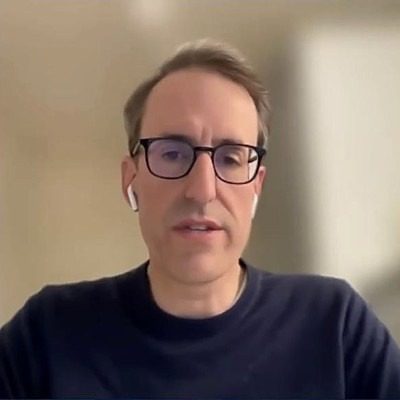
Ashton Addison: How did you get into blockchain, and how did that lead to your role on the Casper Association board?▶ 00:21
Ralf Kubli: I started university just as the internet was becoming interesting and graphical interfaces arrived in the early 90s. I got my first email in 1993 and was coding HTML from 1994 to 1996. Then I left the space and spent years in industrial environments with a classic management career. In 2015 I came across Ethereum. I knew about Bitcoin, but Ethereum made me understand the potential of the technology, and I felt I was being given a second chance in life. In 2016 I put all my effort into getting into the space, and I ended up with a venture capital firm in Switzerland that invested in early-stage blockchain startups. We also took an active role in making Switzerland's regulatory environment advantageous for the technology.
Ashton: Why is Casper a great protocol, and what is the history behind it?▶ 02:58
Ralf: The founders wanted to overcome the fundamental problems of blockchain adoption. They come from enterprise environments, and they believed adoption has to come from technology that can be easily integrated into existing application environments. That is the principle we built on and continue to build on. When Casper Labs was founded and work on the core protocol started four years ago, choosing Rust was a very early decision. Today it is probably the main language for blockchain infrastructure. The chain is also modular, so elements can be upgraded independently. We recently changed the database, and the team is working on a new consensus mechanism. We are not an EVM-compatible chain. We have our own VM and account model. We also want to use developer tools that large numbers of developers already know, rather than spend resources creating our own testing environments.
I truly believe this technology lets you claim property seamlessly and document your property rights once things are digital.
NFTs as property rights
Ashton: Is Casper at a turning point for DeFi and NFTs? What use cases excite you?▶ 05:39
Ralf: It's still early in the technology, but we have a good platform and there are already productive environments deployed on Casper. We are sometimes perceived as having only an enterprise focus, which is certainly not the case. We think enterprise-grade technology should be available to a very large number of users, and if you build it, enterprises will want to use it. We have early implementations of tokens and token standards. Two use cases excite me. One is an NFT marketplace that makes an asset class like rare whiskey accessible. The other is an intellectual property platform already live on Casper that represents IP as NFTs. It targets inventors and creators, and also enterprises that want to manage the IP lifecycle.
Ashton: Most NFTs use ERC standards. How does Casper compete with those network effects?▶ 08:27
Ralf: That's a big challenge. Casper Labs is an implementation partner to enterprises, which gives it a privileged position to understand what companies want next. On the association side, we focus on community applications, wide adoption and developer tools, and we have named NFTs a priority area. We do have to create our own standard. We copied ERC-721 and the other early standards at first, but we believe they either lack security or fall short on flexibility and adaptability. In ours, you choose at inception whether the NFT is mutable or immutable, with metadata fields that can change accordingly. Because we have a flexible account model, you can also manage these NFTs afterward far more flexibly than in other environments. My excitement isn't about JPEGs or yet another project minting a collection. I truly believe this technology lets you claim property seamlessly and document your property rights once things are digital. I started talking about cryptographically secured property rights a while ago, and it just so happens that the abbreviation is CSPR.
Ashton: Security flaws let NFTs be siphoned from wallets. How does Casper approach that, and what problems remain?▶ 12:54
Ralf: One issue is that we have still created a centralized system. It makes no sense to hold an NFT in your wallet when the underlying asset is controlled by a centralized entity. That defeats the purpose. Many questions are unsolved, such as key management for creators. Musicians, people who develop code, or people who develop chemical formulas or biotech could document and monetize their inventions in completely different ways. But then we hand power back to centralized institutions that hold the data and files. We need to decentralize where this is stored and make sure it is stored securely. Those questions don't keep me up at night, but they certainly keep me busy during the day.
Positioning and the enterprise push
Ashton: Where does Casper sit among smart contract platforms? Is it a top-tier chain?▶ 15:45
Ralf: Yes, we believe so. We think looking at our peers, meaning smart contract platforms, matters more than ranking by market cap. We are recording this on November 11th, just after major challenges across our industry's infrastructure, and I think it still comes down to the technology you build. TVL may not be the end goal. It is really about the applications that live on the infrastructure. I would say we are probably in the top 15 of the more serious, technology-oriented projects. We have to remind ourselves of that today and in the coming weeks: it's early, and it's about building technology a very large number of developers can use.
Ashton: Casper is working with IBM. How does the enterprise side and that partnership fit in?▶ 18:17
Ralf: I'm with the Casper Association, so our task is to foster the open-source community and find more people to contribute to the protocol. Casper Labs is independent from the association but is a large contributor to the core technology, and it targets enterprise use cases that it develops with its customers on Casper. We're very excited that IBM has publicly stated this is interesting technology. There are atomic swaps between Hyperledger Fabric and Casper. Quite a few people build on Hyperledger but need some kind of public outlet. Maybe the future is not only multi-chain but also more hybrid than we think today, with private chains, hybrid environments and public environments. Being able to operate across that spectrum is key for any technology provider going forward.
It makes no sense to hold an NFT in your wallet when the underlying asset is controlled by a centralized entity.
The 2023 roadmap
Ashton: What does Casper need to roll out over the next six to twelve months to reach the next stage?▶ 21:42
Ralf: We have said to the community that we are not the easiest chain to engage with. You have to be committed to find the documentation you want, so we are going to improve that. It is a very short-term target, and hopefully there will be much better infrastructure for developers by the time this is published. Second, there will be more standards and primitives released, so people can save time and see how things were implemented. On the protocol side, we will release 1.5 in the near future. Our goal is version 2.x within six to nine months, maybe four to six at the earliest, with some groundbreaking innovations. We have also started a number of projects around capital markets. We cannot say much yet, but there will be announcements about how legacy financial services firms use Casper technology to bring efficiency, transparency and automation to their business.
This interview has been edited for length and clarity. Recorded November 2022.