Key takeaways
- Numbers Protocol is a blockchain-based system that makes digital media traceable and verifiable by capturing metadata like time, GPS location, and device information when photos or videos are taken.
- The Capture App automatically registers photos and videos on blockchain as Web3-native assets, allowing creators to prove ownership and control of their content rather than relying on centralized platforms.
- Numbers Protocol addresses misinformation, copyright issues, and royalty distribution by creating an immutable record of digital media origin and authenticity from the moment of creation.
- The platform separates registration from NFT minting, allowing users to simply prove they took a photo without monetizing it, or choose to mint it as an NFT for creators seeking revenue.
- Numbers Protocol has been tested in real-world applications including coverage of the 2020 US presidential election and documentation of evidence in Ukraine.
What Numbers Protocol does
Ashton Addison: What is Numbers Protocol, and what is the team working on?▶ 00:46
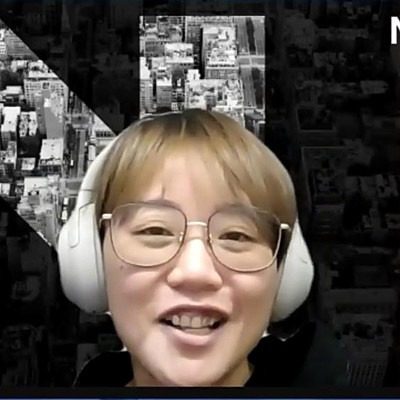
Sofia Yan: Numbers Protocol is an asset-driven protocol that makes digital media traceable and verifiable. That lets us address critical issues in the digital media space, such as misinformation, copyright and royalty distribution. The technology has already been used in real-world cases, including coverage of the 2020 US presidential election and Ukraine.
Ashton: How can the technology tackle misinformation?▶ 01:44
Sofia: We have two products: the Capture app and a Numbers search engine. Capture is a mobile blockchain camera app. When you take a photo or record a short video, it automatically collects the metadata, including the time, GPS location, your device information and who you are, and immediately registers it on the blockchain. That preserves not just the image but also the time, location and other information around it. I think it will be an entry point for people in Web2 who want to get into Web3, because anything generated by the Capture app is Web3-native. You can trace it and find all the metadata from the moment the photo or video was created.
Ashton: How long has the team been at this, and where did the news media work come in?▶ 06:06
Sofia: The idea started at the end of 2018, and we established the company around May 2019, so it has been three to four years. We started with the Capture app and looked for real-world use cases, so we collaborated with news media as a trial experiment, and it went well. We rely heavily on the internet now, and news media seek information from the general public, which means they put a lot of effort into verifying whether a photo or video can be trusted as a news source. So the next step is to make these tools usable by everybody, both to help people prove they really took a picture and to help news media with verification.
We are not recognizing the token, we recognize the assets.
Ownership, NFTs and licensing
Ashton: Do you expect platforms like Instagram or YouTube to adopt this kind of technology?▶ 03:41
Sofia: Maybe one day, if they want to move into Web3. But Capture isn't only about traceability. We also want to bring ownership back to creators. In Web3 you can more truly own your data and your content. Web2 platforms like Facebook and Instagram have built advertising-based models that monetize human attention, compensate artists only through exposure and treat user data as a commodity. Many creators struggle to create meaningful value on centralized platforms, or are blocked completely by industry gatekeepers. We're open to those platforms implementing our technology, but we can't do it alone. We're a small company and a small protocol, so we have to build an ecosystem and as many partnerships as possible.
Ashton: Is registering a photo the same as turning it into an NFT?▶ 08:37
Sofia: There are two parts to the Capture app. The core value is helping people trace the source of a photo or video, so everything taken with Capture is registered on the blockchain, but it isn't minted as an NFT by default. We added minting because we want to help creators monetize their work. If you're a member of the public who just wants to prove you took a photo, you can use the register feature. If you're a creator who wants to monetize, you can choose to mint it as an NFT, all on our platform.
Ashton: What can creators do with an asset once it's registered, and how does that differ from NFTs today?▶ 10:58
Sofia: Every capture is a Web3-native digital asset, and once it's in our network you can do whatever you want with it. You can mint it as an NFT, make a website archive or even print it out. NFTs have only solved ownership. If I transfer a token to you, you own the token, but does that mean you own the image? In my view, the NFT world isn't really aware of copyright. That's why we call Numbers asset-driven. We are not recognizing the token, we recognize the assets. We're also working on a license NFT, so a creator who doesn't want to sell the token outright can control the period for which the buyer may use the asset.
Misinformation and AI
Ashton: What will it take for large organizations, where misinformation matters most, to adopt blockchain verification?▶ 14:17
Sofia: It depends on the organization. Most small media outlets don't make authenticity a first priority. But large, leading news organizations like the BBC care about their reputation, so they do a lot of backtracking to make sure their sources are at least verifiable. They probably can't guarantee that something is authentic, because we all know that with some information you can manipulate things or present them from a different perspective. That isn't a problem technology can solve, so we focus on what it can solve, starting with images. It matters more every day, because you can no longer tell whether what you see is real or fake, especially with deepfakes and AI.
Ashton: How does AI-generated content fit into this?▶ 17:10
Sofia: Before Numbers Protocol we worked in the AI space, on computer vision, so we know the future will probably bring a lot of problems generated by AI. AI can already help you write an article or generate a video, and people online will start making a lot of effort to figure out whether something is human-generated or AI-generated. I think Numbers Protocol can help with that, at least by helping users judge whether content was generated by a human or by AI. We probably cannot guarantee the authenticity of the content, but we can give you all the information you need, and you can decide whether you trust it.
We probably cannot guarantee the authenticity of the content, but we can give you all the information you need
Mainnet and what's next
Ashton: What are the next steps for Numbers Protocol in 2023?▶ 19:04
Sofia: We launched our mainnet on December 1st. People ask why you need a blockchain when you already have a product. Numbers is an asset-based protocol that turns normal images into Web3 assets, and that requires three things: storage, governance of the asset, and on-chain activities. We use Filecoin and IPFS for storage. For the remaining piece, the fundamental infrastructure for on-chain activities, we think we should have our own blockchain. Before, we took a multi-chain approach and supported as many chains as possible, including Ethereum and BSC. But to really build the network and lower costs, having our own chain is the only way we can solve this. The mainnet lets us support the whole life cycle of a digital asset: integrity registration, native NFT minting and revenue sharing. It's the last and most important piece of Numbers Protocol, and it completes the picture.
This interview has been edited for length and clarity. Recorded January 2023.