Key takeaways
- Synesis One combines a DAO and NFT marketplace using dual tokens (Synesis governance token and Cannon semi-fungible token) to create a Web3 utility platform for AI and gaming.
- The platform gamifies AI data collection by having users play word puzzle games that train AI models while earning rewards, similar to mechanical turk but blockchain-based.
- Users can own NFTs representing keywords that generate passive income whenever AI companies use those words in their applications and transactions.
- Synesis One is developing its own games with top sci-fi writers and Korean game companies rather than just providing tools, with an alpha product launching soon.
- The dual token system pairs Cannon (composable NFT earning claimable rewards) with Synesis governance token to amplify income potential for data yield farmers and NFT collectors.
What Synesis One is
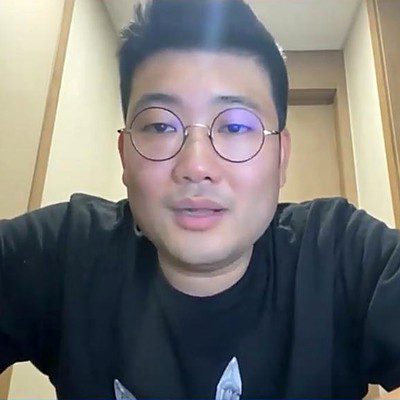
Ashton Addison: Can you give us an overview of Synesis One and the solutions you're building?▶ 00:23
Paul Lee: Synesis One is a Web3 utility and NFT marketplace for artificial intelligence. It is the symbiosis of Synesis DAO and what we call the Canon Exchange, powered by our governance token, SNS, and our semi-fungible token, Canon. It's a collaboration and harmony of those two tokens.
Ashton: How do the two tokens work together, and why do you need both?▶ 09:27
Paul: The dual-token economy is designed to amplify the overall income potential for data yield farmers and yield-generating NFT collectors. Canon is a DeFi-composable NFT that can earn claimable rewards. The SNS token carries the participatory right to vote. So we have the SNS governance token and the Canon NFT token working side by side, very closely.
It's basically Mechanical Turk for crypto, using a gamified component with word puzzle games.
GameFi and building the games
Ashton: How do you see GameFi reinventing gaming?▶ 01:13
Paul: I think GameFi is the next big thing, the next big bang. Gamification has been around throughout history, and now everyone is looking to make money in a fun way. Gaming evolved from paying to play to free to play. The GameFi component is crucial for getting the crowd excited about a project and letting them have fun while having the ability to make a lot of money. They need that ability, otherwise it doesn't matter whether it's gaming or NFTs, no one is going to play.
Ashton: Is Synesis creating games itself, or just the tools to capture that value?▶ 03:46
Paul: We're going to create the games ourselves. We've already hired the top sci-fi writers in the world as well as the top game companies here in Korea, where the gaming industry is massive. The Canon Exchange is the native NFT marketplace for Canon, and the Canon token lets people participate in data yield farming. That's how we get people playing the games, having fun and training the AI.
Data yield farming and owning words
Ashton: How does data yield farming differ from regular DeFi yield farming, and how do word NFTs fit in?▶ 05:04
Paul: All AI companies around the world need data sets, and that data has to be trained by individuals, by the crowd, or by paid personnel. We're trying to make that process fun. It's basically Mechanical Turk for crypto, using a gamified component with word puzzle games and word games we call Legology. They're very simple but engaging, and people play them without even thinking about it. You're training the AI and making money on top of it. If you own an NFT of a keyword, say "refund", and an AI company building e-commerce chatbots uses that word many times, the owner earns money while sleeping, because the AI is using the word they own.
Ashton: So this goes beyond owning an in-game skin to owning almost anything?▶ 07:15
Paul: Exactly. Think about owning words. Our NFTs will be produced in multiple languages, 10,000 words at a time. Imagine owning a word in Arabic or in Chinese and getting paid for it, and being able to participate in yield generation. It's a whole different sentiment of owning a word. It's not just owning a kitty or an ape.
We want them to come on board and have fun without even knowing they're training AI.
Roadmap and the long-term goal
Ashton: How long has the team been working on this, and where is the project now?▶ 08:09
Paul: We started Synesis One in 2021 and finished our pre-sales very quickly. We were oversubscribed and everyone was excited to participate. Right now we're building our first alpha product, which will be out very soon. Our white paper and website are ready, and we're going to build a community. We're also working with our sci-fi writers and game companies on very engaging games. The long-term goal is to provide data sets for AI companies around the world, so that we can securitize and personalize data.
Ashton: What will be the key to Synesis being successful five-plus years down the road?▶ 11:14
Paul: First, people need to be able to make a living from this. If they can make money and have fun, that's all it takes. The underlying ethos is to securitize data and train AIs around the world so it's beneficial for human society. But for a normal Joe Bloggs, we want them to come on board and have fun without even knowing they're training AI. They're playing games, having fun and making money. We think we can do that very well with our gaming background, our AI background and our blockchain expertise.
Ashton: People already train AI through Google searches and browsing, but get nothing back. Is that the gap you're addressing?▶ 12:33
Paul: Absolutely. We're training data for companies that are not rewarding us, and we want people to get the rewards and feel good about it. Josh and I thought about this project for a very long time. We needed technologies like NFTs, DeFi and GameFi to come out so all these pieces could be put together to form the Synesis One ecosystem.
This interview has been edited for length and clarity. Recorded November 2021.